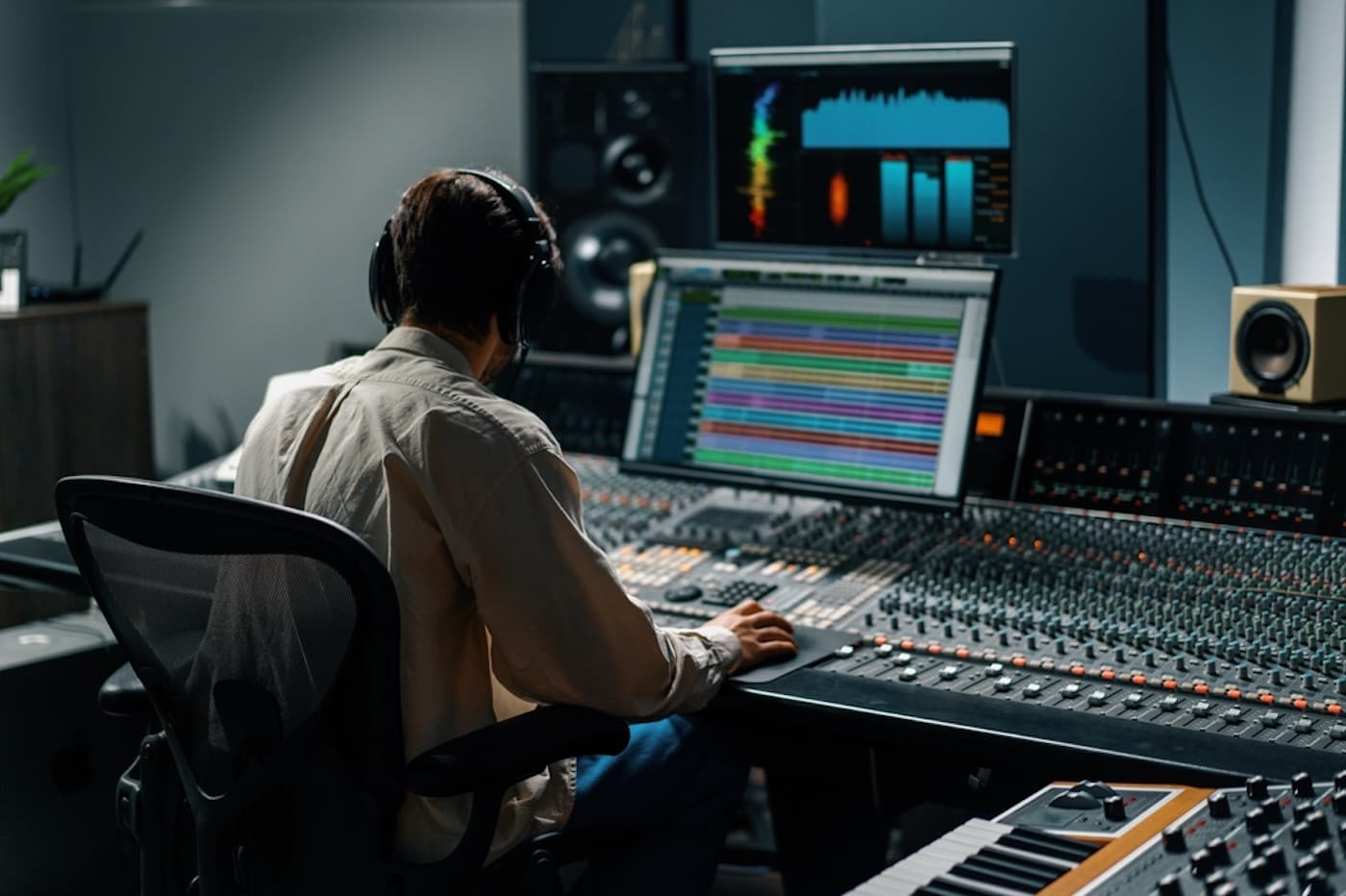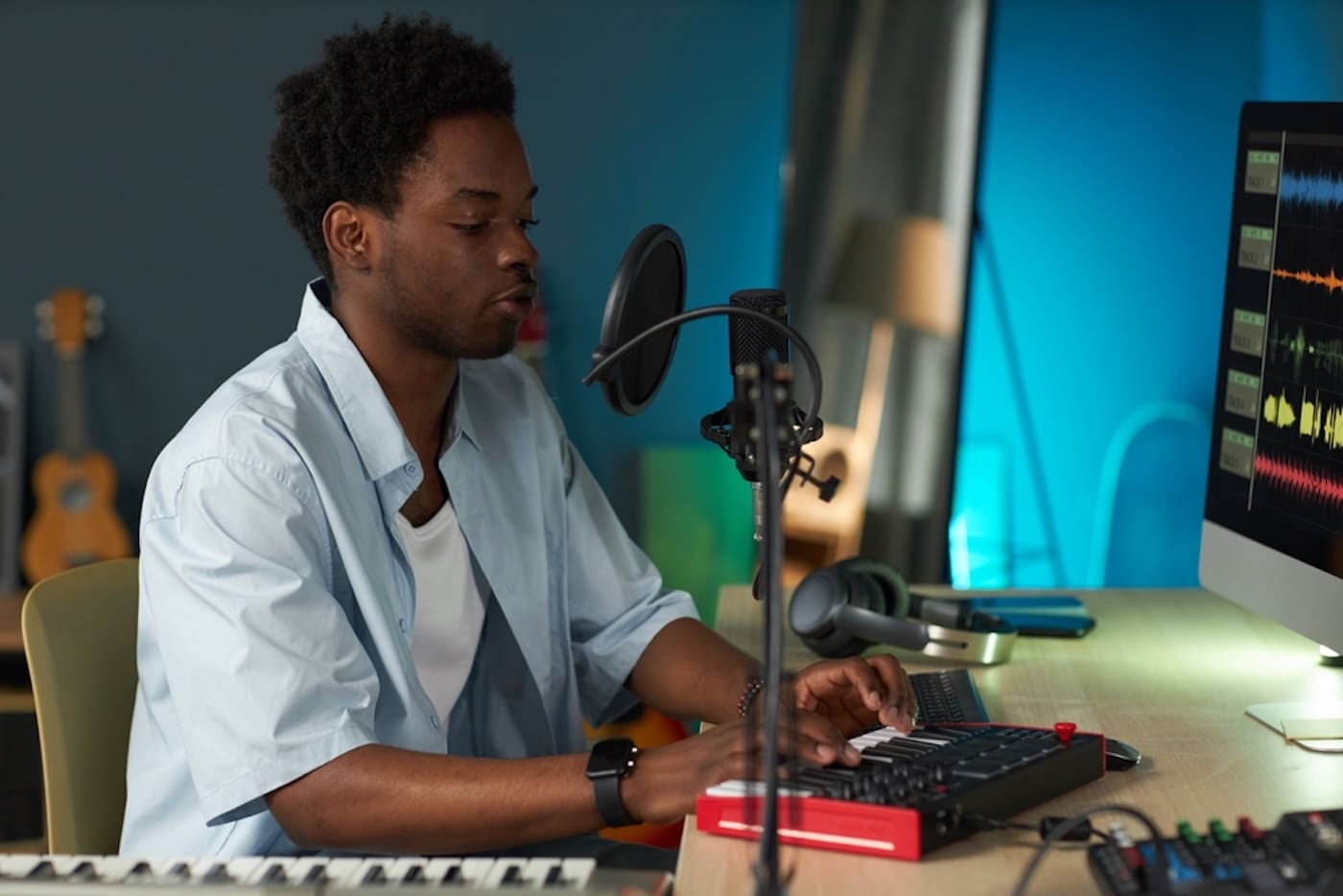
Making beats is an exciting introduction to music production, whether you’re creating electronic tracks or writing music for singer-songwriters.
With modern software and free learning resources, getting started with beat making is more accessible than ever.
This guide breaks down how to make beats from start to finish, covering the tools, techniques, and fundamentals you need to create your first track.
Get Early Access
To Promo Hype
What Do I Need To Start Making Beats?
The core equipment and resources required to make beats begin with a computer and a digital audio workstation (DAW).
This music production software can be enhanced by adding a dedicated audio interface and high-quality headphones for better sound quality.
For additional control and flexibility, you can include a MIDI controller for hands-on beat making and other hardware, such as synthesizers.
If your budget is tight, you can explore budget beat-making tools, which can be easily used to make even a simple beat.
These tools can be complemented with samples and other sound libraries to create sounds that enhance your beats.
As your musical skills and experience develop, you can expand your equipment repertoire to make music with more complexity and nuance.
Basic Music Theory For Beat Making
Understanding basic music theory for producers is vital for embarking on a beat-making journey with minimal friction and confusion.
Let’s break down some of the basic music theory you’ll need to know when you sit down to create beats for the first time:
- Tempo, BPM, and time signatures: A track’s tempo relates to its beats per minute (BPM), while time signatures refer to the number of beats in each bar. Most popular music genres have a tempo range of 90 to 130 BPM and a 4/4 time signature, which is sometimes referred to as “common time.”
- Keys, scales, and chord progressions: A song’s key is an indication of its tonal center, such as C major, from which scales and chord progressions then follow. Scales are a series of consecutive notes that form a musical ladder, while chord progressions are sequences of multiple held notes that add harmony to a composition.
- Rhythm, syncopation, and groove: A track’s rhythm relates to how the patterns of beats and sounds flow over time. Note lengths, percussion hits, and other song elements can be combined to create beats with a groove and sense of style.
With powerful tools that let you generate chord progressions, it’s never been easier to apply basic theory and create beats that sound good.
Related read: Music arrangement explained.
What Makes A Great Beat?
Structuring drums, instruments, and vocals is central to what a music producer does when creating a new track.
While there’s no right or wrong way to make a beat, there are some factors to consider when exploring sonic possibilities:
- Balancing repetition and variation: Making your own beats requires an appreciation for the balance of repetition and variation throughout the song’s structure. This ranges from structural elements such as verses and choruses to repetition and variation among percussion, melody, and chords.
- Giving your rhythm a sense of groove: A sense of groove is another core element of most beats that work well, whether through a catchy bass line or syncopation, which emphasizes off-beats to introduce rhythmic surprises.
- Padding the beats with fills and ear candy: Including drum fills between song sections and other unusual drum sounds can elevate your own drum beat through unexpected variety. Instrumental solos and distinctive riffs provide additional ear candy that keeps listeners engaged.
- Creating emotional impact: One of the biggest challenges in writing a song is creating a sense of emotional connection with listeners. Your choice of melodies, harmonies, and the subject of your lyrics can all be combined to achieve this effect.
By referencing the best beats from established artists, you can arrange lush and engaging beats in your own music.
How To Make Beats: Step-By-Step
Now that we’ve covered the basic concepts around music production, it’s time to break down the beat-making process step-by-step.
Here’s everything you need to know to start making beats that effortlessly showcase your musical style:
Step 1: Establish Your Vibe
Before you sit down to make a beat, it’s important to clarify what vibe and style you’re hoping to achieve for your listeners.
This begins with choosing your genre and developing a clear idea of the tone and emotions the music should convey.
You should also consider the song’s energy and mood, since these factors will help determine the best sounds to use in your beats.
Step 2: Choose Your Digital Audio Workstation (DAW)
While the best music production equipment shares many features, some are better suited to specific genres and experience levels.
If you’re a beginner, consider using a free digital audio workstation like GarageBand for songwriting or Ableton Live Lite for electronic music production.
The best DAWs can be paired with dedicated hardware, such as MIDI controllers, providing a tactile approach to beat-making and composition.
Music production is also highly scalable and upgradable, so you can improve your setup with new software and equipment over time.
Recommended reading: How to start producing music.
Step 3: Collect Reference Tracks & Samples
Once you’ve installed your DAW, you can begin building a library of reference tracks to help with sound selection and inspire your arrangements.
Gather tracks from successful independent artists you admire and break down how their music is structured to gain valuable insights.
From here, you can acquire samples that match your chosen style, building up a library of drum sounds, instruments, and effects.
You can also use a microphone to capture original samples directly from sources, using them to create truly unique beats.
Step 4: Sequence Drum Patterns
Sequencing a drum beat is a foundation of music production, whether you’re inputting them into a DAW or using hardware.
You don’t need to invest in a Roland TR-808, the legendary drum machine, to be able to arrange drum beats that sound exceptional.
Many producers start with a kick drum and snare when laying down beats, building up cymbals and other drum patterns around these.
As you fill out the other instruments and sounds in your track, you can refine your drum patterns to ensure they complement these elements.
Step 5: Write A Bass Line
The next step in the music production process is writing a bass line, establishing the foundation and key of your track.
As one of the most important elements of a beat, the bass line should lock in tightly with the drums and use a complementary bass instrument.
A strong bass line should strike a balance between simplicity and variety, retaining a clear presence throughout the mix.
Get Early Access
To Promo Hype
Step 6: Create Chord Progressions
With your bass line composed, you’re ready to create chord progressions that bring additional variety and texture to your beats.
Working from the song’s key, you can experiment with different types of chords, starting with simple progressions using primary chords.
As your composition skills develop, begin exploring complex progressions that use secondary chords, inversions, and rhythmic changes.
You can reference the circle of fifths chart to create strong progressions that fit harmonically within your song structure.
Step 7: Introduce A Melodic Layer
Composing chord progressions provides the framework for writing a melody, presenting a harmonic context, and structural support.
Melodies can be applied to a range of instruments, including piano, keyboard, guitar, brass, and string instruments.
If you’ve built a home recording studio, you can record instrumental and vocal melodies ready to drop into your DAW.
Melodies can also overlap, with vocals and synths interplaying to create melodic lines that build harmonies and add variety.
Step 8: Use Sound Effects & Samples
While vocals and instruments are at the heart of melodies and harmonies, sound effects can provide much-needed texture and atmosphere.
Used sparingly and appropriately, such sounds can enhance the drive of percussion and augment other elements, such as synths and pads.
They can also help producers fill gaps in the mix where additional ambience and dynamism are required.
Step 9: Arrange Song Sections & Transitions
Drums, melodies, harmonies, and sound effects all play a different role in a beat depending on where they appear in the music.
The next stage of the production workflow is to apply each of these elements to the song’s core sections, such as the verses and choruses.
Many of the best music producers use transitions between these core structural elements to guide energy and build tension.
To achieve this result, consider using pre-choruses and bridges to smooth transitions between the chorus and the verse.
Essential resource: Song structure template.
Step 10: Mix And Master The Track
With your beat’s structure finalized, it’s time to polish the results so it’s ready to play on various sound systems.
While mixing music occurs throughout the arrangement process, the overall track still requires an in-depth pass to sound professional.
This is when the mixing and mastering stage comes into play, balancing the track’s individual elements to create a cohesive whole.
Processes such as individual and group track EQing are used for instruments and percussion, along with audio compression across the mix.
Modern DAWs offer comprehensive mix and mastering tools, though major artists often outsource this to dedicated services.
Common Beat Making Mistakes To Avoid
Making beats requires juggling dozens of audio files and assets that can quickly become overwhelming for new music producers.
Here are some of the common mistakes beat makers make, and how you can avoid them:
- Overstuffed use of elements: One of the most common mistakes new producers make is overstuffing the production with too many sounds. This results in a cluttered soundscape, and can be avoided by emphasizing simplicity and space between sounds.
- Lack of variation: While repetition of elements is necessary when creating tracks, a lack of variation quickly leads to a boring arrangement. Avoid getting stuck repeating simplistic loops by introducing new sequences and melodies.
- Poor mixing and processing: A failure to properly mix and process sounds can lead to serious issues, including clipping, distortion, and over-boosting. Take the time to balance out your mixes and avoid overusing effects like reverb, delay, and filters.
Spending time researching the workflows of the biggest independent artists will enable you to optimize your beat-making and overall music production.
Best Beat Making Tools & Resources
With free-to-use DAWs and extensive online tutorials, mastering the art of beat making has never been easier.
Here are some essential tools and resources beat makers can use to streamline their workflow and develop their music-making skills:
- Online music production courses: Whether you’re experimenting with drum loops to create trap beats or learning music theory, there are online music production courses to help.
- Free VST plugins: Making the most of the best free VST plugins can expand your creative options, from discovering new drum loops to writing melodies with virtual instruments.
- AI beat-making tools: While artificial intelligence is no substitute for musicality, AI music production tools can help you overcome creative blocks and learn composition techniques.
Dedicating time to learning music theory will also help you to craft unique rhythms and sounds beyond the basic steps outlined above.
Read next: How to release a song.
How To Make Money Selling Beats
Once you’ve honed your beat-making skills, there are many ways you can make money as a music producer by selling your creations.
Here’s how to make money selling beats without compromising your artistic vision and retaining your music royalties and other income.
- Sign up for a digital music distribution service: Reaching a global audience means uploading to major streaming platforms, and the best music distribution services automate the process.
- Acquire marketing and promotion tools: Once your tracks are online, you can use tools like Canva and Capcut to create powerful visual assets when promoting your music.
- Explore music licensing: Making money selling beats isn’t just about digital streams and downloads; music licensing is another profitable option to consider.
With more beat producers leaving the industry to sell beats online, the opportunities for generating revenue have never been stronger.
Summary
Learning how to make beats is a skill that improves through practice and experimentation.
By following this guide, you now have a clear foundation for creating beats from scratch and continuing to develop your sound as you learn and progress.
Whether you’re producing hip-hop, EDM, or songwriting ideas, the core principles covered here apply across all genres.
Get Early Access
To Promo Hype
Join Promo Hype



Want the latest Unsigned Advice?
Subscribe to our mailing list to get tips, tricks and hacks straight to your inbox!