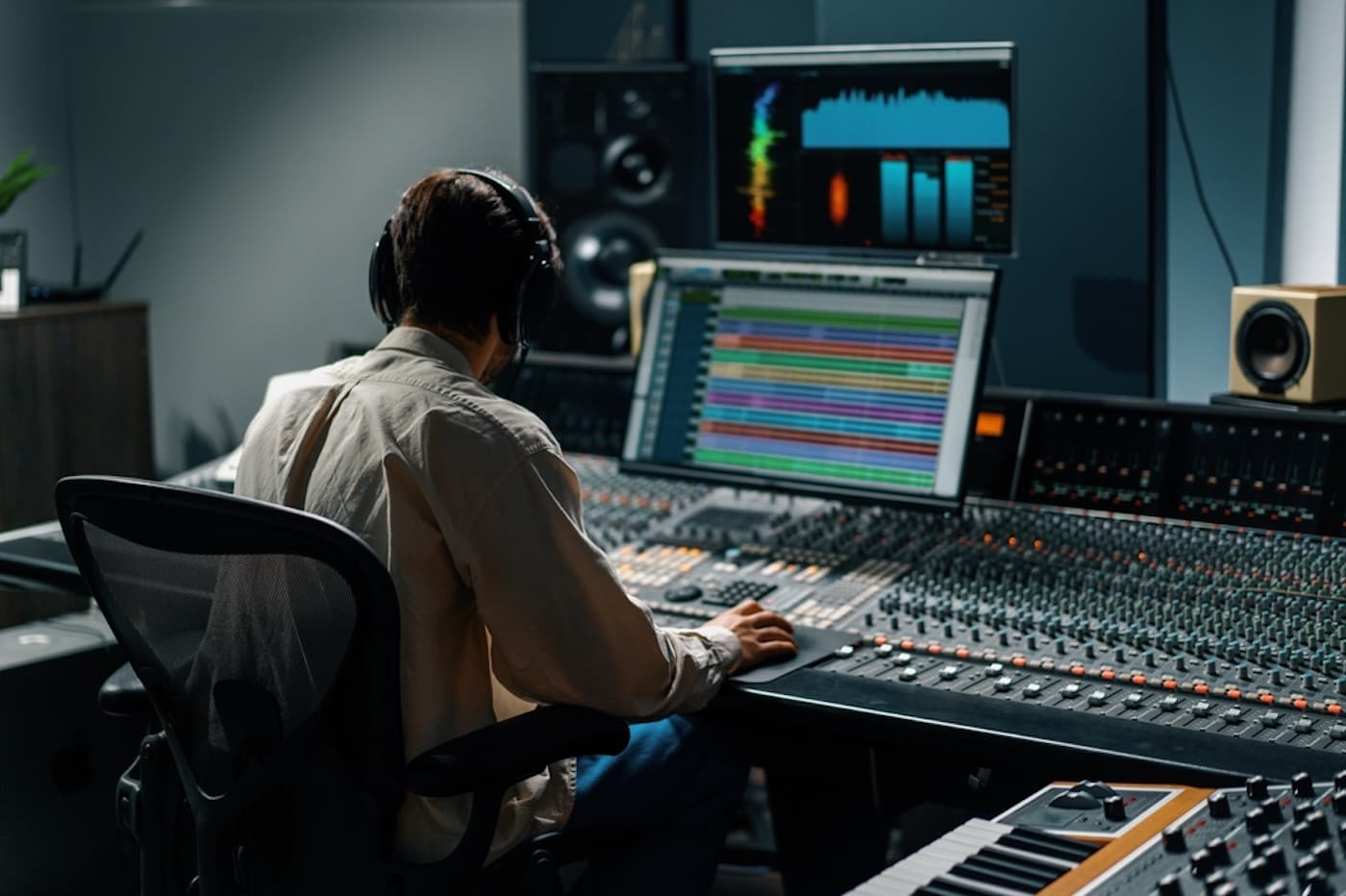
Every great song relies on more than melody and lyrics alone, using thoughtful structure and instrumentation to shape emotion, flow, and the listener’s overall experience.
Music arrangement brings vocals, harmony, rhythm, and instruments together, helping artists transform simple ideas into cohesive songs that sound polished, balanced, and intentional.
This guide explains what musical arrangement is, explores its core elements and common song structures, and demonstrates how to apply these concepts to your own music.
Get Early Access
To Promo Hype
What Is Music Arrangement?
Music arrangement is the process of organizing the various elements of a song, such as vocals and instruments, to create a unique structure.
A core aspect of making music, arrangements impact everything from melody and harmony to the instruments playing chords and rhythm.
Music arrangements also draw on aspects of songwriting, such as verses and choruses, as well as intros and outros.
It can be applied to original compositions or used to adapt an existing piece of music, such as changing it to another genre.
Music Arrangement Vs. Composition: What’s the Difference?
Understanding the difference between an original composition and a music arrangement is essential when starting a music career.
The fundamental difference between the two concepts is originality: compositions are entirely new pieces of music.
Arrangements, on the other hand, are often reinterpretations of existing works, taking the original core idea and changing various elements.
Both music arrangements and original compositions can be used to make money as an independent artist in a variety of ways.
Learn more: Music publishing 101.
How Music Arrangement Evolved From Classical To Modern Genres
The birth of Western classical music marks a significant moment in the overall history of music theory and instrumentation.
Many of the concepts around composition, notation, key, and tempo emerged throughout the classical era, beginning in the early seventeenth century.
These structural rules evolved in the early twentieth century as new popular music genres, such as jazz, blues, and rock, found their voice.
With the advent of radio and recording, classical music became accessible to the masses, and independent artists experimented with its conventions.
Today, classical music has enjoyed a renewed popularity among Gen Z and young millennials, who continue to explore its potential.
Thanks to modern production techniques, classical elements can be incorporated into arrangements through sampling and other tools.
Elements Of Music Arrangement
We’ve touched briefly on the various independent elements that come together to form a complete music arrangement.
Here’s a more detailed breakdown of these musical elements and how they relate to different types of compositions:
Song Structure
The song structure defines the overarching elements that combine to form a complete song, with structural elements varying across genres.
In general, however, most contemporary songs use some variation of the standard verse-chorus structure, along with intros, hooks, and bridges.
The following elements are then arranged within this overall structure to create captivating music for audiences.
Instrumental & Orchestral Arrangement
Instruments and orchestration are key elements of most music, whether it’s traditional music with string instruments or keyboards and guitars.
Arranging techniques when creating music vary across instruments, ranging from memorable melodies to chord progressions.
Experimentation, such as playing chords in different sequences or using a particular instrument for a melody, can lead to unique compositions.
Vocal Arrangement
Vocal arrangements are another key aspect of songwriting, establishing the melody for lead vocals and background harmony.
When recording music, most producers record multiple takes of vocalists and select the best ones in post-production editing.
Vocals also draw on texture and layering for additional depth, combining with different instruments to create a lush soundscape.
Rhythm Section Arrangement
Percussion and other rhythmic elements provide the glue that holds a piece of music together, creating momentum through patterns of sound.
Drums, cymbals, and a range of sound effects can all be used in the rhythm section to guide the song’s tempo, pulse, and meter.
Developing intricate rhythms can significantly elevate music arranging, with rhythm a powerful tool that shapes people’s lives.
Sound Design & Spatial Arrangement
While the other elements outlined above focus on traditional compositional practices, sound design and spatiality also play a role in arrangements.
The use of stereo soundscapes and effects such as reverb, chorus, and filters can enhance the song’s arrangement.
If you’re hoping to make money as a music producer, mastering sound design and spatial arrangement will deliver professional-sounding results.
Related read: Top 10 songwriting tips for beginners.
Where Music Arrangement Fits Into the Music Production Process
There is often some crossover between arrangement and the music production process, with tools for arranging in digital audio workstations.
Most of the best music production software includes a piano roll feature for arranging notes for melodies and harmonies.
This is achieved using MIDI technology, allowing producers to play elements in real time, then edit and refine them in the software.
This includes transposing instruments and other voicing into a different key or octave, extending or shortening individual notes.
Music production software also enables expressive, creative editing of these elements, layering sounds to create texture and atmosphere.
Likewise, the application of effects can enhance the song’s dynamics, automate volume levels, and smooth transitions.
Once the arrangement is finalized, producers can then apply mixing and mastering to polish the piece of music, ready for distribution.
Common Song Structures Used in Music Arrangement
There are a variety of common song structures used across popular music genres that provide an accessible starting point for arrangements.
Here’s an overview of these common structures, breaking down the structural elements and how artists explore new ideas.
Verse-Chorus-Verse-Chorus
The verse-chorus-verse-chorus song structure is an excellent option for anyone with little experience, which can be used to start arranging music.
Songs using this structure establish and elaborate on the narrative and themes in the verses, switching up the lyrics for each verse.
For the chorus, catchier melodies and lyrics with a clear hook come into play, often delivering a peak to the song’s emotions.
Verse-Chorus-Verse-Chorus-Bridge-Chorus
A slightly more complex variation on song structure introduces an additional bridge section to the verse-chorus-verse-chorus arrangement.
This bridge section adds contrast between the penultimate and final choruses, changing the mood or narrative perspective.
This dynamic shift works exceptionally well for powerful, earnest songs that aim to draw the listener in on an emotional level.
Verse-Pre-Chorus-Chorus-Verse-Pre-Chorus-Chorus
Another familiar song structure often used in pop songs is the Verse-Pre-Chorus-Chorus-Verse-Pre-Chorus-Chorus structure.
While the bridge provides a contrasting section to the chorus, the pre-chorus’s role is to build anticipation between a verse and a chorus.
In this sense, it often replicates some of the chorus’s melody or lyrics to maintain a smooth flow between the elements.
Varied & Progressive Song Structures
If you’re interested in a more experimental approach to songwriting and composition, you can explore varied and progressive structures.
These structures draw on additional elements, such as interludes, drops, and solo arrangements, combined with verses and choruses.
It’s an attractive option for storytelling with more complexity, such as folk music, and learning a hybrid approach to arrangement.
Get Early Access
To Promo Hype
Arranging Music & Copyright
To avoid infringing on music copyright laws, you should always seek permission from the copyright owner before releasing a song you’ve arranged.
You can access services such as ArrangeMe to obtain such licenses, or contact the publisher or composer directly.
Alternatively, you can arrange and release a song of anything in the public domain, or arrange tracks from other artists you know.
With the rise of AI forcing a rethink of copyright and creativity, it pays to follow industry trends and best practices.
How To Make Money Arranging Music
Whether you’re focused on electronic music or play in a band, there are many opportunities to make money with music you can explore.
Arranging music is no exception, with various revenue streams accessible once you’ve mastered the process, including:
- Revenue from royalties and music licensing: Songwriters and composers can earn money through performance royalties whenever their copyrighted music is performed publicly. They can also generate income through music licensing deals, such as sync licensing, allowing their music to be used in movies, TV shows, and video games.
- Selling sheet music: Some songwriters gather print royalties by selling physical or digital copies of the sheet music for their musical works.
- Work-for-hire song arrangements: Skilled musicians and composers can work full-time on projects for a range of clients and commissions. This can be writing jingles for commercials, composing for film and television, or assisting on ensemble arrangements.
If you’re generating revenue through streaming services, use a music distribution service to manage schedules and releases.
Essential read: How to get gigs as a musician.
Examples Of Music Arrangement In Popular Songs
There’s an abundance of popular songs that demonstrate how strong arrangements can elevate a great idea into sublime music.
Here are some examples of songs with exceptional arrangements you can listen to for inspiration:
Queen – “Bohemian Rhapsody”
Queen’s most popular song is “Bohemian Rhapsody,” which uses lush instrumentals and a multi-sectional structure to impressive effect.
The track veers from ballad to rock with an operatic tone and vocal layering that sounds outstanding on a good Hi-Fi.
The Beatles – “Eleanor Rigby”
Much of the Beatles’ success came in part thanks to producer George Martin, who arranged many of the band’s biggest hits.
“Eleanor Rigby” showcases his flair for arrangements, from the use of a double-string quartet to the layered melancholic vocals.
Led Zeppelin – “Kashmir”
Rock band Led Zeppelin redefined the genre and continued to debut in the top 10 charts decades after their formation.
The song “Kashmir” demonstrates their compositional skills, employing polyrhythms and orchestration to create a wonderfully textured soundscape.
Tools & Resources for Music Arrangement
Arranging music can be complicated, particularly when the composition requires writing for a variety of musical elements.
Here are some essential tools and resources for arranging music, from developing the initial idea to finishing the whole song:
- Song structure templates: If you’re a newcomer to musical arrangements, you can use song structure templates to learn the basics before experimenting with new styles. Using templates from songs you love will also help you better understand how the original melody interacts with other instruments.
- Digital audio workstations (DAWs): Music production software like Ableton Live and Logic Pro are essential tools for applying production techniques to arrangements. The best DAWs include powerful features for managing complex projects with many instruments and files from multiple recording sessions.
- Online courses and tutorials: Many online courses and tutorials can help you master the various aspects surrounding songwriting and arrangement. Whether you’re investigating the circle of fifths or arrangements for a string quartet, check out YouTube and dedicated courses when learning new skills.
You can also consider using music notation software like Sibelius and integrating free VST plugins into your DAW of choice.
Read next: The 10 best independent record labels.
Music Arrangement FAQs
In case you still have any concerns or questions about music arrangements, here are some answers to some of the most frequently asked questions:
Is it legal to arrange music?
If you’re considering making music to distribute for profit, you’ll need to understand how the music industry works.
While it’s fine to make arrangements for personal use, you’ll need a license from the copyright holder if you intend to monetize them.
How is arranging different from producing?
Arrangements involve decisions about which instruments play in a song and how they are structured with vocals and rhythm.
While production can involve music theory, it tends to emphasize the process of shaping recordings through mixing and effects.
What skills do you need to arrange music?
A solid grasp of music theory and the ability to read sheet music are both foundational to composing arrangements.
Strong communication skills are also necessary for collaborative projects, as is an understanding of how different instruments can be combined in arrangements.
Summary
Music arrangement helps you organize musical elements to create structure, balance, and impact within your songs.
This guide explains how arrangement works, breaks down its core elements, and outlines the most common song structures used in modern music.
By applying these ideas in practice, you can develop stronger arrangements and turn your musical ideas into more polished, professional songs.
Get Early Access
To Promo Hype
Join Promo Hype



Want the latest Unsigned Advice?
Subscribe to our mailing list to get tips, tricks and hacks straight to your inbox!