The music production process brings creative ideas to life, turning rough concepts into polished, professional tracks.
Whether you’re producing music at home or in a studio, every song follows a series of steps that shape its final sound.
This guide breaks down those stages in simple terms, showing you how producers take a track from start to finish, and how you can do the same.
Get Early Access
To Promo Hype
Quick Overview: The Music Production Process In 10 Steps
Before we dive into the full breakdown, here’s a clear summary of the core steps involved in the music production process:
- Project conceptualization: Before the recording and mixing process begins, the producer conceptualizes the work, from the genre to the overall sound.
- Arranging collaborations: If the song is produced collaboratively, the producer manages the project and liaises with other artists.
- Songwriting and composition: Producers often work on the structure, lyrics, and composition for popular music projects.
- Production setup preparation: Setting up studio recording equipment, software, and other hardware also falls under the producer’s remit.
- Recording process: Recording music, such as vocals and instruments, is typically overseen by the music producer.
- Mixing music: Once the recording sessions are finished, the producer then mixes the results and adds effects to elements.
- Mastering the final mix: The mastering stage is essential for making music that sounds professional and balanced across different playback systems.
- Legal/copyright protection: Some independent producers handle the legal and copyright aspects before releasing tracks to the public.
- Distribution and marketing: Indie producers often handle distribution and marketing when working outside of label or publisher influence.
We’ll cover each of these stages in depth and how they are used when producing a complete song or piece of music.
What Is Music Production?
Music production is the process of creating a piece of music from the initial idea through recording and editing.
While not all music producers write a song, they’re typically involved in arranging compositions and recording a song’s elements.
Music producers also handle technical aspects, implementing sound design processes throughout the music production workflow.
This is achieved using a range of music production software and hardware to bring all the elements together for the final mix.
Related read: Music theory for producers.
Types Of Music Producers Explained
Music production can be applied to a variety of creative projects, each with its own relationship to artists and methodologies.
Here are some of the most common types of music producers working in the music industry today:
- Genre-specific producers: Many music producers opt to focus on specific genres, whether working on commercial pop projects or focusing on recording and editing for bands.
- Executive producers: Major labels typically hire executive producers to manage all aspects of a project and to hire staff for key stages.
- DJ/Producers: Electronic music production and DJing often go hand in hand, with many successful independent artists emerging from this dynamic.
- Mixing and mastering engineers: In some cases, producers focus on specific production stages, such as working with dedicated engineers on mixing and mastering.
Understanding the various roles is essential when considering becoming a music producer and defining career goals.
What Music Producers Do in the Production Process
One of the overarching objectives for any music producer is to guide the song’s creative process and develop a distinct sound.
Here’s how they impact the process of creating music when managing collaborations with others or working on solo projects:
- Songwriting and arrangements: Producers are frequently closely involved with the songwriter, discussing improvements to the song structure, lyrics, and arrangement of vocals and other instruments.
- Recording session supervision: The producer oversees the recording of vocals and instruments to ensure optimal sound quality and capture multiple takes for editing.
- Editing and mixing the audio: Recorded tracks are then manipulated in music production software before entering the final stage of mastering.
In many cases, project management and technical support are also processes that music producers do when working on tracks.
The Music Production Process Explained: Step-By-Step
If you’re entirely new to the process of producing music, knowing how to optimize your workflow can be a challenge.
This music production process guide breaks everything into manageable stages to help you express your musical ideas/
Step 1: Conceptualize The Project
Project conceptualization sets the tone for the music, whether producing a single or working on an EP or an album.
It begins by establishing the genre, then develops a concept of the style and associated production techniques.
The best music producers are noted for their consistency of sound design, implemented through a precise workflow and creative process.
Step 2: Arrange Collaborations
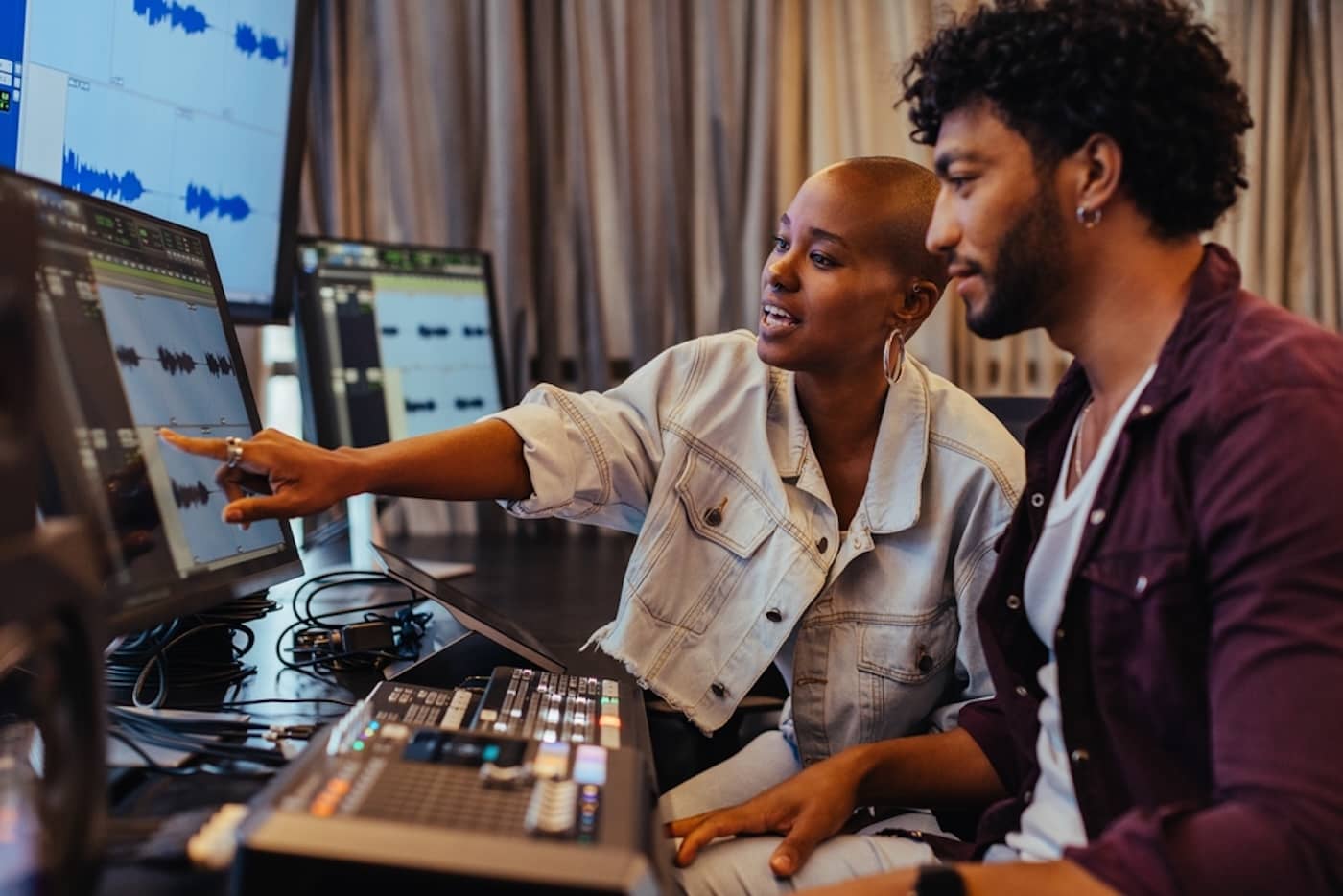
Once a project’s concept has been determined, the producer then liaises with other artists involved in the collaborative process.
Singer-songwriters and musicians will be contacted to arrange studio sessions and review the conceptual notes for feedback.
This process allows the producer to refine the production style based on their input and to share reference tracks when necessary.
It often leads to musical collaborations that shouldn’t have worked on paper, blending distinct sounds into exceptional results.
Learn more: How to read sheet music.
Step 3: Songwriting & Composition
The distinctions between a songwriter and a music producer are sometimes blurred, with producers sometimes handling all aspects.
Whether writing melodies and lyrics or handling production, producers need a basic understanding of music theory.
They are often expected to make decisions surrounding a song’s composition, adjusting arrangements and suggesting alternative chord progressions.
Other aspects of music theory that intersect with the production process, such as dynamic range and texture, are also important.
Step 4: Prepare Your Production Setup
While not every producer is involved in decisions about the song structure or arrangement, all producers work on post-production processes.
Here’s an overview of the core music production setup used for recording music and editing the results ready for release:
Studio Recording Equipment
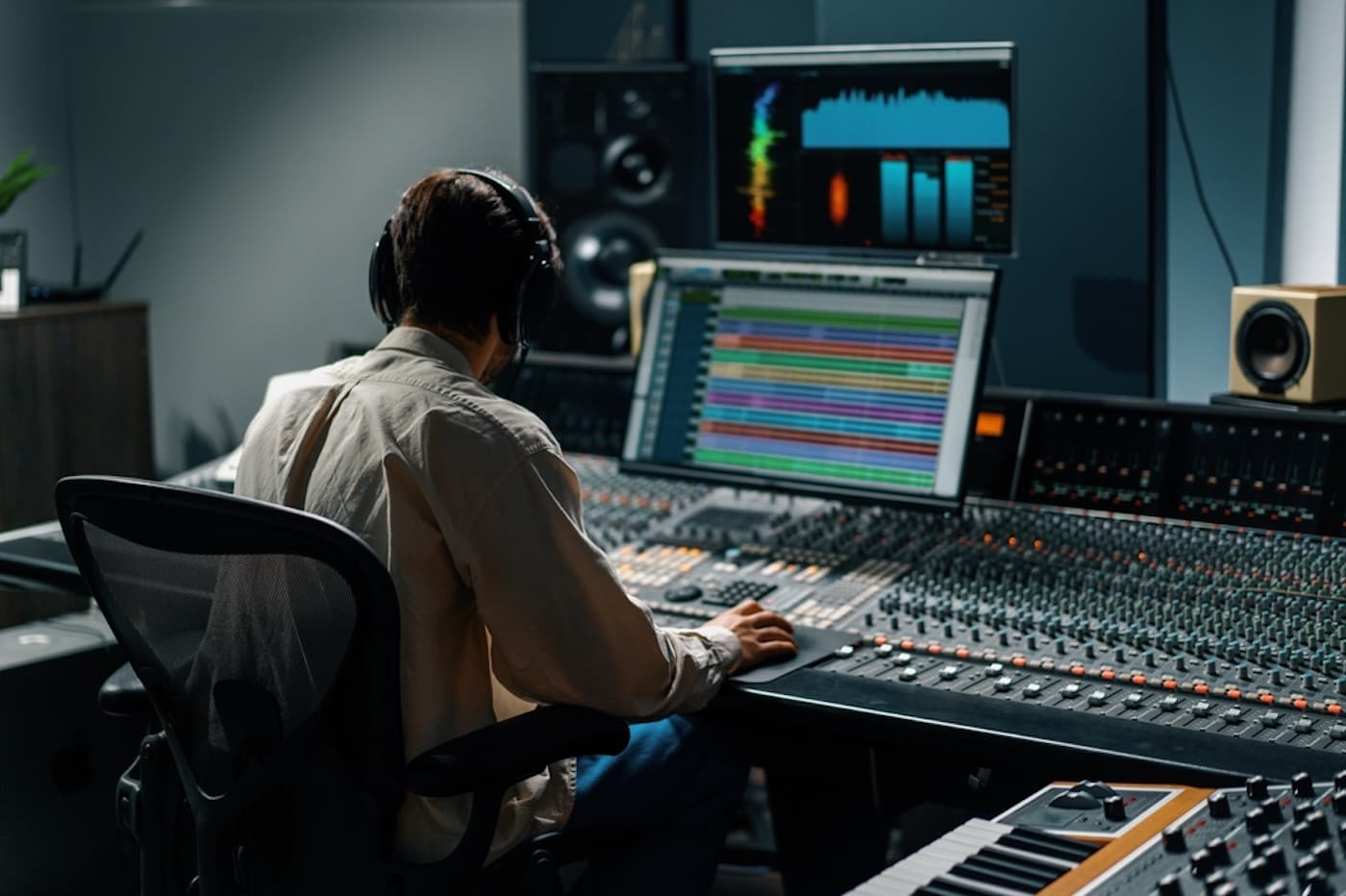
Whether using a professional studio or setting up a home recording studio, equipment is necessary to collect recorded audio.
It includes an audio interface for microphone input and studio monitors to assess the recording quality of vocals and instruments.
Digital Audio Workstations (DAWs)
Audio recordings are then imported into digital audio workstations (DAWs), where they can be fine-tuned in a broader stereo mix.
The best DAWs facilitate the entire workflow, from sequencing recordings and samples to exporting as multiple media formats.
Some modern DAWs also serve as improv partners, with features that suggest new chord progressions, drum sequences, and other elements.
Audio Engineering Tools & Accessories
Additional audio engineering hardware, digital tools, and accessories are also included in studio setups to streamline the process.
These include MIDI-based hardware like keyboards, dedicated mixing consoles, audio analyzers, and acoustic treatment.
Get Early Access
To Promo Hype
Step 5: Record The Tracks
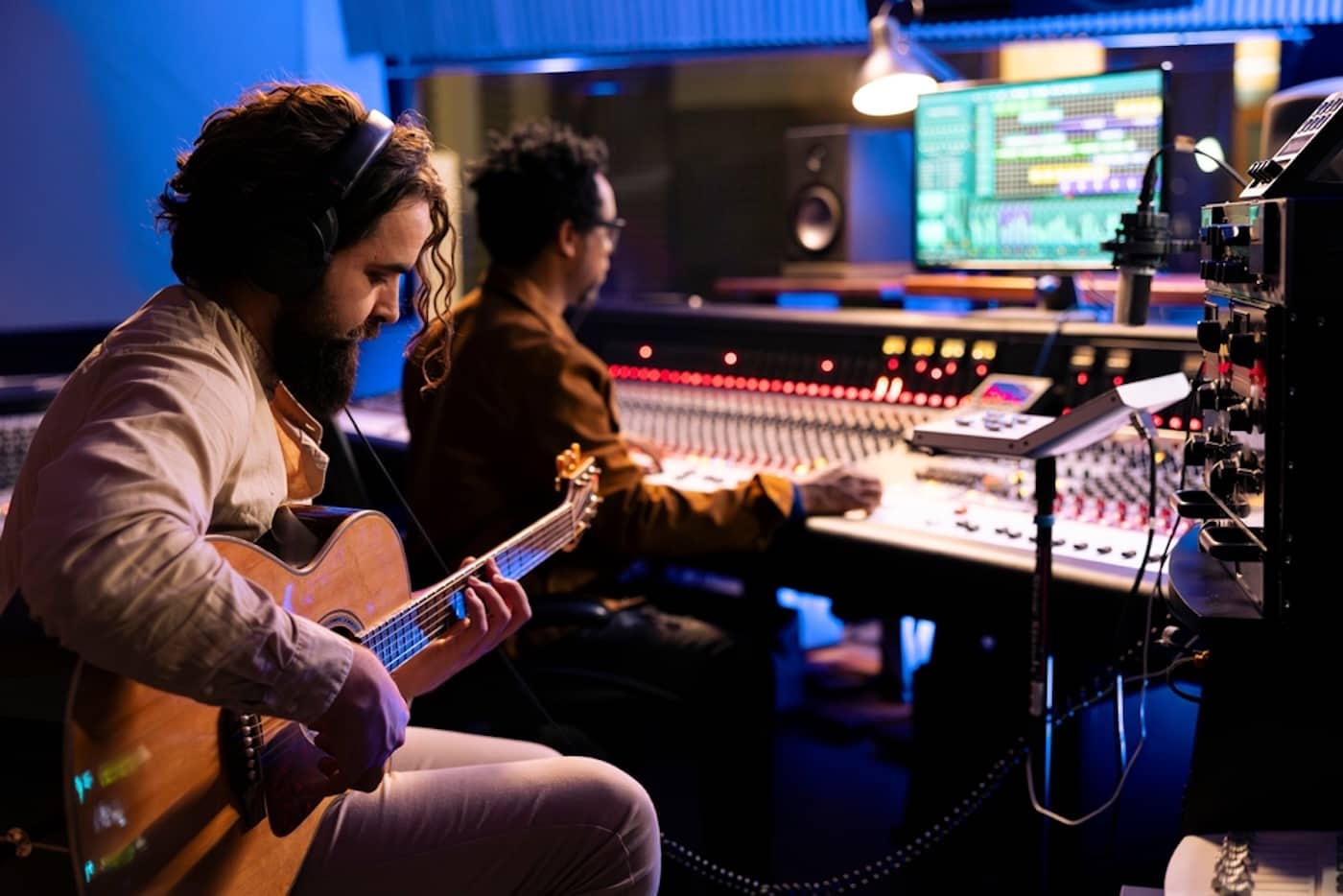
Producers who frequently collaborate with singer-songwriters or bands work closely with collaborators when recording music for projects.
This stage records the live performance of the song, with multiple takes or vocals and instruments to use in the editing phase.
Producers set up microphones for optimal recording quality, provide creative input on performances, and operate equipment.
Step 6: Edit The Recordings
The next phase of the production process involves editing the recorded elements in a DAW based on the song structure template.
Each element is aligned, with timing corrected through quantization or time-stretching, based on the best takes from the recording studio.
The producer may elect to rearrange song elements to improve the structure, adding or removing verses, choruses, or bridges.
Audio elements are also cleaned up in this stage, removing unwanted background elements and other technical imperfections.
Step 7: Mix The Music
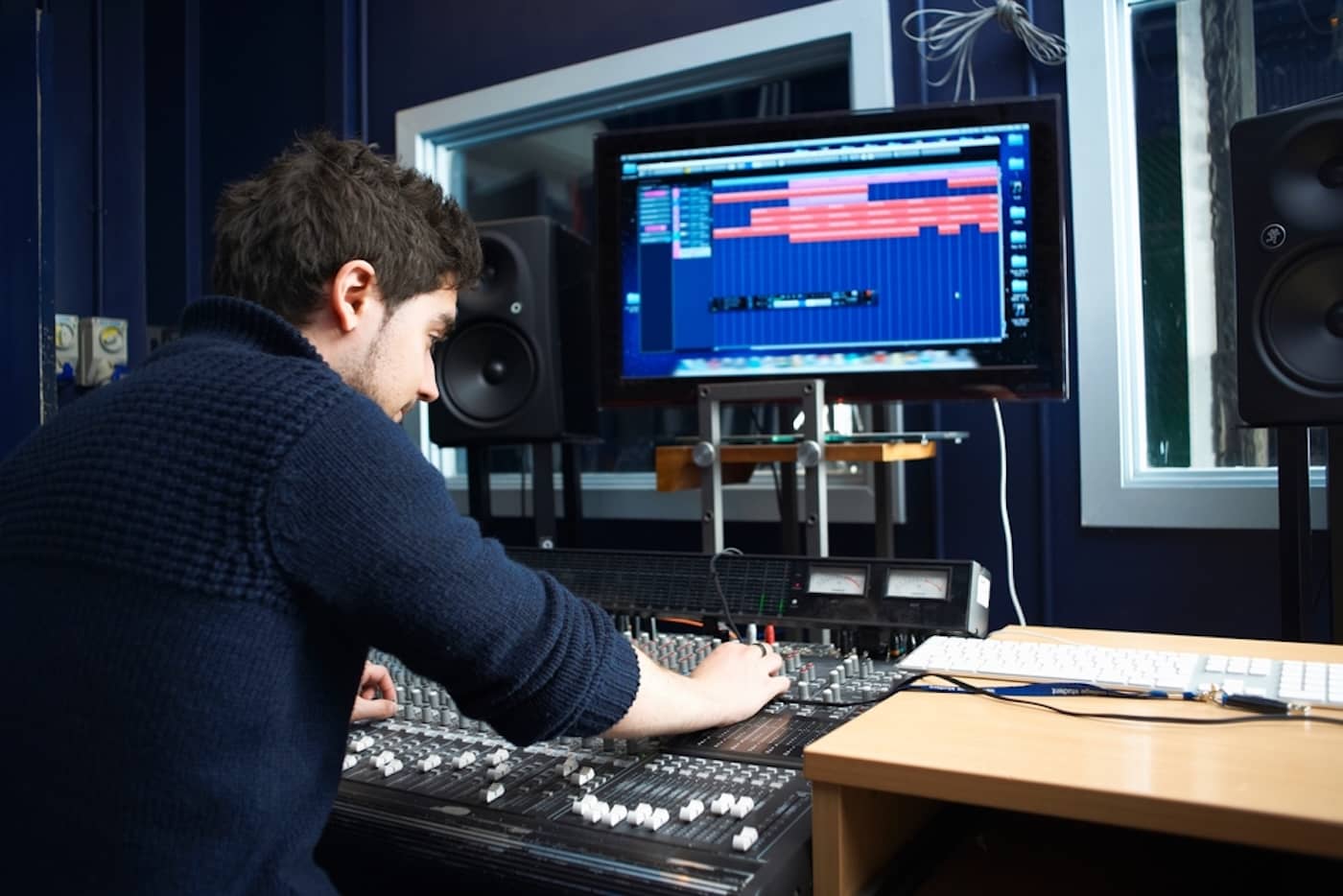
With the song structure finalized, the producer is ready to mix the music, applying effects and equalization to individual elements.
Vocal, drum, and instrument levels are balanced with EQ, and audio compression is applied to control dynamics.
Additional effects, such as reverb, delay, and chorus, are also incorporated to elevate the track’s sense of space and atmospherics.
Often the most time-consuming stage of production, it’s here where the track’s distinctive sound design and texture are forged.
Step 8: Master The Final Mix
If the mixing stage focuses on the micro-level elements of the track, the mastering stage focuses on the overall sound.
Both mixing and mastering utilize similar tools, with mastering applying equalization and compression to the entire track.
The aim is to create a consistent sense of tonality and loudness that optimizes the final master on all playback systems.
Step 9: Protect Your Work
Independent music producers must take steps to protect their work, particularly in an era of AI-generated music.
Doing so makes it easier to make money as a music producer, whether self-releasing or partnering with a record label.
This means understanding music copyright laws, negotiating contracts, and registering with performing rights organizations.
Once these aspects are covered, producers can then maximize their music royalties across multiple distribution channels.
Discover more: How to trademark a band name.
Step 10: Release, Market & Distribute
The final stage of the process is releasing and promoting the music to the public, whether through streaming services or physical media.
Marketing doesn’t require a large budget; many successful artists have gone viral on TikTok and other social media platforms.
Likewise, you don’t need a publishing deal for distribution, particularly if you’re focusing exclusively on digital media formats.
You can use music distribution services to schedule releases on Apple Music, Spotify, TIDAL, and other major streaming services.
Music Production Tools, Software & Resources
While commercial producers work in expensive studios, you don’t need a large budget to begin making your own music.
Here are some popular music production tools and resources to help develop a distinctive sound when producing music:
- Free DAWs/plugins: Free digital audio workstations like GarageBand and Audacity are excellent tools for learning the ropes. You can also pick up thousands of free VST plugins to experiment with virtual instruments and editing processes.
- Online production tutorials and courses: There’s an abundance of resources for learning about production, from YouTube videos to online music production courses.
- Music grants: Some music projects may be eligible for music grants, which can be used to purchase music production gear and instruments or pay for the recording process.
If you’re serious about learning production techniques and have the finances, you can attend a dedicated music production school.
Common Music Production Mistakes To Avoid
The music-making process is complex, and people often make common mistakes when they first start producing music.
Here’s an overview of some common mistakes to avoid when planning your music production workflow:
- Overproducing the track: While music production equipment offers versatile editing choices, overstuffing elements with effects and over-relying on a DAW can dilute the finished results.
- Using poor audio recordings: Whether recording vocals or instruments, it’s vital to get the best possible takes, which can be mixed to enhance sound quality.
- Leaving tracks unfinished: Chasing perfection might seem like a noble goal, but it often results in unfinished tracks that never see the light of day.
By incorporating a range of music production tips into your workflow, you can overcome these challenges and create a balanced sound.
Read this next: How the music industry works.
Music Production Process FAQs
If you still have any questions about the music production process, these answers to FAQs will shed further light on the subject:
How long does it take to produce a song?
Producing music can take anywhere from a day to several months, depending on the genre, number of participants, and other factors.
Electronic music producers often work quickly, while commercial songs can take multiple sessions with lengthy editing phases.
Can beginners learn music production at home?
Absolutely, setting up a home music studio is easier than ever, with free software and affordable hardware like studio monitors and microphones.
If you’re considering starting a music career, mastering a DAW and the basics of mixing music can be achieved at little cost.
What’s the difference between mixing and mastering?
Mixing and mastering are separate stages: mixing is applied to individual tracks, and mastering to the entire song.
You can use free plugins for mixing and mastering sound design to elevate the polish of your music composition.
Summary
The music production process turns creative ideas into complete, professional tracks through a clear sequence of steps.
Once you understand how writing, recording, editing, mixing, and mastering all fit together, producing music becomes far less overwhelming.
By using the steps outlined in this guide, you’ll be equipped to build a workflow that helps you create music that truly reflects your vision and artistic style.
Get Early Access
To Promo Hype
Join Promo Hype



Want the latest Unsigned Advice?
Subscribe to our mailing list to get tips, tricks and hacks straight to your inbox!