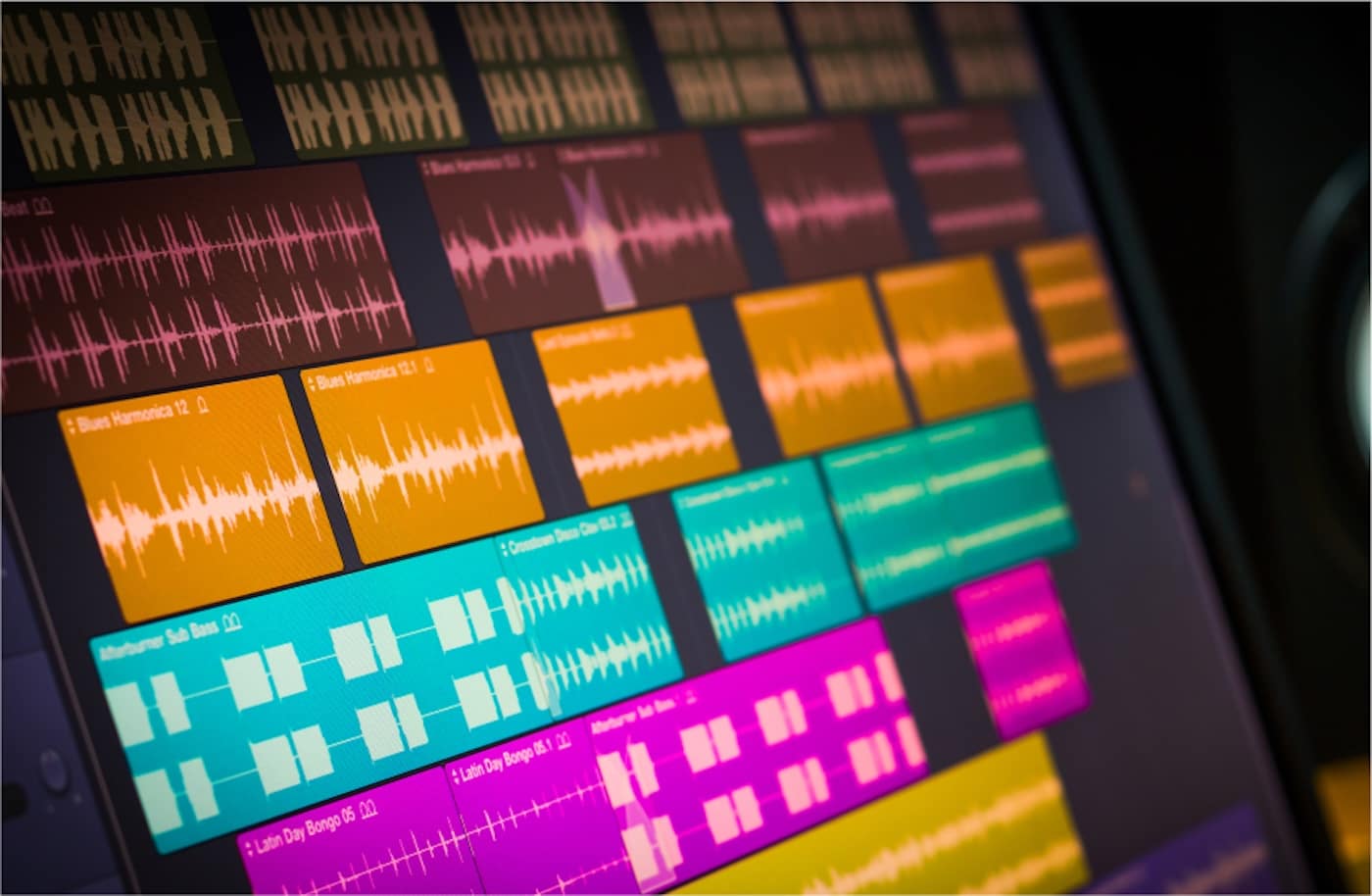
The popularity of music production has created a fertile market for digital audio workstations that allow people to make music from home.
Choosing the best music production software for your needs depends on multiple factors, including budget, music style, and experience.
This guide breaks down the key features of music production software that professionals use to create songs for their audience.
Get Early Access
To Promo Hype
What Is Music Production Software?
Music production software is used to make music on a computer, providing tools for recording, editing, mixing, and mastering tracks.
Often called digital audio workstations, music production software ranges from simple, free-to-use applications to professional software.
Music producers use such software to record audio, such as vocals and live instruments, then input the recordings into the software’s sequencer.
Audio and MIDI tracks can then be refined through various editing tools, adding atmospheric effects to enhance the production.
Individual channels can also be mixed in music production software to create a harmonious balance between each element’s frequency range.
With more music being produced than ever before, the music production software market covers all budget and experience levels.
Check out Promo Hype’s music distribution services.
Essential Music Production Software Features
Music production software incorporates many features for recording, editing, and mastering high-quality tracks.
Here are some of the essential features to research when deciding which music production software to bring to your studio:
- User-friendly interface: The best music production software presents its workflow via an easy-to-understand interface, with customization options to personalize the experience. If collaborating with other
- musicians, look for software with an integrated chat and cloud-based storage for file sharing.
- Audio and MIDI capabilities: Audio and MIDI editing tools are another core feature critical to the music production process. These editing tools allow you to clip, move, and manipulate instruments and audio tracks to create the desired effect for your productions.
- Plugins and virtual instruments: Most music production software allows users to install plugins and virtual instruments to expand their creative potential when producing music. These plugins range from editing tools like reverb and compression plugins to replicas of real-world synthesizers and drum machines.
- Real-time editing tools: Another common feature to look out for with production software is real-time editing tools that allow you to edit elements while they are playing. This element allows for more tactile and intuitive editing and potential for experimentation.
Before investing in music production software, check reviews to verify the workflow and how it fits your preferred style and genre.
How To Choose The Best Music Production Software
Once you’ve written a song and are ready to flesh it out with other elements, you’ll need software to begin producing.
When deciding which music production software is best for your workflow, consider the following factors:
- Available budget and value for money: The first and most obvious consideration is how much you’re willing or able to spend on software, especially if you have a tight budget. Likewise, buying the most expensive software isn’t always necessary, particularly if you’re looking for something more casual and won’t use the advanced features.
- User friendliness and learning curve: The difficulty when learning new software varies between products. If you’re new to production, you’ll want to select one with a shallow learning curve. That said, plenty of online tutorials help master software and speed up the learning process.
- Platform compatibility: Different music production software is compatible with different platforms. While some can be installed on Windows and Mac computers, others are platform-specific. Verify compatibility and performance-related specifications to ensure the software works on your PC.
- Advanced features: If you’re experienced with music production, you’ll need to select software with the relevant advanced features your workflow requires. With AI taking center stage in media production, it’s worth checking whether the software incorporates cutting-edge technologies.
Check out the free version if it’s available and explore the key features and audio interface functionality.
The Best Music Production Software To Use In 2025
Modern music production software can deliver professional results without requiring access to a dedicated recording studio.
Here’s the best music production software used by successful independent artists to create world-class music in their preferred genres:
10. Adobe Audition
While Adobe Audition is aimed toward more general audio editing situations, it can also be a DAW for content creators.
Built around a streamlined editing pipeline for videos and podcasts, it also features audio editing tools that beginners will appreciate.
Music is presented in a Waveform or Multitrack view to assist with mixing, recording audio, and adjusting channel volumes.
It’s simple to use, with a drag-and-drop system that makes adding and cutting clips a dream, and adding markers when necessary.
The mixer can be used to fine-tune exact frequencies, apply noise reduction, and create effects such as delay and reverb.
Adobe also provides access to tutorials and tips to boost your audio editing skills and create professional-sounding results.
While Adobe Audition lacks the full suite of DAW tools, its generalist approach to audio editing makes it ideal for content creators.
9. Reaper
If you’re approaching production on a tight budget, Reaper replicates many of the tools of high-end software at a fraction of the price.
It comes with live recording for virtual instruments, a complete mixing console, and full support for video scoring.
An intuitive menu system allows you to build up your interface and establish a visual style that matches your workflow.
While it’s not as simple as other software, Reaper’s long-term benefits are evident in its extensive selection of editing features.
Building up track lists and applying effects doesn’t take long to master, while the selection of tools covers all the bases.
Standard manipulation tools like reverbe, sustain, and delay are expanded with in-depth compression tools for professional mastering.
Reaper’s EQ controls are designed for complex routing schemes. They also include comprehensive Rea VST effects and vocal pitch correction.
It’s an affordable yet versatile production suite allowing live instrument recording and editing with feature-rich performance.
8. Studio One
Studio One by PreSonus has been refined over the years to streamline the workflow for beginner and professional music production.
It presents a fast workflow for recording, editing, and mixing songs and comes with robust composition tools to help with songwriting.
Users can use the chord- and pattern-based tools to refine and improve their song structure, enhancing melodies and chord progression.
The straightforward user interface enhances this process by allowing you to reposition menus and dialogs to your liking.
Studio One also has a selection of Smart Templates for various project types, suggesting appropriate names and data.
It also supports the open-source DAWproject format, making it easier to collaborate with other producers.
This makes sharing editable MIDI data and plugin settings easy, delivering a unified production quality across platforms.
Upgrade to Studio One Professional and live performance tools are available through the software’s MainStage hub.
These include managing backing tracks and changing instrument patches, with extensive metering and effects plugins.
Studio One even includes Dolby Atmos mixing capabilities for musicians considering multichannel production for music videos.
7. Magix Sequoia Pro
Producers working on PCs have plenty of software to choose from, but Magix Sequoia Pro is one of the most powerful.
More than just a music production software, its tools can be used for mixing movie scores to performing professional audio restoration.
As a fully-fledged DAW for musicians, Magix Sequoia Pro covers all the bases, with real-time plugins, in-depth mixing, and mastering tools.
These features allow for impressive editing finesse, with EQs, time and pitch automation, and plugins to enhance dynamics.
Everything is managed through a neat user interface, with a streamlined exporting process for individual and multiple projects.
Audio recording and editing is also of the highest quality, with an advanced crossfade editor and 32-bit float at up to 384kHz.
There is an impressive amount of third-party support for Magix Sequoia Pro, which provides additional functionality such as stem splitting.
These tools come bundled at purchase, increasing the software’s value for money and long-term benefits for users.
Magix Sequoia Pro is expensive, but producers looking for high-end tools and features for restoration will find plenty to love.
6. Reason
Reason is one of the most established tools for music production, a music industry staple for several decades.
Providing an all-in-one recording and mixing platform, producers often use Reason for dance music and hip-hop.
This decision is due to its selection of bundled instruments, versatile sound sets, and different features for editing and mixing tracks.
Reason also features the Mimic sampler tool, which considerably expands creative options for recording and editing samples.
While the user interface is clunky, users can easily customize it to streamline their production workflow.
Blue and Dark themes are available for a new aesthetic, and synth ranks, instruments, and effects can be moved around the screen.
Reason’s selection of instruments is first class, with rich-sounding synths for vibrant lead melodies and engulfing chords.
Samples can be easily imported into a wavetable and enhanced through various tools, with excellent presets for beginners.
These tools have established Reason as a solid platform for electronic music, particularly among retro-inspired producers.
While there are better alternatives for recording live instruments, Reason’s impressive tools set it apart for creating dance music.
Get Early Access
To Promo Hype
5. Cubase Pro
Like Reason, Cubase has been a long-standing player in the music industry for high-quality production tools and features.
With roots in MIDI production, Cubase Pro has a powerful suite of editing options for complex tracks with many channels.
There’s an Inspector tab to streamline processes like quantizing and transposing, with instantaneous adjustments of many parameters.
Cubase Pro also has features that incorporate elements of music theory, creating harmonies and chord tracks with ease.
When recording audio, Cubase uses a 64-bit audio engine that supports 5.1 surround sound and 32-bit, 192 kHz recording.
Combined with the lack of limitations on MIDI and audio tracks, this makes it capable of high-end production that goes beyond music.
Bundled instruments are eclectic, with several workstation synth plugins and acoustic instrument samples to work with.
4. Pro Tools
Professional music, movies, and game audio production studios frequently use Avid’s Pro Tools on commercial projects.
Pro Tools covers all music producers’ needs through a robust audio editing workflow and powerful 64-bit engine.
It’s suitable for any skill level with plenty of support for external hardware and powerful, seamless editing features.
The Pro Tools instrument bundle includes a selection of synthesizers and a sequencing drum machine for creating beats and composing melodies.
There’s also the PlayCell virtual instrument for quick sample playback and editing, along with a decent library of sounds.
Pro Tools includes a handy pop-out MIDI editor window for fine-tuning compositions and a dedicated Score Editor.
Mixing and other post-production processes are also ably handled in the software through the comprehensive Mixer window.
If you’re considering audio production for videography, Pro Tools is among the best software in this category.
It supports Dolby Atmos and Apple Spatial Audio monitor mixes and industry-standard metering for broadcast requirements.
3. FL Studio
Another popular DAW with deep roots in the industry is FL Studio, which became hugely successful in the early 2000s.
While the original Fruity Loops focused on loop creation, the latest iteration provides a full-scale production pipeline for producers.
The same compositional tools remain, albeit with significant enhancements and additional tools for arranging and mixing tracks.
There’s a suite of editing features for audio compression, EQing, and adding unique effects to instruments, vocals, and drums.
FL Studio is available in various versions, with the complete All Plugins edition offering the most scope for music production.
This version covers everything from the Vintage Phaser for guitar pedal emulation to the disco-inspired Jarre synth.
As such, FL Studio provides everything to make professional tracks, and its shallow learning curve enhances its accessibility.
2. Apple Logic Pro
Apple Logic Pro is another commonly used DAW for Apple devices, with a customizable interface and impressive production tools.
While Logic Pro’s learning curve is steeper than that of alternatives, a simplified mode option helps beginners learn the ropes.
On the other hand, experienced producers can step through this setting, jump into Advanced mode, and access the full features.
With Logic Pro, there’s plenty of scope for creating unique compositions, with extensive key and MIDI commands for experimentation.
It includes approximately 6,000 instruments and effects patches, combined with an outstanding 1200 sampled instruments.
Throw in another 14,750 Apple Loops, and Logic Pro’s appeal is evident, saving time gathering assets to focus on music making.
It’s an exceptional DAW for Mac users, sporting streamlined features for smart workflows and support for the Ableton Link protocol.
1. Ableton Live
Ableton Live needs little introduction, a contender for the most popular and flexible music production software currently available.
Used to produce music or for live music events, it’s packed with plugins that include lush instruments, robust effects, and manipulation.
Everything is controlled via the crisp user interface, with Session and Arrangement modes depending on a given project.
If you’re producing electronic music, Ableton Live includes many powerful settings that can enhance your performance in a live setting.
This system includes real-time audio manipulation and editing, automatic beat matching, and other DJ functions.
While Ableton Live is approachable, online tutorials and music production schools are available to help users learn it.
You can also access documentation and support directly from Ableton, saving countless hours wading through online tutorials.
Join the Promo Hype community.
Free Music Production Software Alternatives
If you can’t afford to invest in dedicated production software, there are plenty of free options to begin your creative journey.
Here are some free music production software alternatives that cover the core features needed to create a complete track:
Audacity
Audacity has made a name among producers looking for free music production software built around open-source development.
It features excellent audio editing tools and multiple-track playback, with batch processing for high production volumes.
The bar-beat grid makes producing for popular music genres easy, with time-stretching loops and tempo assisting beginners.
While Audacity isn’t up to fully-fledged DAWs, its core tools provide a segue into production and can also help with podcasts.
Waveform
Waveform by Tracktion is another well-regarded and completely free DAW that users find intuitive and easy to use without compromising features.
A linear DAW, Waveform’s intuitive interface and professional tools offer plenty of depth, from full automation to MIDI editing.
It comes with two bundled instruments, a drum machine and a synth, with support for third-party plugins expanding the selection.
You can also upgrade to a paid version, considerably expanding its range of editing tools and performance capabilities.
GarageBand
Mac users looking for a free DAW can begin their creative journey with Apple GarageBand, which is available on every Mac.
With a streamlined interface and a range of Producer Packs, it’s among the most novice-friendly DAWs for Apple users.
Producers looking to learn instruments can use GarageBand’s built-in lessons to improve their skills and record audio in the software.
It’s also excellent for learning music production software basics, with a console mimicking Logic Pro used in professional studios.
GarageBand even includes various mastering features, which other free music production tools often lack.
Cakewalk
Another popular free music production application for musicians is Cakewalk, created by BandLab to assist with compositions and recordings.
With its focus on bands, Cakewalk’s unlimited audio and MIDI tracks make it ideal for recording and editing pristine-sounding songs.
The software includes a raft of pro-studio sounds for crafting dynamic mixes and mastering tools for additional polish.
Cakewalk also includes direct export to YouTube, SoundCloud, and Facebook to help musicians promote their releases.
LMMS
Our last selection for free software is LMMS, another expanding open-source application with polished production features.
Its easy-to-use interface is suitable for beginners but retains enough depth for more experienced producers to explore.
LMMS is compatible with Mac and Windows computers. It includes a complete sequencer and built-in instruments, plugins, and presets.
There’s also full support for VST and SoundFont formats and features a lively community for anyone looking for advice.
Distribute & Promote Your Music With Promo Hype
Completing a new track with music production software is the first step toward a career as a successful independent artist.
Once you’re ready to promote your music and build an audience, Promo Hype services can help with:
- Distribution across all major streaming platforms: Reaching an international audience means navigating multiple streaming platforms. Promo Hype allows you to instantly reach Spotify, Apple Music, TIDAL, and more.
- Comprehensive promotion tools for releases and live shows: Promo Hype members can access the Promotional Toolkit to unlock powerful marketing tools. Drive your audience to new releases and announce upcoming live performances.
- Community support and insights: If you’re struggling with production or want to build a network, Promo Hype’s Community is here to help. Chat with like-minded independent artists and share tips and advice.
- In-depth data analytics and performance monitoring: Growing a fan base is easier when you can analyze the performance of your releases. With Promo Hype’s dashboard, you can gain real-time insights into what your audience listens to most.
With members retaining 100% royalties from all platforms, Promo Hype provides everything independent artists need to succeed.
Summary
DAWs are vital for music creation, providing access to virtual instruments and features that deliver professional results.
The music production software in this guide has a track record, with industry-standard features and editing tools.
If you’re unsure which to choose, use free trials and produce music before investing in the complete version. Test what suits your workflow, then build from there.