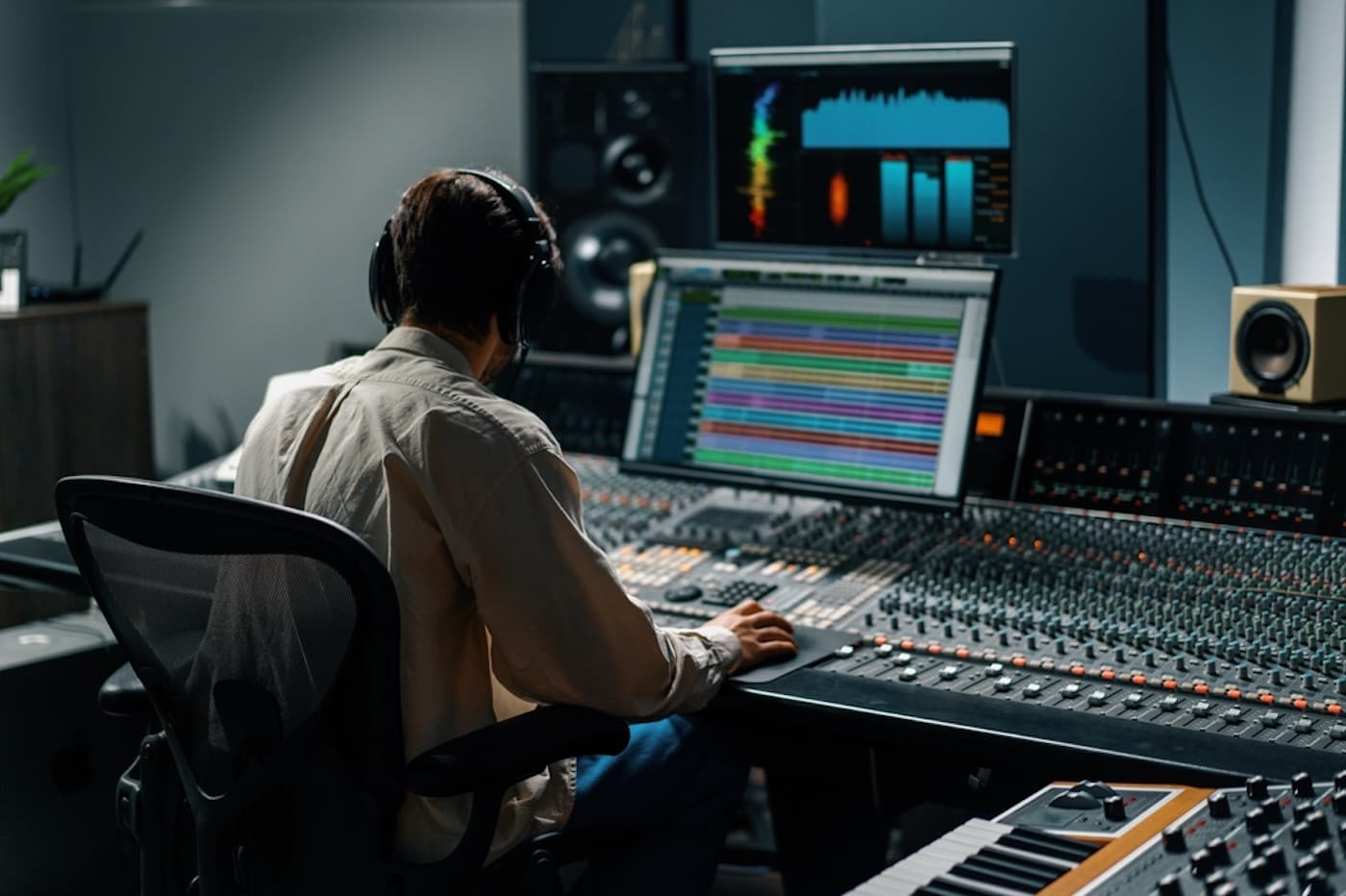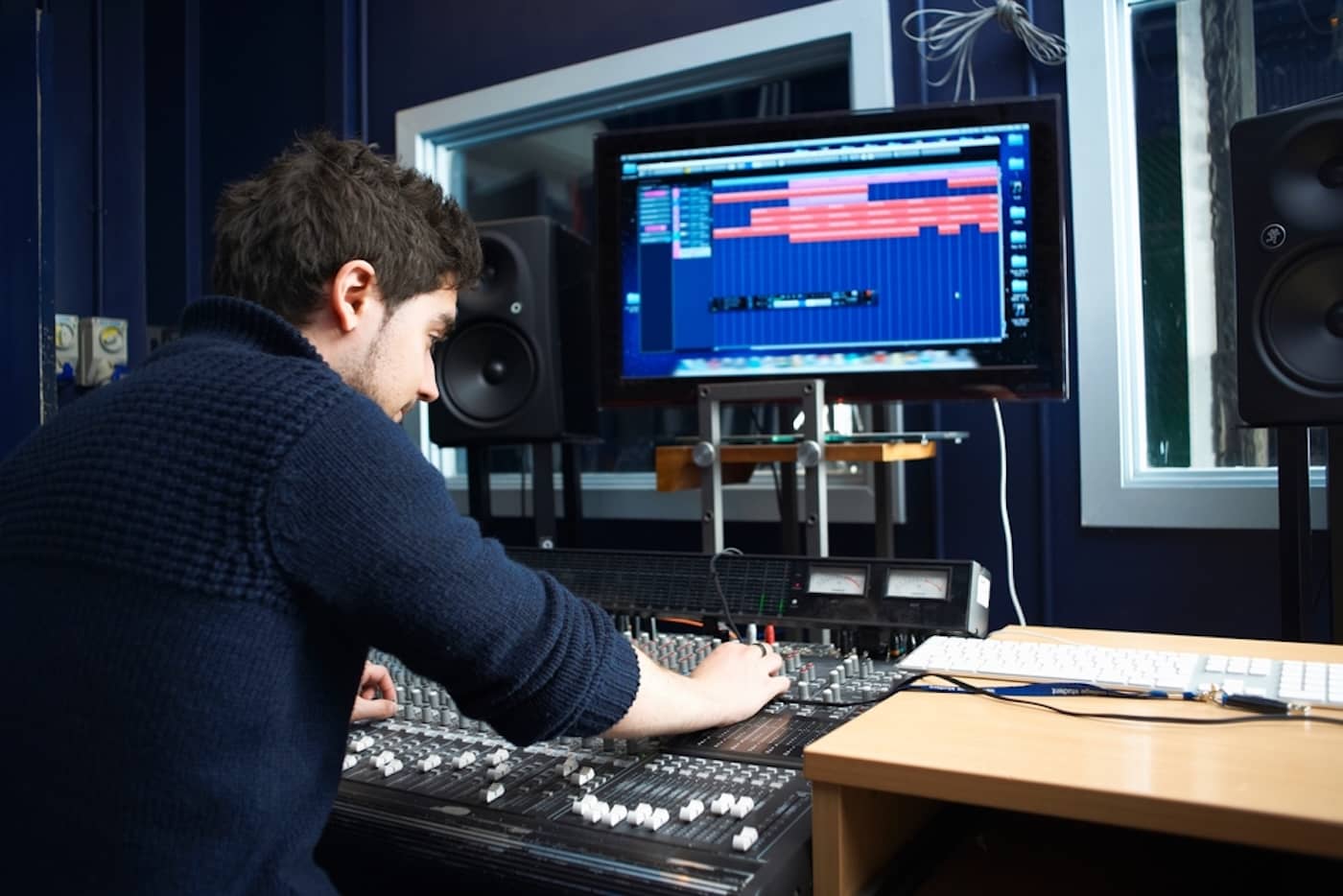
Songwriting software can help you turn rough ideas into fully developed songs by giving you practical tools to shape lyrics, melodies, and overall song structure.
Whether you’re just starting out or refining your sound, using the right songwriting tools can significantly improve how you approach writing and arranging music.
This guide breaks down the best songwriting software and tools to support every stage of the creative process, from early ideas to finished productions.
Get Early Access
To Promo Hype
What Is Songwriting Software?
Songwriting software refers to tools designed to help musicians write a song, whether it’s exploring lyrics or complete music production.
Applicable to all popular music genres, songwriting software begins with basic aids to help you write lyrics, such as rhyming dictionary tools.
It also encompasses other aspects of composition, such as structuring songs, suggesting chord progressions, and writing melodies.
Types Of Songwriting Software
We’ve touched briefly on the various types of software you can use for the multiple stages of the songwriting process.
Here’s an overview of these software types in more detail and how they can help you make music that sounds professional:
- Lyric writing generators: Basic tools to help with writing lyrics and overcoming writer’s block can be used to explore themes, discover rhymes, and build up your lyric writing skills.
- Tools for chord progressions and melodies: More complex tools that can help with song structure are also available, suggesting chord progressions and sketching out melodies.
- AI-powered software: If you want a shortcut to get quick results, you can use AI-powered tools to assist with the generation of musical ideas, which you can then edit.
- Digital audio workstations (DAWs): For complete control over the songwriting process, including production, a DAW is a must.
You can also explore powerful songwriting tools for notation, such as MuseScore and Sibelius, when creating classical music compositions.
Learn more: Top 10 music production tips for beginners.
Benefits Of Using Songwriting Tools
Different songwriting tools can be used throughout the creative process and help up-and-coming artists become top songwriters.
Here are some of the key advantages of using software throughout the songwriting process to fully express your ideas:
- Streamlining the songwriting process: Tools are an excellent way to simplify a range of processes, whether tracking lyrics and chord progressions or keeping on top of musical ideas.
- Learning music theory: Some of the best songwriting tools include music theory features that can highlight theoretical concepts and help you master the basics.
- Facilitating experimentation and creativity: Combining tools can significantly enhance your creative process, enabling trial-and-error in your compositions.
- Opening up music production skills: Once your song ideas are formulated, they can be extended to broader music production processes, mixing and mastering your recordings.
By polishing your song ideas with powerful tools, you can create and submit music to radio stations that compares favorably to professional releases.
The 10 Best Songwriting Software & Tools
Whether you’re entirely new to songwriting or honing your established skills, there’s an abundance of software to help you develop.
Here are our picks for the top 10 songwriting tools you can use, from accessible, beginner-friendly options to pro-level software:
10. Moises
Dubbed an “AI bandmate,” Moises offers a wealth of powerful tools to assist with songwriting, performance, and production.
There are audio separation tools for isolating vocals, percussion, and other elements of the song, as well as smart tools like metronomes.
Head over to the AI Studio feature, and Moises transforms into a basic DAW that generates arrangements to support the user’s ideas.
The software even includes a built-in sessions musician to help creatives flesh out complex ideas with polished results.
9. ChordChord
If you’re struggling with chord progressions, ChordChord is the one-stop shop for mastering harmonic sequences in your songs.
You can select a key and scale, and the tool will generate a range of sequences, with AI suggestions for building progressions.
You don’t need to know about the circle of fifths to use ChordChord, with easily adjustable instruments and tempo presets to explore.
The software also includes additional songwriting tools for lyrics, suggesting rhymes and styles based on your requirements.
8. Suno AI
One of the most popular AI music production tools is Suno AI, which can generate complete songs based on the user’s descriptions.
Add your requirements for the song’s genre and theme, and the tool will auto-generate songs up to 8 minutes long, depending on the version used.
Head over to the web-based Suno Studio to find additional tools for mixing music, including stem separation and advanced editing.
It’s an increasingly popular option for helping with songwriting in the early stages and for building a consistent artist persona.
Recommended read: How to record music.
7. Guitar Pro
If you’re using an acoustic guitar for songwriting, the aptly-named Guitar Pro is an essential tool for musicians of all skill levels.
It can be easily integrated into a home recording studio, with extensive support for instruments to create tabulations and scores.
There’s robust audio track integration to introduce backing tracks and percussion, with easy tools for syncing these assets.
Guitar Pro is also adept at general practice sessions, with a built-in metronome and visual countdown, along with loop sections.
6. BandLab SongStarter
Another powerful and popular AI-powered music generation tool is BandLab SongStarter, which can be used to create royalty-free patterns.
Artists concerned about AI can use SongStarter to signal their interest in AI licensing and potentially earn money through their creations.
It works by selecting a customizable prompt, inputting your desired genre, and providing additional instructions to inform the style of music.
Once your ideas have been generated, you can export them into music production equipment and edit the results as MIDI tracks.
5. Masterwriter
The cloud-based creative software Masterwriter is aimed squarely at dedicated songwriters through its comprehensive language reference tools.
With extensive linguistic search tools and access to specialized dictionaries, it enables creative lyrics with powerful synonyms and descriptive words.
Masterwriter includes a detailed database of pop culture references, along with extensive curated reference databases.
You can also use the internal recorder to capture lyrics and voice memos in real time, enhancing your project workflow.
Get Early Access
To Promo Hype
4. Hookpad
Another powerful cloud-based tool for songwriting is Hookpad, which blends music theory features with AI-powered suggestions.
Tools like the Magic Chord Palette can help with chord progressions, while the library of virtual instruments enhances their expression.
Hookpad also features DAW integration, allowing writers to adjust the song structure template and explore new arrangements.
There’s even an option to export sheet music and guitar tabs, enabling streamlined collaboration with other musicians.
3. Autochords
As the name implies, the Autochords tool is a comprehensive chord progression generator for various instruments.
Suitable for beginners and professionals, the tool’s accessible learning curve is matched by its in-depth features for seasoned songwriters.
It works by selecting your key and musical style, with the app then generating chord progressions for the main section, bridges, and solos.
Dubbed by the developers “the ultimate songwriting cheat sheet,” it’s ideal for songwriters working on piano or guitar.
2. Ableton Live
One of the best music production software programs on the market is Ableton Live, which delivers a complete creative suite for music makers.
Ableton Live can be used to record live sessions, trigger musical clips, and experiment with melodies and chord changes.
These can be easily reconfigured using the platform’s MIDI system, and the program can convert audio to MIDI.
The software has also expanded to include comping, which stitches multiple recordings together by selecting the best takes.
1. Logic Pro
The go-to software for many songwriters, Logic Pro has been widely adopted by successful independent artists across multiple genres.
It features an intuitive user interface, an extensive library of sounds, and plenty of tools for arranging and composing music.
In addition to tools for arranging compositions, there are also many free VST plugins for adding instruments and polishing the overall production.
You can use the session players tool to get realistic percussion and basslines without needing in-person musicians to join your project.
The UI also includes arrangement markers to help break songs into verses, choruses, and bridges, enabling instant structural changes.
There are also handy tools for correcting vocal pitch, with Flex Pitch and Flex Time rectifying mistakes from recording sessions.
Once you’ve completed a song, Logic Pro allows you to save it as a template, further streamlining the songwriting process on new projects.
Further reading: The 10 best DAWs.
Pro Tips for Getting the Most Out of Songwriting Software
Songwriting software has multiple applications that can deliver highly complex results and save considerable time.
Here are some pro tips for exploring songwriting ideas in software to create beautiful music that could become hit songs.
Experiment With Lyric Writing
Writing lyrics is all about expressing sincerely felt emotions in a way that resonates with your core audience.
It begins with using similar-sounding words for rhyming conventions, but doesn’t have to be constrained by these conventions.
Many record labels seeking artists look for artists who can write songs that reflect their distinctive brand and persona.
This means cultivating an approach to writing your own lyrics that echoes your personal style and unique voice.
Learn Music Theory
Understanding the basics of music theory provides a firm foundation on which your songwriting skills can evolve.
This theoretical foundation can improve your ability to write melodies that take the listener on a journey, complemented by other instruments.
You can also consider learning how to read sheet music, which can be pivotal when collaborating with other musicians on your projects.
Explore Chord Progressions
With many different types of chords to explore, mastering how chord progressions fit within the composition process is essential.
Start with basic chord progressions, then experiment with applying more unusual ones used in genres like jazz.
You can also experiment with other compositional methods, such as phrasing and dynamics, creating contrast with your lead melodies.
Work On Collaborations
Songwriting is often a collaborative practice, and working with other artists can help you learn new techniques and writing shortcuts.
If you’re a singer-songwriter, team up with musicians who play relevant instruments and collaborate on new song ideas together.
Your collaborators can offer up fresh perspectives on songwriting, suggesting new ways to tackle the creative process.
They can also help promote your music through their social media channels once the track has been released.
Related reading: The 10 best music production schools.
Songwriting Software FAQs
If you still have questions about the best songwriting tools and software, these answers to FAQs will help clarify some additional points:
What software do most artists use to make music?
Many established songwriters share processes with music producers, using digital audio workstations to develop their musical ideas.
This is often done with software such as Pro Tools and Logic Pro X, which both include powerful recording tools.
What is the best software for making house music?
Software used by many electronic music producers includes Ableton Live and FL Studio, though other DAWs are well-suited to these genres as well.
Cubase is often used for dance music releases, while Reaper is a budget-friendly option for newcomers finding their feet.
Which software is best for composing music?
If you’re focused on classical, jazz, and movie score composition, notation-focused software like Sibelius is widely used to create music arrangements.
For more general compositions, Pro Tools and Logic Pro X are packed with a vast array of virtual instruments for fully-fledged arrangements.
Summary
Songwriting software gives you the tools to turn ideas into complete, polished songs by supporting lyrics, chord progressions, melodies, and production within a single creative workflow.
Whether you’re developing early ideas or refining finished tracks, using the right songwriting tools helps you write more efficiently, stay creative, and maintain momentum throughout the process.
By choosing software that matches how you work, you can strengthen your songwriting skills and confidently bring your musical ideas to life.
Get Early Access
To Promo Hype
Join Promo Hype


Want the latest Unsigned Advice?
Subscribe to our mailing list to get tips, tricks and hacks straight to your inbox!