Behind every chart-topping hit and underground classic is a complex process involving numerous skilled professionals working together to craft the perfect sound. One key figure guides the project from concept to completion.
That person, the music producer, is often the industry’s unsung hero, who has enormous influence over how songs sound when they reach our ears.
If you’re interested in breaking into the music industry or curious about how contemporary songs are created, we examine the role of a music producer.
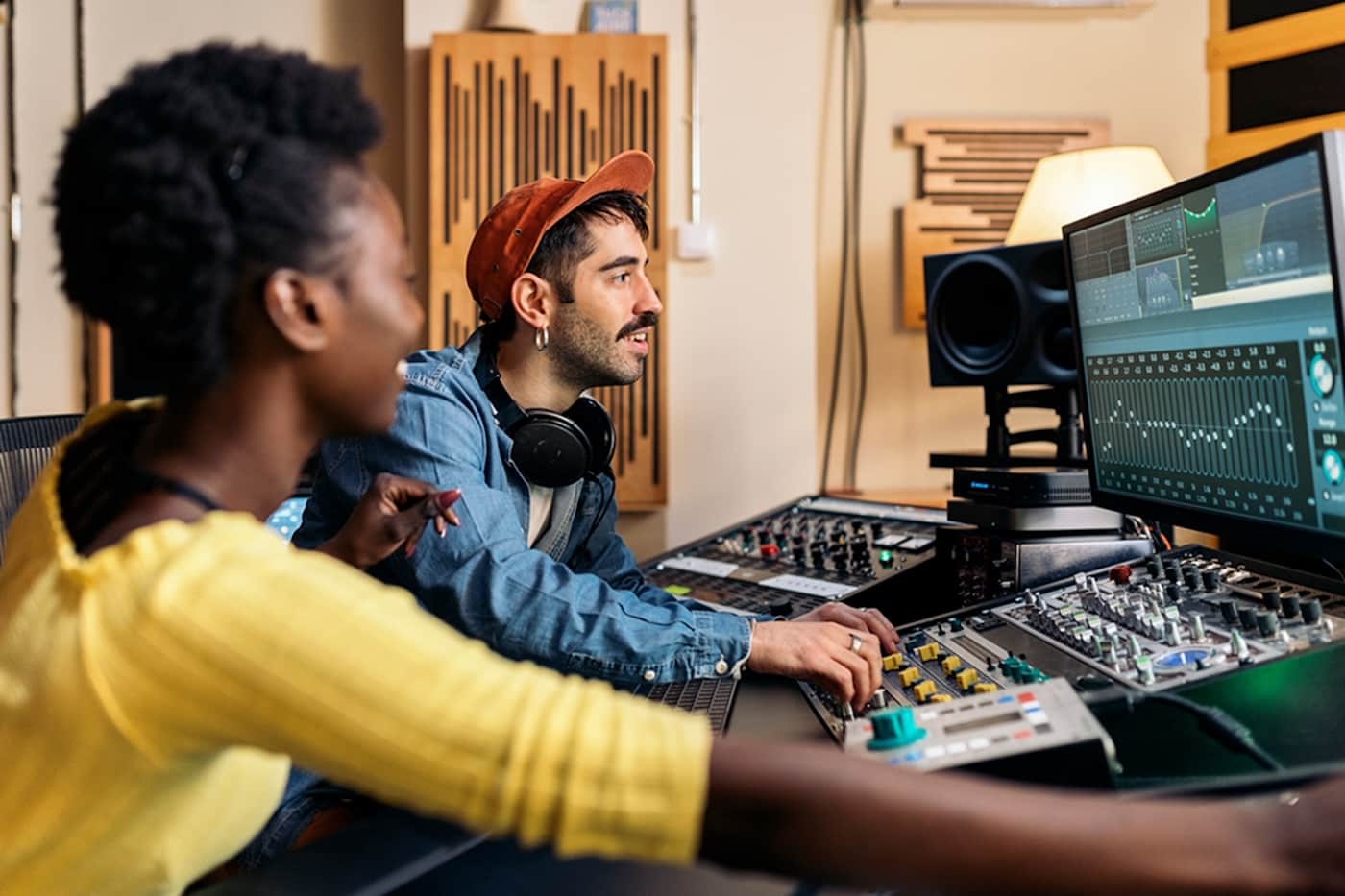
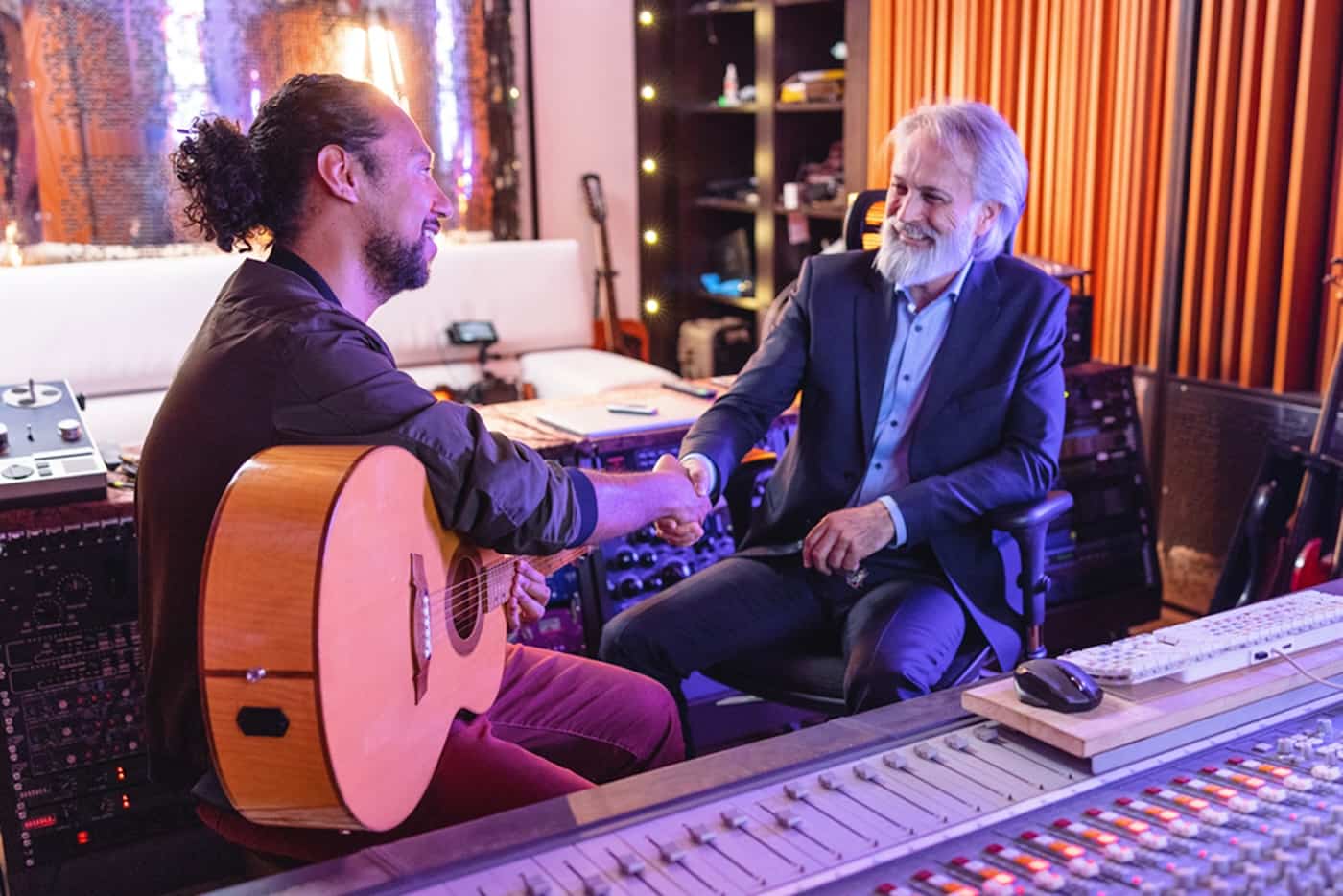
In the simplest of terms, a music producer is the creative and technical leader who oversees the creation of a musical recording. They are the visionary behind the sound, the coach for the performers, and the technical expert who brings it all together.
Music producers work closely with artists to refine raw musical ideas into polished and professional recordings. You could say they are the film directors of the music world; they guide the overall creative process while managing all the technical aspects to bring it to life.
What Does A Music Producer Do?
A music producer’s responsibilities are vast and varied, touching every aspect of the recording process. They wear many hats, including those of creative consultants, technical experts, project managers, and performance coaches.
The role changes depending on the genre, the artist, and the specific project goals. Some producers are heavily involved in songwriting and arrangement. Others focus more on capturing perfect performances or crafting innovative sounds with some of the best music production software in the industry.
Music Producer Skills And Responsibilities
The best music producers tailor their approach to each project’s specific needs. They possess a unique combination of creative vision, technical expertise, and interpersonal abilities.
Producers’ skills have been developed through years of experience, learning, and a genuine passion for music. They must understand the artistic and business aspects of creating music and the structure of songs.
Music producers are often musicians in their own right. They will have an understanding of music theory and structure, which they use to create a professional sound.
Successful music producers develop a broad skill set to navigate the complex challenges of bringing projects from concept to completion. Here’s a breakdown of the skills and responsibilities of a music producer.
1. Schedules Recording Sessions
One of a music producer’s responsibilities is planning and scheduling all the necessary recording sessions. This process requires coordinating the availability of artists, session musicians, recording studios, and technical staff.
Producers must determine the time required for each project phase, from pre-production rehearsals to tracking various instruments, vocal recording, mixing, and mastering. Careful scheduling ensures that studio time is used efficiently and the project stays within budget and timeline.
Music producers will often control the financial aspects of a music project. They help to allocate the budget and manage expenses, including studio rental, equipment, musician fees, mixing, and mastering.
For independent artistswith limited resources, producers must be especially creative in maximizing value while minimizing costs. Managing the budget may involve prioritizing which elements receive the most investment or exploring innovative alternatives to more expensive options.
Being smart about budgeting helps to direct financial resources where they’ll have the most impact on the finished product.
3. Builds The Team
A skilled producer will assemble the right team, usually including an audio engineer, assistant producer, arranger, and programmer. Projects will also use specialized technicians for specific instruments or effects.
The producer assesses the project’s needs and recruits individuals with the necessary expertise. Building an effective team also means fostering a collaborative environment where everyone shares a clear understanding of the vision and works cohesively toward achieving it.
Established music producers will have a vast network of skilled professionals. As a budding music producer, growing and developing your contacts will pay off in the long run.
4. Hires Session Musicians
Most recording projects will require additional musicians beyond the leading artist or band. Music producers identify the instruments or vocal talents needed and bring in the right musicians to fill these roles.
Session musicians are typically incredibly talented individuals who possess a deep understanding of how to make good music.
Session players are selected not only for their technical ability but also for their stylistic compatibility with the project. They can add crucial elements to recordings, including string sections, horn arrangements, and instrumental solos.
5. Arranges The Songs
A music producer’s job is to help arrange songs to maximize their impact. Decisions about arrangement involve structure, instrumentation, dynamics, and pacing.
Producers might suggest extending a chorus, adding a bridge, changing the key, or altering the rhythm to make a song more compelling. Making the right arrangement choices will impact how listeners experience the music.
A skilled arranger knows how to produce music that builds tension and release, creates emotional arcs, and highlights the most essential elements of a song. The most successful music producers can transform a basic song through thoughtful arrangement into something that resonates powerfully with audiences.
6. Coaches The Artists
One key role of a music producer is coaching performers to deliver their best possible work. Effective coaching involves providing constructive feedback and suggesting techniques for improvement.
It is also essential that the artist feels comfortable performing and taking risks. A producer will help create an environment enabling artists to showcase their talents fully.
Producers need to know when to request another take and when a performance has achieved the right emotional quality. They bring out authentic, emotionally compelling performances that connect with listeners.
A great music producer often helps artists tap into their genuine feelings during a recording session. Many successful independent artists credit experienced producers for helping shape their sound.
Technical skill is part of a producer’s creative toolkit. While many producers work with dedicated audio engineers, most also possess strong, specialized knowledge.
Knowing the proper microphone selection, placement, signal processing, and mixing techniques helps producers achieve their vision.
Clever and innovative sound design is essential in modern music productions. Producers often create unique sounds through synthesis, sampling, and processing that become signature elements of the recording.
The technical aspects of music production have become an art form. A music producer’s job is to craft musical landscapes that are just as important as the notes and lyrics.
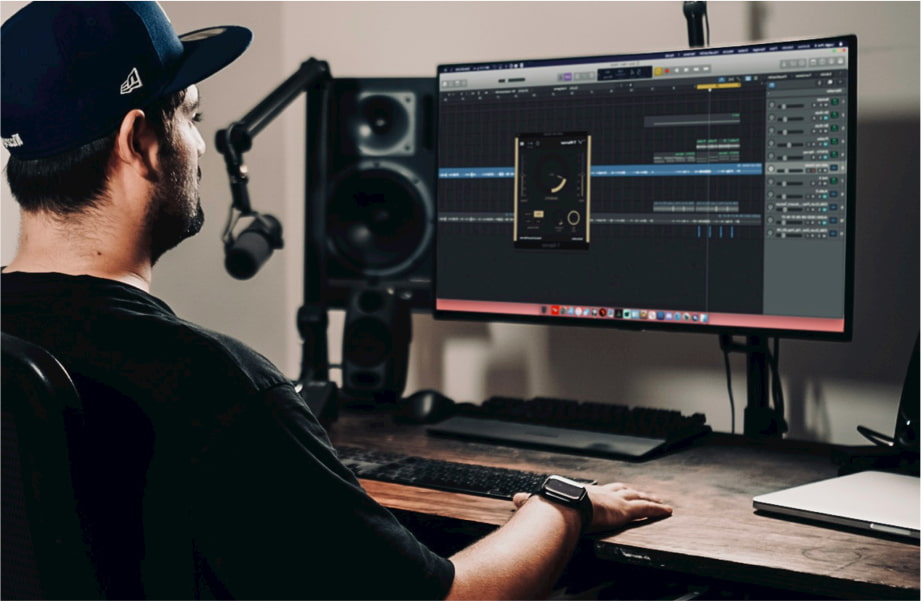
Modern music production relies on a combination of hardware and software tools. A core studio setup typically includes a computer with aDigital Audio Workstation (DAW), such as Pro Tools, Logic Pro, or FL Studio.
Multitrack recording equipment is the backbone of today’s production process, allowing producers to capture and manipulate individual instrument and vocal tracks separately.
The technology ranges from simple USB interfaces with a few inputs to sophisticated consoles in professional recording studios, which feature dozens of simultaneous recording channels.
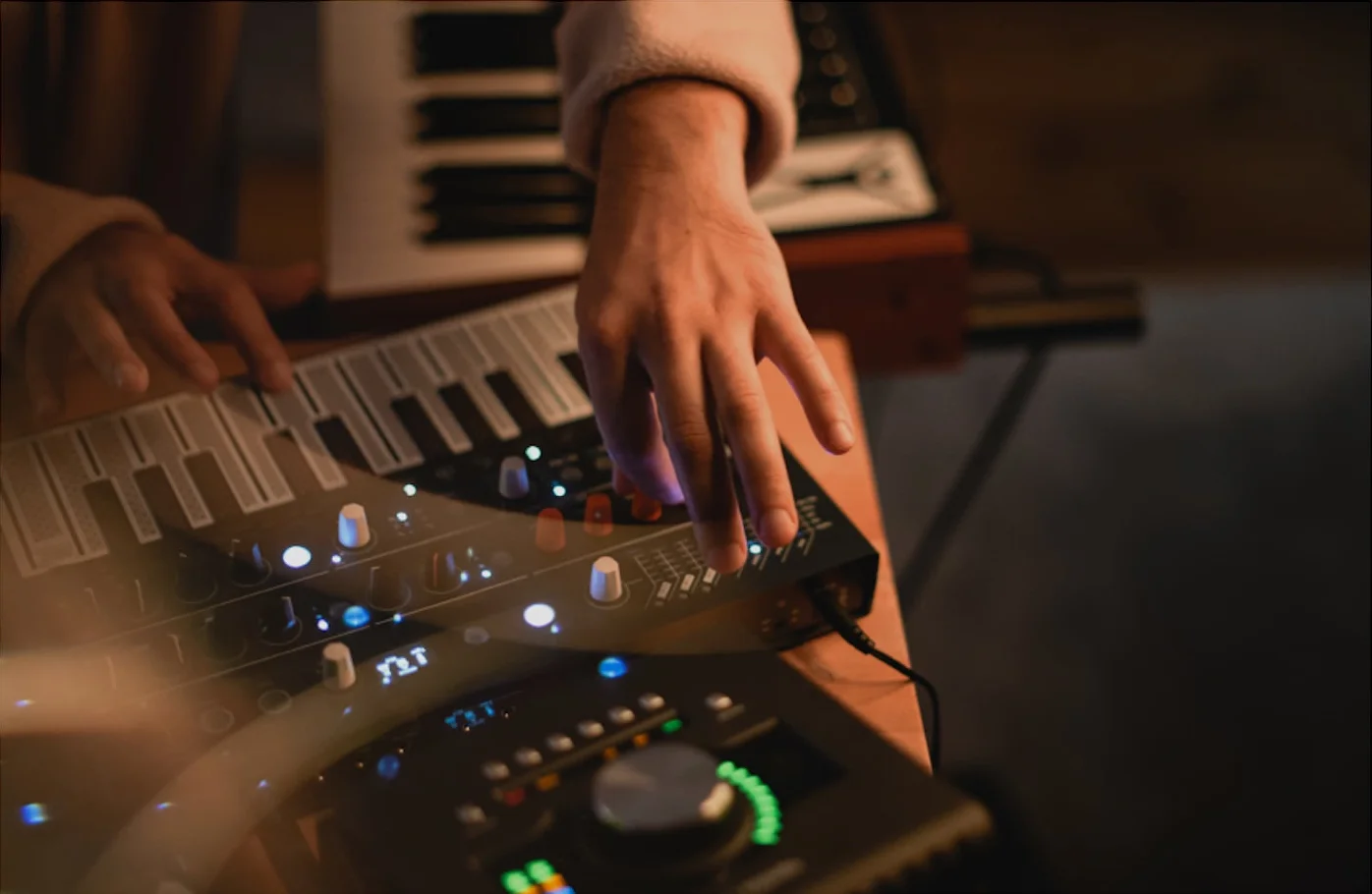
High-quality preamps, converters, and a selection of dynamic and condenser microphones complete the essential gear required for capturing clean, detailed performances. A producer might also use MIDI controllers, synthesizers, drum machines, and outboard processors.
While professional recording studios offer access to comprehensive equipment, many producers now achieve impressive results with modest home studio setups. Home recording studios are becoming more common, provided the design is done well and acoustic treatments are used to dampen sound.
Sound equipment is more affordable than ever without compromising on power. Equipment can also be rented, which is a budget-friendly option when first starting.
Who Hires A Music Producer?
Record labels often employ producers to collaborate with their signed artists, particularly for major releases with high stakes. A record label will match artists with producers whose style and experience align with their vision.
Independent artists also hire producers, though often with more limited budgets. Finding the right producer to maximize resources while delivering professional results is crucial for these indie artists.
Other artists sometimes hire producers forspecific expertise, such as electronic music production or orchestral arrangement. Beyond traditional music, music producers are increasingly sought after by film and television studios for arranging soundtracks.
More potential clients may include advertising agencies for commercial jingles and brand themes, as well as video game developers for immersive gaming soundscapes. YouTube content creators may utilize a producer for channel themes and background music.
The demand for professional sound extends to any industry where audio quality enhances the consumer experience or communicates a message more effectively.
Music Producer Salary: How Much Do Music Producers Make?
Music producers’ incomes vary dramatically based on their experience and industry connections. Established producers with a track record of hits can command substantial advances and royalty percentages.
Most producers are typically paid a flat fee and royalties on sales or streams. Normally, they receive an advance against future royalties, plus points on the record (a percentage of revenue) for major label projects.
The career outlook for producers remains positive, provided they are prepared to grow alongside the evolving music industry. Opportunities for music producers can go beyond traditional channels into film, gaming, and digital media.
Earning potential in music production also varies significantly by genre and market segment. Producers working in commercial pop, hip hop, and electronic dance music often have more opportunities for lucrative projects than those in more niche genres.
Great producers can earn millions annually through production fees, publishing royalties, and brand partnerships. Mid-level professionals can make a comfortable living from a steady stream of projects.
Many producers also diversify their income streams by creating sample packs, developing signature plugin effects, or licensing beats directly to artists. A great producer knows how to write a song and may continue to release their own music.
As streaming continues to dominate the music industry, producers must understand how royalty structures work to maximize earning potential.
How To Become A Music Producer
There is no single definitive path to becoming a music producer. Some record producers start as musicians or songwriters, while others begin as engineers or DJs.
For example, John Legend transitioned from being an in-demand session pianist and vocalist to becoming a respected music producer. He leverages his exceptional talent in music and the industry connections he established while working with artists such as Lauryn Hill and Kanye West.
Many other successful producers started making their own music in their bedroom studios long before collaborating with other artists.
One straightforward route to a music production career is through formal education and music production schools, which can provide a solid foundation. Many universities and colleges offer degrees in music production or recording technology.
When you start this career path, remember that hands-on experience is invaluable. Find work as a production assistant, intern, or recording engineer to gain practical knowledge and industry connections.
Building a portfolio of work is essential, even if it means offering free or discounted services initially to gain experience. Most record producers start small and gradually progress to larger projects as they establish their reputation and refine their music production skills.
Networking within the music business is also crucial, as many opportunities come through personal connections. Sometimes, it can be a case of not knowing what you know but who you know.
Summary
A music producer is a multi-talented individual with an incredible range of responsibilities. They must be a creative visionary and technical expert, a project manager, and a performance coach.
Producers shape the sound of our musical landscape by bringing together artists, technology, and innovative ideas to create the music we all know and love.
If you are looking to enter this fascinating industry, you’ll need to develop a broad range of skills and gain experience across multiple aspects of music. While it can be challenging, a career as a music producer offers the opportunity to make a lasting impact on the music industry.
Whether working with major stars or emerging talents, music producers help transform raw musical ideas into the songs that become the soundtrack to our lives.
Various factors, including streams, digital and physical sales, and chart rankings, influence the popularity of music genres.
We’ve analyzed the data to bring you the most popular music genres and demonstrate how audience demographics and listening habits influence the results.
10. Classical
As its name implies, classical music is a timeless genre that spans several centuries, dating back to the seventeenth century and continuing through the mid-1800s.
It’s a core aspect of the Western cultural tradition, characterized by complex orchestral arrangements and the use of traditional instruments.
Classical music artists are expected to be proficient in reading sheet music and possess high competence on their chosen instrument.
Composers such as Mozart, Beethoven, and Schubert remain immensely popular today, with their key works regularly performed worldwide.
Classical music pieces, such as Beethoven’s Ninth Symphony and Mozart’s Requiem, are widely regarded as some of the greatest works of music ever created.
While the genre is often associated with older generations, classical music has recently enjoyed a resurgence of interest with younger audiences.
Thanks to streaming platforms, under-35-year-olds have reported listening to classical music more than their parents, marking a significant demographic shift.
Classical music has also played a crucial role in movie soundtracks, with composers such as John Williams and Hans Zimmer drawing inspiration from classical composers.
These works have helped further to drive appreciation for classical music among younger audiences seeking more complexity in compositions.
Jazz music shares many similarities with classical music, from its experimental sounds and complex compositions to the range of instruments used.
Along with the closely related sub-genre of blues, jazz has a deep and fascinating history rooted in African American communities since the early 20th century.
During the 1920s, Louis Armstrong’s trumpet playing and scat singing boosted jazz’s popularity and improvisational style.
Over the following decades, influential artists, including Duke Ellington, Charlie Parker, and Dizzy Gillespie, brought new levels of virtuosity to the genre.
The open-ended and freeform approach that characterizes jazz music is reflected in the broad range of sub-genres associated with jazz music theory.
Swing, Bebop, big band, bossa nova, avant-garde, and funk jazz are just a few of its offshoots, which build upon its core principles.
While jazz has always existed outside mainstream music culture, its enduring appeal is undeniable.
It has also profoundly influenced other genres, including rock music and hip-hop, with artists seeking to capture its freedom of expression.
8. K-Pop
World music genres are typically aimed at niche audiences based in a specific territory and rarely make a significant impact on the international scene.
However, K-pop is an exception to this flexible rule, having experienced a significant surge in global popularity in recent years.
An abbreviation for Korean pop music, K-pop shares many of the production and composition qualities associated with Western pop music.
K-Pop producers and artists create music that delivers broad commercial appeal, featuring catchy lyrics and rhythmic beats that often veer towards simplicity.
Its role in a broader pop culture context is evident in its close ties to fashion, with many K-pop stars becoming models for major brands.
The genre’s rise in popularity can be attributed to the influence of groups like BTS and BLACKPINK, which have employed highly effective social media strategies.
Echoing the popularity of boy bands and pop groups of the 1990s in the US and the UK, K-pop’s commercial appeal ensures its enduring popularity.
7. Latin Music
While K-pop has a specific association with South Korea, Latin music has a broader definition, referring to any music featuring Spanish vocals.
Its popularity in the United States is impressive, thanks to the country’s proximity to Mexico and other leading countries such as Brazil.
Artists like Bad Bunny, Peso Pluma, and Rauw Alejandro‘s success has helped increase the genre’s global reach while allowing the style to evolve.
In this respect, Latin music is a vast genre that incorporates a wide range of composition and production techniques.
Latin music genres, such as salsa, bachata, and cumbia, are known for their upbeat sensibilities and draw on African rhythms.
Vocal styles in Latin music can also be diverse, ranging from passionate and powerful ballads to energetic dance-pop-style singing.
This fusion of cultural influences continues to drive the genre to new audiences, becoming a significant player in the music world.
6. R&B/Soul
Rhythm and blues and its close relationship with soul have been at the heart of music since R&B emerged in America during the 1940s.
Representing a fusion of other genres, including blues, jazz, and gospel music, R&B is notable for its lush vocals and soulful rhythms.
Early R&B artists, such as Marvin Gaye, helped popularize the genre, and artists like Michael Jackson and Rihanna have since adopted the style.
Likewise, soul artists such as Aretha Franklin and Otis Redding have helped shape the genre’s mass appeal, which has endured for decades.
While some argue that the popularity of R&B and soul peaked in the 1960s, its influence on contemporary musical styles is hard to overstate.
The inherent genre fluidity that allowed it to emerge has expressed itself in sub-genres such as Indie Soul, represented by acts like Hiatus Kaiōto.
It’s also another fine example of how the infectious rhythms featured in Black American communities have significantly influenced popular music genres.
The popularity of country music in the United States is evident in the numerous country music songs that dominate the charts at any given time.
While country isn’t as popular as other music genres worldwide, the American target audience continues to grow annually.
Known for its use of acoustic guitars and expressive vocals, country music is an example of how traditional folk music has evolved.
This shift is reflected in the lyrics of country music songwriters, who explore themes related to blue-collar life and working-class struggles.
Country’s dominance of the American charts has recently seen it gain popularity in other countries, such as the United Kingdom and Germany.
It’s also widely performed at music festivals, with notable events including the CMA Music Festival, C2C Country to Country, and the Black Deer Festival.
This ascendance outside of traditional niche audiences has seen country expand its horizons and bring in artists not typically associated with the genre.
The rapper Post Malone recently ventured away from his preferred genre to explore the country sound in Nashville.
It’s a move that demonstrates how the country is expanding its appeal to a broader audience, drawing on new and exciting influences.
Electronic dance music (EDM) is a broad umbrella term encompassing various types of electronic music, including house, techno, hardcore, and drum and bass.
As such, its popularity is exceptional, with Generation Z fully embracing its eclectic approach to music style and composition techniques.
Electronic dance music eschews traditional instruments in favor of a combination of hardware and software, often using MIDI interfaces.
Such tools are used for the entire production process, arranging compositions through sequencers and deploying various virtual and physical synthesizers.
Producers use additional tools and plugins to enhance production through methods such as audio compression and effect application.
The result is a highly versatile music genre widely performed in nightclubs and music festivals, with millions of global fans.
Notable contemporary EDM producers, such as Calvin Harris and Deadmau5,have achieved international fame and broad commercial appeal.
Conversely, underground producers and DJs who emerged during the 1990s continue to thrive and push the boundaries of production techniques.
With affordable digital audio workstations and online streaming, up-and-coming DJs and producers can easily get their music heard.
In this sense, electronic dance music is a truly democratic genre that will continue gaining popularity as new artists emerge.
3. Rock
Rock music has enjoyed widespread popularity since its emergence in the post-war European and American music scenes.
Emerging from blues and rock music genres, styles range from classic rock with commercial appeal to punk rock and alternative rock.
Additional sub-genres, such as pop rock, indie rock, and hard rock, further consolidate its position as a truly eclectic musical style.
Each of these rock music genres has enjoyed a loyal following over the decades, and many legacy bands continue to perform on national and international tours.
The genre also played a pivotal role in the emergence of indie music during the 1990s, with bands such as Oasis and Blur.
Rock genres also take radically different approaches to song structure, notably with the jazz-inspired compositions featured in progressive rock.
It also has many fans committed to purchasing physical media, with limited edition vinyls and out-of-print releases highly sought after.
Likewise, rock music genres dominate many of the world’s leading music festivals, gaining popularity in this context and drawing large audiences.
The outstanding popularity of hip-hop among younger audiences is reflected in the statistics for streaming services, where the genre dominates.
While musically distinct from country, hip-hop shares some qualities with that genre, such as lyrics that focus on the lived experiences of individuals in deprived communities.
From a production perspective, hip-hop employs the same approach to samples and drum machines as is common in electronic dance music.
This deceptively simple approach to composition and production is balanced with influences from jazz, blues, and other genres.
On Spotify alone, hip-hop attracts over 400 million users, securing a substantial global market share for the genre.
Hip-hop and rap music emerged in the late 1970s and gained popularity during the 1980s, dominating charts and shaping fashion and culture.
By the 1990s, artists such as Snoop Dogg, The Wu-Tang Clan, and Tupac Shakur had become household names, familiar to every music enthusiast.
Today, hip-hop and rap music genres continue to be favored among younger listeners, in part due to their popularity on streaming platforms and social media.
Tracks, including “One Call” by Rich Amiri and “Redrum” by 21 Savage, went viral on TikTok, proving that social media can circumvent mainstream labels.
1. Pop
It goes without saying that pop music is the most popular genre of all time, as this is inherent in its definition.
Pop music, an abbreviation of popular music, encompasses a range of songs that deliver commercial appeal to a broad, international audience.
It achieves this through a combination of catchy and simple lyrics set to similarly simplistic melodies, backed by upbeat tempos and percussion.
The type of chords and progressions used for pop music is also simple, while the lyrics explore themes of youthful romance and other relatable issues.
Emerging in the post-war era and often closely tied to rock and hip-hop, the leading figures in pop are well-known worldwide.
Acts such as Taylor Swift, Justin Bieber, and Billie Eilish have sold millions of records and performed at numerous sold-out international tours.
Pop has also branched off into various sub-genres, including synth-pop, pop rock, and dance-pop, each incorporating elements of its chosen sub-genre.
The general demographics of pop music skew toward younger audiences, although the genre’s long-standing presence often transcends age groups.
Its ongoing broad appeal and ability to unite a wide audience will no doubt ensure pop’s status as the most popular genre in the music scene.
Summary
Music’s ability to enrich the lives of millions of people is reflected in the growth of streaming platforms and the emergence of different genres.
The most popular music genres covered in this guide offer a compelling starting point for exploring new styles that complement your personal taste.
As digital streaming platforms allow up-and-coming artists to find an audience, alternative scenes will expand, introducing new music to niche audiences.
FL Studio enjoys a similar legacy to Reason, first launched in 1998 under the name FruityLoops as a fun and engaging electronic production tool.
It’s since been significantly updated to deliver powerful DAW performance, with an excellent UI and impressive synthesizers.
Features
Boot up FL Studio, and users are presented with a neat user interface that covers a range of effects, production, and mixing tools.
There’s a piano roll for manipulating melodies and chord types, with extensive templates including Channel Rack for auto-populated projects.
Included instruments are geared toward dance music, replicating the classic TR-909 drum machine and complemented by powerful mixing tools.
A wide range of virtual instruments is included, with standouts like the Kepler and Cloud delivering impressive capabilities for stylish tracks.
Pros:
Highly approachable UI for beginners
Versatile MIDI composition tools for loops and patterns
Lots of virtual instruments and included samples
Easy automation clip manipulation
Lifetime free updates
Cons:
Lacking a notation editor
Multitrack recording needs improvements
Bottom Line:
With a range of impressive built–in virtual instruments and streamlined editing, FL Studio caters to the production of the most popular music genres.
The developers provide ongoing support and upgrades that enhance its recording and editing functionality, resulting in polished results.
4. Cubase Pro
Best for: Composition with virtual instruments
Operating system compatibility: Windows/Mac
Pricing: $579.99
Overview
Steinberg’s Cubase has been a leading DAW for professional music production for decades, favored by composers in the music and video game industries.
With a solid audio interface, robust MIDI editing, and plenty of instruments, it’s a comprehensive DAW for production and sound engineering.
Features
Cubase’s versatile user interface may be overwhelming for beginners, but tapping into its functionality quickly makes it a powerful platform.
The simple yet effective Key Editor enables impressive refinements during playback, featuring a quick Inspector for applying various tools.
Cubase’s impressive pattern sequencer streamlines composition, while the mix console workflow and integration are exceptional.
There’s support for 5.1 surround sound for film composition, with no limitations on MIDI and audio tracks to restrict musicians.
Pros:
Highly responsive audio processing
Impressive bundled instruments and plugins
Highly flexible MixConsole feature
First-class automation and editing tools
Streamlined writing through the Channel Tab feature
Cons:
Expensive
Limited modulation options
Bottom Line:
With its all-in-one recording and production suite and decades of refined features, Cubase is a serious DAW with professional capabilities.
While the price point may deter casual producers, if you’re serious about music or looking for a studio-based DAW, Cubase is a top choice.
3. Pro Tools
Best for: Professional recording studios
Operating system compatibility: Windows/Mac
Pricing: Pro Tools Studio: $299/year or $39.99/month; Pro Tools Ultimate: $599/year or $99.99/month
Overview
Avid’s Pro Tools software has long been a vital component of what music producers do in a professional studio setting.
If you’re considering a professional production career, learning this software is essential for breaking into the industry.
Features
Pro Tools delivers industry-standard live recording and post-production tools for high-quality editing, with pristine audio and mastering tools.
Seamless integration of hardware and virtual instruments is complemented by a robust score editor, allowing users to read sheet music.
Cloud collaboration is available for group projects, offering cross-platform compatibility with Cubase, Logic Pro, and other DAWs.
Sporting a fast and fluid workflow, multi-channel recording, and precision editing and mixing, it’s the go-to software for bands and solo artists.
Pros:
Industry-standard DAW for professionals
Rapid 64-bit recording tools
Exceptional audio editing workflow
Real-time cloud collaboration
First-class support from Avid
Cons:
Subscription-only pricing
Steep learning curve
Bottom Line:
Widely taught in music production schools, Pro Tools’ status in the industry is well-deserved due to its outstanding flexibility.
Anyone considering a professional career will gain considerable benefits, particularly when collaborating on projects.
2. Ableton Live
Best for: Dance music production and performance
Operating system compatibility: Windows/Mac
Pricing: Live 12 Suite $749
Overview
Another firm favorite among electronic music producers is Ableton Live, which offers greater versatility compared to Reason and FL Studio.
Its live performance capabilities are second to none, without compromising on extensive tools for producing original tracks.
Features
Producing with Ableton Live uses a flexible UI with adjustable elements to arrange channels and access multiple editing tools.
These tools include a powerful suite of generative MIDI tools that streamline compositions and arrangements on tracks.
In addition to powerful transformations for arpeggiation and quantization, Ableton Live is equipped with a range of effects for refining sounds.
There’s multi-stage distortion, robust audio compression, powerful EQing, and new instruments added through updates.
It’s a fresh and invigorating approach to production that stands apart from conventional DAWs with its live performance capabilities.
With producers including Skrillex, Daft Punk, and Deadmau5 among its supporters, dance music fans are sure to appreciate Ableton Live.
Pros:
Flexible, customizable user interface
Inspiring generative MIDI tools
Intuitive clip-based live performance features
Impressive tools for automation
Cons:
Lacks a notation view
No pitch correction feature
Bottom Line:
Ableton Live’s reputation for shaping dance music is well established, and the software is particularly well-suited for electronic music production and performance.
Its unconventional DAW approach may take some adjustment, but the unparalleled pattern-and-loop composition approach is highly engaging.
1. Logic Pro
Best for: General music production
Operating system compatibility: Mac
Pricing: $199.99
Overview
Apple acquired its flagship digital audio workstation in 2002, refining and improving the workflow over the decades since.
Widely used by successful independent artists for creating music on Apple’s hardware, it’s feature-rich and packed with libraries and tools.
Features
Browsing the features and assets that are included with Logic Pro, it’s instantly evident how comprehensive the DAW is for production.
Designed for professional use, it offers thousands of instruments and effect patches, along with 1200 sampled instruments and over 14,000 loops.
There are tools for newcomers to make generative beats, while Ableton Link connectivity enhances collaboration on projects.
Composing and arranging songs is straightforward without sacrificing nuance, with exceptional multi-track recording capabilities.
There’s also the powerful Spatial Audio feature, which allows for refined and dynamic editing of Dolby Atmos movie soundtracks.
Pros:
Comprehensive selection of bundled effects and instruments
Excellent value for money with no subscriptions
No copy protection on projects
Offers full feature and simplified modes
Fully customizable AI session players
Cons:
Limited user interface customization
Mac users only
Bottom Line:
An outstanding, industry-leading DAW for Mac users, Logic Pro deservedly won the award for most popular DAW in 2022.
Equally at home for casual production as it is for professional projects, its massive library and toolset are second to none.
Deciding which DAW is best for your music production style requires an understanding of the essential tools and features they offer.
While most music production software includes basic editing capabilities, high-end options significantly expand the feature set.
Here’s an overview of the core features included in DAWs you need to be aware of:
Multi-Track Recording
Multi-track recording in DAWs is the process of simultaneously recording multiple tracks, including instruments, percussion, and vocals.
Each sound is routed to a dedicated track within the DAW, which is then armed to enable it for recording.
While electronic music producers typically work on individual tracks, the ability to record multiple tracks is essential for bands.
This is why Pro Tools is used in the recording studio, where multiple instruments and hardware need to be recorded simultaneously.
Audio Editing Tools
DAWs offer a variety of audio editing tools as standard, allowing producers to chop, rearrange, and manipulate sound design.
In addition to cutting and trimming, editing tools are available for fading, layering, and applying a range of dynamic effects.
Noise and reverb reduction are sometimes included to help with polishing sound design, along with tools for layering tracks.
DAWs can also be used to automate various parameters in real-time, including volume, stereo panning, and effects using curves.
MIDI Sequencing Capabilities
Another foundational aspect of music production is MIDI editing and sequencing, which enable the creation of complex compositions.
MIDI data can be input using the piano roll within the software or by playing music on a MIDI keyboard.
Step sequencers can be utilized in the creative process to generate melodic and rhythmic patterns using the grid-based interface.
MIDI sequencing also covers a range of automation and quantization tools to ensure notes are correctly timed.
Mixing & Mastering Tools
Mixing and mastering are critical for transforming musical ideas into coherent and professional-sounding tracks.
A DAW’s workflow includes mixing tools for equalization, compression, reverb, delay, and other mixing processes.
Many also include mastering features to polish the overall track further and prepare it for submission to record labels.
Robust metering tools streamline the process, highlighting peak levels and monitoring loudness across all audio tracks.
Effects & Instrument Plugins
Virtual instruments and effects plugins have the potential to significantly enhance the long-term benefits of using a DAW.
Available for free or as a purchase, plugins function as self-contained software modules that add functionality to DAWs.
Many VST plugins are designed to emulate traditional hardware, including echo and reverb units, as well as classic audio compressors.
There are also MIDI plugins, which are helpful for auto-generating MIDI data ranging from chord progressions to rhythmic patterns.
How To Choose The Best Digital Audio Workstation In 2025
Not all DAWs are created equal, with varying features, workflow approaches, and advanced capabilities in each software.
While some platforms are ideal for recording and editing bands, others are best suited for electronic music producers.
Before investing your money in a DAW, work through this checklist to ensure you make the best decision:
1. Check Out The User Interface & Workflow
How you engage with a DAW depends on the structure of its user interface, which dictates the overall music production workflow.
Newcomers will want to opt for something clean and straightforward, while experienced producers require in-depth customization.
Your style of composition and choice of genre also play a role in how you manage projects and workflows.
If you’re experienced with music theory, some DAWs include tools for displaying and creating sheet music.
Spend some time watching video tutorials of DAWs you’re considering to get a good feel for the interface design.
2. Verify Operating System Compatibility
While many DAWs offer cross-platform functionality, some are only available on specific hardware systems.
An example of a Mac-only DAW is Logic Pro, which was developed by Apple Inc. as exclusive software for their devices.
You should also double-check the system requirements needed to run the software at optimal performance.
Typical minimum system recommendations for DAWs include:
Intel Core i5 or AMD equivalent CPU.
Minimum of 8GB RAM.
64-bit operating system.
A fast SSD drive for audio files and project assets.
If you have the funds to upgrade your RAM or other computer components, consider factoring this into your overall budget.
Likewise, live music production may require a dedicated external sound card with inputs for guitars, keyboards, and microphones.
Keep in mind that these components can always be upgraded as needed, saving you money on your initial investment.
3. Evaluate The Features & Plugin Support
DAWs incorporate everything you need for music making out of the box, but the features between software are often unique.
While all DAWs will include basic recording, editing, and sequencing tools, advanced features will vary between programs.
Essential features you’ll need, regardless of your experience or genre, include MIDI editing and audio track manipulation.
Virtual instruments and other plugins for effects and drum machines are additional features to consider.
You should also research third-party support for a given DAW to assess the availability of plugins and other add-ons.
4. Assess Live Performance Capabilities
While many music producers use a DAW primarily for studio-based recording and composition, some need live performance capabilities.
This includes using the DAW in combination with performance pads for live electronic music or as a central hub for hardware integration.
Ableton Live is a popular choice for live electronic music performances, while Pro Tools is geared toward multi-instrument band recordings.
Live looping tools are also excellent for musicians to lay down multiple melodies and chords for complex and rich performances.
If you’re considering performing and recording tracks in a live setting, these DAW features are essential.
5. Determine Your Budget & Requirements
Once you’ve weighed up all the required DAW features and they fit into your workflow, you can determine a budget.
Some music producers prefer to purchase software through a one-time payment, while others prefer to spread the cost over a subscription.
Subscriptions are more cost-effective in the short term, but one-time purchases tend to deliver significantly better long-term value.
Not all DAWs offer the option to choose between subscriptions and one-time purchases, so weigh the options carefully before investing.
6. Check For Free Trials
Lastly, if you have the chance to explore the features and tools of a DAW through a free version, seize the opportunity.
Some of the popular DAWs that offer free trials include:
Logic Pro: 90-day free trial.
Reaper: 60-day trial with a fully functional version.
Cubase: 60-day free trial for various versions.
Ableton Live: 30-day free trial of the Suite version.
Logic Pro: 90-day free trial.
Pro Tools: 30-day free trial of Pro Tools First.
Free trials may be subject to change, so be sure to check what’s available when researching DAWs.
You should also verify what, if any, limitations the trial has, such as locked-out features and tools.
Essential Free DAWs For Beginners
We’ve covered GarageBand and Audacity in the guide above, two of the most popular and versatile free digital audio workstations (DAWs) available.
There are other free DAWs worth considering, which also offer plenty of scope for beginner producers.
Check out these essential free DAWs for newcomers to music production:
1. Pro Tools Intro
If you’re tempted to invest in the fully-fledged version of Pro Tools but want to try it first, Pro Tools Intro is there to help.
It’s packed with features, including eight instrument tracks and MIDI tracks, as well as a host of editing and manipulation tools.
There’s a core suite of effects plugins and virtual instruments to work with, and cross-compatibility with other Pro Tools versions.
It’s a robust and beginner-friendly free version of an iconic DAW, perfect for home producers, podcasters, and songwriters.
2. Waveform Free
Waveform Free offers producers a fully-formed production platform that stands out thanks to its capable audio engine and feature set.
Featuring straightforward workflows for recording music and applying effects, it includes full support for VST, VST3, and AU.
Use it to record your band performances, create electronic music, and lay down rich, sumptuous vocal tracks.
Waveform Free also offers numerous expansion packs to enhance its functionality and refine your music compositions.
3. Cakewalk
Cakewalk by BandLab is another free-to-use, complete music production package for recording, composing, editing, and mastering songs.
With unlimited audio and MIDI tracks for in-depth production, it features advanced mixing tools for dynamic audio quality.
There are also built-in mastering tools and share options for social media like Facebook, as well as YouTube and Soundcloud.
BandLab’s Cakewalk Sonar and Cakewalk Next add more features for musicians with a BandLab membership.
4. OpenDAW Studio
A relatively recent addition to the line-up of free DAWs is OpenDAW Studio, which provides production tools through a browser.
With a focus on providing learning resources for new producers, its educational applications make it perfect for newcomers.
It uses an approachable user interface with a useful piano roll note editor, and a decent selection of effects and mixing tools.
The OpenDAW Studio developers have ambitious plans for the application, including offline modes and full support for VST plugins.
The Best Mobile DAW Alternatives
Music production is most effective when performed on a large screen and with hardware such as MIDI keyboards for composition.
But for those who want to enjoy music-making from their smartphone or tablet, there are mobile-friendly DAW alternatives.
Here are some fun and user-friendly mobile DAWs you can download and try:
1. Logic Pro for iPad
Like Pro Tools Intro, Logic Pro for iPad offers newcomers an insight into high-quality DAWs without the price tag.
Taking full advantage of the iPad’s sharp display and touchscreen capabilities, it’s among the very best DAWs for portable devices.
Use it to lay down complex beats and melodies, enhancing the results with the software’s AI-powered studio tools.
Users can even invite session players to sit in on a song, making Logic Pro for iPad an excellent resource for bands.
2. Cubasis
Steinberg’s Cubase Pro has a younger sibling in the form of Cubasis, a mobile-friendly DAW compatible with Android, Chromebook, and iOS.
Designed for instantly capturing musical ideas with robust tools to flesh out full productions, it’s tailored to mobile devices.
Cubasis comes packed with plugins for instruments and effects, with full MIDI support and additional packs and add-ons.
Producers can try out the free version before they buy, and upgrading to the complete package won’t break the bank.
3. Fender Studio
If you’re a guitarist or band member looking for a rock and blues app for composition, Fender Studio is a must.
A free DAW for mobile and desktop features a streamlined workflow, instant recording, and authentic Fender guitar tones.
There are twenty professionally recorded jam tracks to play along with, ranging from pop ballads to pounding heavy metal.
Users can edit and mix their recordings with several tools, including compression, delay, reverb, and a vocoder.
With vintage amps and pedals also included, Fender Studio is a fun and invigorating platform for composers.
4. KORG Gadget
KORG has long been at the forefront of industry-standard synthesizers, bringing this legacy to their KORG Gadget application.
This all-in-one production software app is packed with synthesizers and drum machines you can use for on-the-fly production.
Its synths sound as good as you’d expect, ranging from resonant bass synths to lush and vibrant pads for melodies and chords.
Users can insert various effects to elevate their compositions, and access over 6000 sound programs with the Instrument Collection.
A welcome addition to the growing market of DAW applications, KORG Gadget also supports AUv3.
This means you can use instruments in GarageBand, Logic Pro, and other applications for a complete cross-platform workflow.
5. Reason Compact
We’ve explored the features and benefits of the full version of Reason; now it’s time to cover the Reason Compact application.
Designed to streamline the creative process, Reason Compact takes the core functionality of the full version with mobile-friendly modifications.
Use it to flesh out song ideas and lay down beats, and transfer your projects across to the desktop version.
It comes with a good selection of drum kits, instruments, and editing tools, with the option to perform on external MIDI keyboards.
If you’re new to DAWs or want an entertaining application for casual music creation, Reason Compact is the real deal.
Essential Tips For Mastering Your DAW
Mastering your DAW allows for your songwriting efforts to shine through with beautiful instrumentation and vocals.
Here are some methods you can adopt to get the most out of your DAW’s full potential:
Explore all included resources: Most DAWs come with a Help center and other support mechanisms to introduce you to the features. These resources are especially useful if you’re entirely new to music production tools.
Utilize developer support and tutorials: Setting up a home studio can be frustrating, as it often involves compatibility issues and other problems to resolve. If you encounter a roadblock, utilize the developer’s customer support services or consult troubleshooting tutorials online.
Start simple: Another vital tip for newcomers to DAWs is to keep things simple early on, easing yourself into the process. It might be tempting to start a project for a full-blown piece, but focusing on simpler tasks is wiser.
Develop a personalized workflow: Many DAWs offer flexible user interfaces and workflows that can be tailored to suit individual needs. You can utilize these customization features to optimize the DAW to your specific production style.
Don’t be afraid to experiment: Many excellent tracks have come about through experimentation with production techniques. Playing around with settings on plugins and virtual instruments is an excellent way to learn how they work.
Use AI when it makes sense: While artificial intelligence isn’t viewed favorably by creatives, it can still have a place in production. You can use AI-powered DAWs to streamline specific tasks without compromising artistic integrity.
Music production can be time-consuming, but with practice, you can streamline your processes for a more enjoyable experience.
Distribute Your Music With Promo Hype
Creating your own music is the first step toward building a successful career as an independent artist.
Once your compositions are ready, you’ll need to distribute and promote them to establish a dedicated fan base.
Independent artists can access everything they need to drive their careers through Promo Hype’s unified platform.
Become a Promo Hype member and access the following services:
Instant global music distribution: Promo Hype members can schedule and release music across all major streaming music platforms. Manage your Spotify, Apple Music, TIDAL, and Amazon Music distribution in a single location.
Comprehensive music promotion tools: Standing out from the crowd means promoting your music directly to your audience. With Promo Hype, you can manage your marketing budget and spend on campaigns that deliver the best results.
In-depth analytics to enhance your musical presence: Understanding your audience’s behaviors is vital for building a successful career as an independent artist. Promo Hype’s analytics draw on extensive metrics to help you build your presence.
Feedback and support from the Promo Hype Community: If you’re struggling with composition or production, the Promo Hype Community is here to help. Connect with like-minded artists, share tips and advice, and plan your next collaboration.
With an intuitive Dashboard to manage all processes, Promo Hype covers everything independent artists need to succeed.
Summary
Whether venturing into electronic music production for the first time or polishing songs by a band, DAWs are essential.
Referencing this guide will ensure you select the right DAW for your music creation workflow and create exceptionally polished tracks.
As your skills improve, you can expand your selection of plugins and VSTs, allowing you to explore new techniques.
Applying a coherent structure is an essential process of making music in any genre. It gives the song an identifiable shape and progression.
Song structure imparts a sense of familiarity and recognition that captures the listener’s attention and draws them into an emotional journey.
Other examples of reasons why a strong song structure is essential for a great piece of music include:
Streamlining structuring song ideas: Writing songs with a clear structure in mind may feel like imposing limitations, but it simplifies the process. Each section of your chosen structure provides manageable elements and prevents you from becoming overwhelmed.
Capturing the listener’s attention: Understanding how your song’s sections are structured makes it easier to capture the listener’s attention with a hook. Your song structure can then build toward these moments and create a sense of anticipation and excitement.
Fostering creativity and innovation: Learning how to apply a song structure to your creative process outlines the rules of composition. By understanding these rules, you can innovate and experiment with breaking their conventions.
Providing an emotional impact: Just as a song structure can captivate the listener’s attention, so too can it use sections to deliver emotional impact. This allows your lyrics and melodies to build up to a cathartic release with powerful dynamics.
By experimenting with melodies and types of chords, you can refine the sections within a song to create unique music.
Key Elements Of Song Structures
While song structures vary greatly between different types of music, the key elements remain the same across most genres.
Understanding these elements is vital for mastering songwriting and music production software when sequencing and arranging tracks.
Let’s explore the key elements used in song structure in more detail:
Introduction
The introduction of a song strikes a delicate balance between introducing specific elements to the listener without overwhelming them.
This includes establishing the song’s tempo and key and introducing the core melody through the singer’s voice.
In electronic dance music, the intro section is often further pared back, with most songs using drums and a bassline.
As a rule of thumb, the introduction should be lower key than the other sections of the song, focusing on establishing the mood.
Verse
A song’s verse is when the songwriter can elaborate on the storytelling of the piece through complex lyrics.
While the lyrics in the chorus typically repeat, each verse features new lyrics that expand on he previous verse.
Writing lyrics for verses should be approached with a sense of linearity as the narrative unfolds between verses.
Likewise, the second and subsequent verses can be written to riff off the prior chorus, subverting the entire song.
Pre-chorus
As the name suggests, the pre-chorus is an optional section of a song’s structure composed before a chorus.
It incorporates a riff or chord progression that bridges the gap between the verse and chorus, blending them together.
Another way a pre-chorus can blend these sections is to break the pattern by switching up harmonies and melodic elements.
In a shorter section of music, songwriters often experiment with the pre-chorus, applying melodic flourishes and impressive drum fills.
Chorus
For most songs, the chorus is the centerpiece of the composition, where the main idea takes form lyrically and melodically.
The most memorable section of popular music, the chorus, is where the song’s hook is featured to engage the listener.
Most songwriters use the same lyrics for all choruses, and this section often mentions the song’s title.
It’s an essential element of song structure that music fans are most likely to sing along to and remember at karaoke.
Hook
The hook of a song sits within the chorus section, referring to a vocal line or guitar solo that captures the listener’s attention.
Characteristics of a hook focus on catchiness and repetition, with simplistic melodies that stand out from the rest of the song.
When writing a hook, listen to some of the catchiest pop hooks ever to see how they’re composed by professionals.
Aim to blend a strong melody or riff with rhythmic patterns, and use the hook for your powerful lyrics or the song’s title.
Bridge
Another optional section used in a song structure is the bridge, which is used sparingly toward the end of a song.
The bridge provides a notable change of pace for the song, switching up both the lyrics and the music to deliver something fresh.
Usually positioned between the second and third chorus, its primary purpose is to break any repetitive elements that dominate the chorus.
Songwriters frequently achieve this jolt away from the repetitive chorus by switching to a relative key within the same key signature.
Outro/Coda
The final section of a song structure is the outro, called the coda in classical music, which usually mirrors the intro.
Like the intro, the outro pares back the complexity of the composition and sometimes fades away entirely.
This fading out often occurs during a repetition of the chorus, but other patterns can also apply when using this method.
Another unique spin on the standard verse-chorus structure doubles up the opening verses and closing choruses.
It allows for elaboration on themes in the initial two verses, emphasizing the stronger elements in the replicated final choruses.
Check out the best rap verses to learn more about writing and composing these song elements in your music.
3. Verse – Chorus – Post-Chorus – Chorus
Another structure that deviates from the common structural template is verse-chorus-post-chorus-chorus.
The initial verse introduces the hook that dominates the chorus, with a post-chorus section resembling a bridge.
Like a bridge, a post-chorus can amplify the song’s energy and extend the tone of the chorus.
4. 12-Bar Blues
The 12-bar blues cycle follows a sequence of chords and is widely used in jazz and blues genres.
Composing with this structure requires learning to read sheet music and concepts like turnarounds and seventh chords.
You can also use variations of the structure, including Bebop blues, minor blues, shuffle blues, and quick to four.
5. Through-Composed
While most song structures covered include repeated elements, through-composed music is continuous and non-sectional.
Instead, each new section introduces new material, similar to poetry, which is adopted in opera and music theater.
Examples of through-composed pop songs include Radiohead’s “2+2=5” and Genesis’s progressive rock songs.
Most Popular Song Structure Examples
Whether you hope to go viral on TikTok or hone your skills, it pays to learn from successful musicians.
Here are some examples of commercially successful songs that use the structures outlined in this guide:
1. “Blowin’ in the Wind” – Bob Dylan (Verse-Chorus-Verse-Chorus)
A classic example of the verse-chorus structure is “Blowin’ in the Wind by the iconic songwriter Bob Dylan.
The lyrics use the verses to ask the listener a rhetorical question before answering these in subsequent choruses.
2. “Happy” – Pharrell Williams (Verse-Chorus-Verse-Chorus-Bridge-Chorus)
The introduction of a bridge can shift the song’s mood, as is the case with Pharrell Williams’ “Happy.”
Its application here elevates a lively pop song and creates anticipation before the final chorus lands.
3. “Smells Like Teen Spirit” – Nirvana (Verse-Pre-Chorus-Chorus-Verse-Pre-Chorus-Chorus)
Nirvana used a variation on conventional structure for “Smells Like Teen Spirit,” the song that brought international attention.
Mixing eight- and twelve-bar sections, the pre-chorus and verse use eight bars, while the chorus features twelve.
4. “It’s Still Rock And Roll To Me” – Billy Joel (Verse-Verse-Bridge-Verse)
Billy Joel’s catchy and effective song “It’s Still Rock and Roll to Me” was featured on his hit 1980 album, Glass Houses.
Setting aside choruses, Joel’s verse-heavy structure outlines and elaborates on the song’s key themes.
Essential Song Structure Tips
If you’re new to songwriting or struggling with the process, there are methods you can adopt to help find a structure for your song.
Here are some things to consider to streamline the process and choose the best structure for your song:
Learn from your favorite songwriters: An easy way to discover a great structure is to see how your favorite singers structure their music. In addition to listening to their songs, you can read interviews for tips on overcoming writer’s block.
Consider your chosen genre: Different genres have specific overarching approaches to structure that can help you with your own. Spend time analyzing the song structure for your chosen genre to see how you can incorporate it.
Aim to tell a captivating story: Some songwriters begin by writing the lyrics, and this storytelling approach can help determine the structure. If the structure you’re using isn’t working, switch it up and see if this helps your process.
Attend a music production school: If you’re serious about learning theory and other compositional skills, you can attend music production schools. Alternatively, check out free online tutorials to see if a full course suits you before taking out student loans.
Experiment with variations: Working within a given structure can sometimes lead to stagnation or writer’s block. Don’t be afraid to experiment with structural variations to see which combination clicks.
The more experience you gain with songwriting, the more intuitive determining the structure of your compositions will become.
Share Songs & Reach New Fans With Promo Hype
Once you’ve finished writing a song, it deserves to reach the broadest possible audience to build a fan base.
Independent artists who sign up for a Promo Hype membership can access the following features:
Global music distribution across all streaming platforms: Promo Hype’s services cover Spotify, Amazon Music, Apple Music, and other major platforms. Upload your back catalog and schedule your new releases for maximum online reach.
Powerful marketing and promotion tools: Once your music has been distributed, Promo Hype’s Promotional Toolkit is ready to promote your music. Manage your budget and drive awareness through a range of powerful tools.
Data analytics to drive your music career: With Promo Hype, members can analyze various metrics to see where they succeed. They can also monitor the location, demographics, and other parameters in real time.
A lively Community for independent artists: Promo Hype is all about sharing ideas, and it has a thriving community for like-minded artists to chat. Share your songwriting tips and connect with other artists to plan your next song.
Whether writing popular music or composing for a niche genre, Promo Hype will drive your music career forward.
Summary
Song structure provides the foundation for writing pop music and other genres that independent artists commonly work on.
Using the frameworks in this article will help you arrange song sections and integrate melodies that elevate the music.
Once familiar with basic song structures, you can experiment with complex structures that improve your compositional skills.
Sitting down and writing a song lays the foundations for making music, but this is the beginning of the overall creative process.
It requires a range of equipment necessary for recording live instruments, as well as arranging, editing, and mastering compositions.
Here’s an overview of the essential hardware and tools for producing music with a polished, professional sound.
Laptop/Computer
A laptop or computer is a fundamental requirement for music production. It provides the brain through which song structure and audio elements are combined.
It is used to run a digital audio workstation, requiring an audio interface to connect additional hardware such as synthesizers and drum machines.
Digital Audio Workstation (DAW)
A digital audio workstation (DAW) is software used in music production to record, sequence, edit, and export audio files.
A DAW is the foundation for most music producers. It encompasses extensive editing tools that allow compositions to be fine-tuned and polished.
Examples of popular music production software include Ableton Live and Logic Pro, both of which are capable of professional-sounding production quality.
Plugins & Sounds
Digital audio workstations also allow producers to incorporate a range of plugins and MIDI instruments to enhance their compositions further.
This process includes powerful effects plugins for shaping audio and creating dynamic presence, often using downloaded samples.
Vocal processing, reverb, synths, and drum plugins can be combined to refine audio signals and enhance recordings.
Hardware & Physical Instruments
Physical hardware, such as synthesizers, drum machines, and traditional instruments, is commonly used in music production.
While the electric guitar is one of the most popular instruments for musicians, the piano is commonly adopted thanks to its compositional utility.
Microphone
A high-quality microphone is another essential equipment for music production, whether recording vocals or live instruments.
Condenser microphones are popular options, delivering a flatter frequency response that can be fine-tuned in production software.
Studio Headphones & Monitor Speakers
Lastly, music producers require a good pair of studio headphones or monitor speakers to ensure their compositions sound their best.
Dedicated headphones and monitors present audio with neutral sonic balancing, allowing producers to mix and master their tracks effectively.
If you’re new to producing music and on a budget, headphones are the best option, since calibrating studio monitors requires some expertise.
How To Make Music In 2025: Step-By-Step
Whether you’re hoping to submit music to streaming services or perform tracks in DJ sets, following the correct process is vital for success.
This step-by-step guide covers everything you need to start making music, from defining your style to setting up a studio and collaborating with other artists.
Step 1: Discover Your Inspiration & Genre
Before you can begin making music, you must discover your sources of inspiration that will inform your chosen style and genre.
Exploring the most popular music genres can provide a foundation for your creativity and genres outside your personal taste.
Inspiration can come from many sources, including personal experiences and memories, or great works from artists you admire.
Drawing on these ideas, you can gain a feeling for melodies and lyrics that bring them to life and are likely to resonate with your listeners.
You can also seek inspiration outside of music through an appreciation of literature, cinema, visual arts, and the natural world.
Step 2: Explore Music Theory
A good understanding of the core principles of music theory is essential for composing music with a professional structure and key elements.
Music theory provides the building blocks of a song, from melodies and chords to the various sections used throughout a composition.
You can begin by learning the fundamental theories, such as tempo, key, and time signatures, and how these interrelate throughout a composition.
For example, understanding how keys work in music can help with harmonics, connecting melodies and chords in your compositions.
Other elements worth learning include the application of scales and musical modes and the concepts of consonance and dissonance.
As you master the basics, you can explore advanced music theory, developing an understanding of timbre, dynamics, and articulation.
This theoretical framework will help you write songs that fit within your chosen genre and progress to more complex compositions over time.
There are plenty of online resources for learning music theory, including free courses and video tutorials on YouTube.
Step 3: Learn An Instrument
Making music is considerably easier if you can play an instrument, such as the guitar or piano, which are both commonly used for composing songs.
This ability will streamline the process of experimentation with chords and melodies, tracking and editing them through your DAW.
Instruments are also essential for a hands-on approach to mastering theory and for providing a tactile and responsive approach to composition.
Learning a new instrument will also introduce you to reading sheet music, which is a valuable skill when creating compositions.
If you have a classical background, this experience with less conventional instruments can be a great way to make your music stand out from the crowd.
Step 4: Plan The Music Project
Planning and preparation are the key to delivering projects efficiently and outlining the resources and processes you wish to use.
Your plan can list the reference tracks you want to include and identify the instruments and other equipment required for the music.
It can also cover your approach to structuring the track, starting with melodies or laying down beats and percussive elements.
While a plan shouldn’t be inflexible, it can help keep you focused on the right processes while providing a framework for experimentation.
Once your plan has been finalized, you can use it to set up your music production equipment and ensure everything you need is ready to use.
This step begins with creating your project in a DAW and cataloging any files that the song requires, such as samples and recordings.
It also involves installing relevant plugins for audio compression, effects, and MIDI-based synthesizers for composing the track.
Take the time to orient your monitor speakers optimally and, if your budget permits, add soundproofing to enhance audio quality further.
Once everything is set up and tested, you can begin producing music with a studio setup for editing and mixing the results.
Step 6: Find Artists To Collaborate With
Collaborating with other musicians, vocalists, and producers on your project is an optional extra step to consider when making music.
The most successful independent artists frequently collaborate with other artists to expand their creative horizons and attract additional talent.
If you know a great vocalist, ask if they’d be interested in working on a project and sharing their creative insights.
You can also research high-profile collaborations between major artists and see how each contributes to the song.
A fruitful collaboration can have significant long-term benefits, including networking with other talent on future projects and live performances.
Step 7: Write & Record The Music
The next stage when making music is writing and recording the track, which includes composing the lyrics and applying them to the song structure.
While different producers have unique approaches to this stage, general composition and arrangement principles apply to all types of music.
Structuring intros, verses, choruses, and outros helps create an emotional journey, and dynamics and harmonies accentuate these elements.
The arrangement should also combine instrumentation and melodies in each section to add texture and variety to the composition.
Step 8: Edit & Refine The Track
Once you’ve finalized the overall composition in your DAW’s sequencer, you can begin editing and refining the track.
Most music producers work on editing individual song elements during the composition stage, tweaking aspects such as reverb and stereo to build dynamics.
This process includes fine-tuning different chord types and repositioning notes in melodies from MIDI instruments to ensure precise and clean sounds.
As you replay the track, you may find that other synthesizers work better than the one used initially, so don’t be afraid to experiment with different options.
If necessary, you can return to the recording studio and rework vocals, adjusting your setup if the initial recordings aren’t up to scratch.
With the track’s arrangement in place and edits performed, it’s time to mix and master the results for a professional end product.
Some music producers use professional mastering services before releasing tracks, but you can accomplish this using standard DAWs.
The process involves balancing the frequencies between each song element to avoid clashes and create a cohesive sound.
Mixing is performed using equalization tools to adjust these frequencies, with additional tools like compression further enhancing frequency separation.
Additional mixing processes used in music production include panning instruments across the stereo field and automating level changes.
You can learn these techniques at the best music production schools, or save money by checking out free online tutorials.
Step 10: Distribute & Promote Your Music
With your track completed, you’re now ready to distribute, promote your music, and gather feedback from your fans.
If you’re entirely new to music production, start by sharing the song in your local community and leveraging your social media presence.
Adding striking visuals, such as cover art, will help capture the audience’s attention and help build your artist’s brand.
Performing the song at a live event is also an effective way to connect with an audience and gauge their reaction to its quality.
There are also online music distribution and promotion services with dedicated teams to help push your content across the major streaming platforms.
These services make navigating streaming platforms like Spotify, TIDAL, and Apple Music much easier while ensuring you receive royalties.
Digital distribution and promotion are essential, whether you’re looking to build a fan base or hope to get signed to a record label.
Independent artists can push their career forward by signing up for Promo Hype and accessing the following services:
Global distribution across all major streaming platforms: Promo Hype provides complete distribution services to all major music streaming platforms, including Spotify, Apple Music, Amazon Music, and TIDAL.
Comprehensive promotional tools for new releases and upcoming events: If you’re promoting a new single or have an upcoming live event, Promo Hype’s promotional tools can help spread the word and attract an audience.
Powerful analytics to help optimize content: Understanding where your music is being heard is vital for growing your brand, and Promo Hype’s analytics deliver the insight you need to succeed.
With a thriving community and access to expert advice, Promo Hype services help independent artists achieve the success they deserve.
Summary
Understanding music production’s core processes and techniques gives artists a solid start in learning how to make music.
The steps in this guide will help you transform a musical idea into a coherent song that meets the standards of professional music producers.
As you gain more experience, you can collaborate with other musicians and explore new styles that complement your creative process.
Are you ready to take your career to the next level and wondering how to get signed to a record label? Having an industry pro sign you up can have real advantages.
The path to a record deal is entirely different from even five years ago. What you know can often matter less than your Instagram following and streaming numbers. Most labels want artists with built-in fans and proof that you can sell music.
Our guide details how to position yourself for label attention, from fine-tuning your sound to negotiating contracts.
Record labels exist to help musicians distribute, promote, and get paid for their music. They handle everything from identifying fresh talent to orchestrating album releases and marketing an artist’s music.
A record label employs various people who specialize in artist development. A&R scouts discover musicians while marketing professionals develop branding. Distribution experts get the music on streaming services, radio stations, and store shelves.
Labels today offer career advice, tour support, and social media strategies to help artists grow their careers. They also know precisely how to promote your music.
Record labels also supply the necessary financing and organizational structure that artists require. They provide money at a virtually impossible level for artists to reach independently.
Good labels provide environments where artists can focus entirely on creating great music while the music business professionals deal with the commercial side.
How Do Record Labels Work?
Labels invest in artists who make them money by selling recorded music, streaming, touring, and merchandise. Once the artist has spent the money, it serves as investment capital earned back when a song becomes a hit.
The relationship starts when A&R representatives find a strong performing act and offer them a contract. Once signed, the label pays for recording sessions, aids production, and directs promotional resources to maximize the artist’s commercial value.
Labels do the behind-the-scenes work of copyright management, royalty collection, and distribution partnerships that most artists and listeners never see. They have relationships with radio programmers, playlist curators, and the media that are vital in developing a buzz.
Once released, the label uses its distribution networks to ensure people can find the music on Spotify playlists and Apple Music. It may also press vinyl records for physical sales.
Promotion continues post-release, seeking playlist placements and submitting music to radio stations and media coverage. The label finances the process, including recording budgets, manufacturing, and marketing expenses.
The music industry’s giants are big labels like Atlantic Records, Universal, Sony, and Warner. They have massive resources, global distribution, and enormous marketing budgets.
They could offer you the most exposure, but often want you to give up much creative control and a larger revenue cut. Major record labels also manage multiple artists; you may not get dedicated face-to-face time with them.
Smaller labels work with reduced budgets but often give artists better contract terms and creative control. They facilitate artist development, building in time for talent to develop its audience without the pressure to break big.
Independent record labels usually have better royalty rates, with shorter contract lengths. Artists with niche followings or a specific artistic vision might feel an indie label is more in tune with their goals.
Major labels offer worldwide reach, with teams in various countries collaborating on simultaneous global rollouts. They enjoy big budgets for costly music videos, extravagant promotions, and ad placements that most indie labels can’t afford.
What Can A Record Label Do For You In 2025?
Labels provide financial support for recording, touring, and video production that would otherwise be unavailable to most artists. The money allows you to make better content without accruing personal debt.
Teams of marketing professionals develop promotions for retail, digital, and other promotional media. Their relationship with playlists, radio programmers, and the press opens doors for them that would otherwise remain closed.
Labels provide invaluable experience with copyright protection, international distribution, and film and television licensing. Their advice keeps you from the most common legal traps and opens up lucrative opportunities.
Record labels nowadays have vast data-crunching operations to turn streaming and social media numbers into actionable marketing data. Their digital marketing teams know how to go viral on TikTok, promote playlists, and use digital marketing channels.
Physical distribution is another key benefit of a record label; you need manufacturing relationships and retail networks that most labels can maintain more efficiently than individuals.
Do Independent Artists Need Record Labels In 2025?
Record labels still offer significant benefits: industry connections, large-scale promotion, and access to resources that can open doors. For independent artists, though, the real question is: At what cost?
Signing with a label often means giving up some creative control, ownership rights, and flexibility over how and when your music is released.
That’s why more artists are turning to platforms like PromoHype to help them remain independent while still getting their music heard. Such platforms are tailored for indie artists and offer distribution without locking them into long-term contracts.
Ultimately, it depends on what kind of career you want and how much control you’re willing to trade for support.
Getting a record deal requires strategy and effort. Our list is a practical 7-step guide that walks you through developing your unique voice and musical identity, ultimately leading you to connect and work with the right people.
Each step contributes to developing a package that appeals to label heads seeking to sign marketable talent.
Step 1: Define Your Sound
The first step to getting a record deal is building your unique sound. You don’t need to have attended the best music production school to sound great. Many labels look for artists who fit into established genres yet offer something new.
Develop your songwriting and music production skills and master your artistic vision. Create a clear brand that an A&R person can easily explain and argue for within their company.
Research current artists at target labels to understand what record companies appreciate. Use this research to help “place” your music without sacrificing your true style.
You’ll hear A&R people say, “We’re looking for something unique but accessible” when searching for new acts to sign. They’re looking for artists who feel fresh and familiar enough to connect with established audiences.
Step 2: Grow Your Fanbase Organically
Create a strong online presence on TikTok, Instagram Reels, and YouTube Shorts. Use short-form video content to highlight your personality and brand for people searching for new music.
Performing live, even small, local gigs, develops strong connections with audiences and the industry. Live shows hone your stagecraft and provide additional content for your press kit and streaming platforms.
Working with other artists opens up the potential for audience sharing and network growth. These relationships put your music before existing fan bases and demonstrate that you can collaborate with others.
Growing an email list through show sign-ups and website opt-ins is a promotional asset that record labels understand and value.
On your social media channels, focus on real fans rather than vanity metrics. Labels know that 500 loyal fans who buy your merch, go to your shows, and share your music are worth more than a passive 50,000 casual followers.
Even with the increasing relevance of digital metrics, live performances are still crucial for attracting label attention. A&R people regularly attend shows, and some of the most successful artists were discovered at one of their small gigs.
Spend time rehearsing your playing and your ‘presence’ on stage. Practice what to say between the songs and how you look. Film yourself performing so you can see what needs work, and use the footage for social media and your promotional material.
Think about aspects of production such as lighting, backdrops, and synced visuals that complement your music rather than divert from it. These are professional touches that show commitment to the whole experience..
Step 4: Prepare A Professional Electronic Press Kit (EPK)
All aspiring musicians who want to join a record label need a good EPK. It should include a short artist bio, professional photos, music samples, live performance footage, and highlights from press coverage.
It should also mention key statistics that illustrate your growth, such as streaming stats, social interaction rate, live show ticket sales, and upcoming tour dates.
Having your EPK available online through a professional website is essential. Ensure that all components align with your overall brand while looking professional to make an outstanding first impression.
Be sure to highlight your story and some career high points in your artist biography. Professional photography that reflects your personality and style is crucial for press and promo material.
Create video content showcasing your live performance ability and good old-fashioned charisma. This step will also provide record labels with vital information about your marketability outside the studio.
Add concert videos, interview clips, and behind-the-scenes content that demonstrate different sides of your artistic persona.
Research potential labels to see which match your aesthetics, music, and goals. Check out their current label artists, track record, and marketing plans to see if they suit you.
Do they represent similar artists? Create customized pitches demonstrating exactly why you fit with the label.
Network selectively at music industry events, conferences, or showcases where labels attend to source talent. Research the personnel at your target labels, particularly the A&R representatives working with aspiring artists.
Step 6: Prepare Your Demos
Instead of bombarding labels with your entire music catalog, send them your best high-quality music. Hire a music producer if you can afford it, and ensure that your demos show your artistic side, yet have commercial potential.
Provide context with your submissions, e.g., accomplishments, upcoming gigs, etc, and a way to contact you. Start your submission with your ‘A’ material that will immediately capture the listener’s attention.
People in the music industry typically never make it past the first track if they’re not hooked immediately. Update your demo material as you evolve and have new content ready so you’re never unprepared for a surprise business opportunity.
Step 7: Be Ready for Industry Conversations
Learn the standard terminology of recording contracts, such as advances, types of royalties, term lengths, etc. You should have good legal representation whenever you sign a contract, no matter how big or small the record label you’re signing with.
A music lawyer skilled in record contracts can spot red flags and negotiate better terms. Before you enter negotiations, know your priorities and non-negotiable points.
Be prepared to offer a broader career vision and discuss how you hope to progress into your third and fourth albums. This thinking demonstrates that you want to surpass a few successful singles and shows labels that you are in this for the long haul.
What To Look For In Record Labels
Focus on record labels with a history of developing new artists similar to you in genre, aesthetic, and professional career development. Their previous success with similar acts shows they have the knowledge and network necessary for your project.
Research whether the label is financially sound by looking at its recent work, staff count, and years in the business. Ask for clarification on the contract, specifically what rights and creative control you will maintain over your intellectual property and how much you will keep from your revenue stream.
Scrutinize the label’s digital marketing know-how as social media presence is crucial for commercial success. Labels with strategies, influencer partnerships, and social media muscle have a significant edge.
Find out if artists usually stay with the label after more than one release. A high turnover suggests issues with delivering on promises or effective collaboration.
If you’re serious about building a music career, getting on the radar of A&R reps and signing to a record label is a game-changer.
Many record labels are looking for artists, but standing out in a sea of submissions takes more than talent. You’ll need a strategy, a strong identity, and a sound that is ready for the spotlight.
Red Bull Records: Alternative rock, hip hop, and electronic dance music
Sub Pop: Indie rock, folk, electronic, and hip-hop
Summary
Getting signed to a record label requires strategically growing your music, audience, and connections. As the music industry continually shifts, patience, flexibility, and professionalism are key.
Remember that a record deal is only one possible route to recognition. A number of artists successfully follow the indie path and self-release their work through various digital platforms. Some aspiring musicians even launch their own record labels to maintain complete creative control. What matters most is choosing the path that aligns with your music career.
If landing a record deal is your goal, focus on making great music, building your presence, and connecting with the right people. These steps give you the best chance to get signed.
Music production software incorporates many features for recording, editing, and mastering high-quality tracks.
Here are some of the essential features to research when deciding which music production software to bring to your studio:
User-friendly interface: The best music production software presents its workflow via an easy-to-understand interface, with customization options to personalize the experience. If collaborating with other
musicians, look for software with an integrated chat and cloud-based storage for file sharing.
Audio and MIDI capabilities: Audio and MIDI editing tools are another core feature critical to the music production process. These editing tools allow you to clip, move, and manipulate instruments and audio tracks to create the desired effect for your productions.
Plugins and virtual instruments: Most music production software allows users to install plugins and virtual instruments to expand their creative potential when producing music. These plugins range from editing tools like reverb and compression plugins to replicas of real-world synthesizers and drum machines.
Real-time editing tools: Another common feature to look out for with production software is real-time editing tools that allow you to edit elements while they are playing. This element allows for more tactile and intuitive editing and potential for experimentation.
Before investing in music production software, check reviews to verify the workflow and how it fits your preferred style and genre.
How To Choose The Best Music Production Software
Once you’ve written a song and are ready to flesh it out with other elements, you’ll need software to begin producing.
When deciding which music production software is best for your workflow, consider the following factors:
Available budget and value for money: The first and most obvious consideration is how much you’re willing or able to spend on software, especially if you have a tight budget. Likewise, buying the most expensive software isn’t always necessary, particularly if you’re looking for something more casual and won’t use the advanced features.
User friendliness and learning curve: The difficulty when learning new software varies between products. If you’re new to production, you’ll want to select one with a shallow learning curve. That said, plenty of online tutorials help master software and speed up the learning process.
Platform compatibility: Different music production software is compatible with different platforms. While some can be installed on Windows and Mac computers, others are platform-specific. Verify compatibility and performance-related specifications to ensure the software works on your PC.
Advanced features: If you’re experienced with music production, you’ll need to select software with the relevant advanced features your workflow requires. With AI taking center stage in media production, it’s worth checking whether the software incorporates cutting-edge technologies.
Check out the free version if it’s available and explore the key features and audio interface functionality.
The Best Music Production Software To Use In 2025
Modern music production software can deliver professional results without requiring access to a dedicated recording studio.
Here’s the best music production software used by successful independent artists to create world-class music in their preferred genres:
10. Adobe Audition
While Adobe Audition is aimed toward more general audio editing situations, it can also be a DAW for content creators.
Built around a streamlined editing pipeline for videos and podcasts, it also features audio editing tools that beginners will appreciate.
Music is presented in a Waveform or Multitrack view to assist with mixing, recording audio, and adjusting channel volumes.
It’s simple to use, with a drag-and-drop system that makes adding and cutting clips a dream, and adding markers when necessary.
The mixer can be used to fine-tune exact frequencies, apply noise reduction, and create effects such as delay and reverb.
Adobe also provides access to tutorials and tips to boost your audio editing skills and create professional-sounding results.
While Adobe Audition lacks the full suite of DAW tools, its generalist approach to audio editing makes it ideal for content creators.
9. Reaper
If you’re approaching production on a tight budget, Reaper replicates many of the tools of high-end software at a fraction of the price.
It comes with live recording for virtual instruments, a complete mixing console, and full support for video scoring.
An intuitive menu system allows you to build up your interface and establish a visual style that matches your workflow.
While it’s not as simple as other software, Reaper’s long-term benefits are evident in its extensive selection of editing features.
Building up track lists and applying effects doesn’t take long to master, while the selection of tools covers all the bases.
Standard manipulation tools like reverbe, sustain, and delay are expanded with in-depth compression tools for professional mastering.
Reaper’s EQ controls are designed for complex routing schemes. They also include comprehensive Rea VST effects and vocal pitch correction.
It’s an affordable yet versatile production suite allowing live instrument recording and editing with feature-rich performance.
8. Studio One
Studio One by PreSonus has been refined over the years to streamline the workflow for beginner and professional music production.
It presents a fast workflow for recording, editing, and mixing songs and comes with robust composition tools to help with songwriting.
Users can use the chord- and pattern-based tools to refine and improve their song structure, enhancing melodies and chord progression.
The straightforward user interface enhances this process by allowing you to reposition menus and dialogs to your liking.
Studio One also has a selection of Smart Templates for various project types, suggesting appropriate names and data.
It also supports the open-source DAWproject format, making it easier to collaborate with other producers.
This makes sharing editable MIDI data and plugin settings easy, delivering a unified production quality across platforms.
Upgrade to Studio One Professional and live performance tools are available through the software’s MainStage hub.
These include managing backing tracks and changing instrument patches, with extensive metering and effects plugins.
Studio One even includes Dolby Atmos mixing capabilities for musicians considering multichannel production for music videos.
7. Magix Sequoia Pro
Producers working on PCs have plenty of software to choose from, but Magix Sequoia Pro is one of the most powerful.
More than just a music production software, its tools can be used for mixing movie scores to performing professional audio restoration.
As a fully-fledged DAW for musicians, Magix Sequoia Pro covers all the bases, with real-time plugins, in-depth mixing, and mastering tools.
These features allow for impressive editing finesse, with EQs, time and pitch automation, and plugins to enhance dynamics.
Everything is managed through a neat user interface, with a streamlined exporting process for individual and multiple projects.
Audio recording and editing is also of the highest quality, with an advanced crossfade editor and 32-bit float at up to 384kHz.
There is an impressive amount of third-party support for Magix Sequoia Pro, which provides additional functionality such as stem splitting.
These tools come bundled at purchase, increasing the software’s value for money and long-term benefits for users.
Magix Sequoia Pro is expensive, but producers looking for high-end tools and features for restoration will find plenty to love.
6. Reason
Reason is one of the most established tools for music production, a music industry staple for several decades.
Providing an all-in-one recording and mixing platform, producers often use Reason for dance music and hip-hop.
This decision is due to its selection of bundled instruments, versatile sound sets, and different features for editing and mixing tracks.
Reason also features the Mimic sampler tool, which considerably expands creative options for recording and editing samples.
While the user interface is clunky, users can easily customize it to streamline their production workflow.
Blue and Dark themes are available for a new aesthetic, and synth ranks, instruments, and effects can be moved around the screen.
Reason’s selection of instruments is first class, with rich-sounding synths for vibrant lead melodies and engulfing chords.
Samples can be easily imported into a wavetable and enhanced through various tools, with excellent presets for beginners.
These tools have established Reason as a solid platform for electronic music, particularly among retro-inspired producers.
While there are better alternatives for recording live instruments, Reason’s impressive tools set it apart for creating dance music.
If you can’t afford to invest in dedicated production software, there are plenty of free options to begin your creative journey.
Here are some free music production software alternatives that cover the core features needed to create a complete track:
Audacity
Audacity has made a name among producers looking for free music production software built around open-source development.
It features excellent audio editing tools and multiple-track playback, with batch processing for high production volumes.
The bar-beat grid makes producing for popular music genres easy, with time-stretching loops and tempo assisting beginners.
While Audacity isn’t up to fully-fledged DAWs, its core tools provide a segue into production and can also help with podcasts.
Waveform
Waveform by Tracktion is another well-regarded and completely free DAW that users find intuitive and easy to use without compromising features.
A linear DAW, Waveform’s intuitive interface and professional tools offer plenty of depth, from full automation to MIDI editing.
It comes with two bundled instruments, a drum machine and a synth, with support for third-party plugins expanding the selection.
You can also upgrade to a paid version, considerably expanding its range of editing tools and performance capabilities.
GarageBand
Mac users looking for a free DAW can begin their creative journey with Apple GarageBand, which is available on every Mac.
With a streamlined interface and a range of Producer Packs, it’s among the most novice-friendly DAWs for Apple users.
Producers looking to learn instruments can use GarageBand’s built-in lessons to improve their skills and record audio in the software.
It’s also excellent for learning music production software basics, with a console mimicking Logic Pro used in professional studios.
GarageBand even includes various mastering features, which other free music production tools often lack.
Cakewalk
Another popular free music production application for musicians is Cakewalk, created by BandLab to assist with compositions and recordings.
With its focus on bands, Cakewalk’s unlimited audio and MIDI tracks make it ideal for recording and editing pristine-sounding songs.
The software includes a raft of pro-studio sounds for crafting dynamic mixes and mastering tools for additional polish.
Cakewalk also includes direct export to YouTube, SoundCloud, and Facebook to help musicians promote their releases.
LMMS
Our last selection for free software is LMMS, another expanding open-source application with polished production features.
Its easy-to-use interface is suitable for beginners but retains enough depth for more experienced producers to explore.
LMMS is compatible with Mac and Windows computers. It includes a complete sequencer and built-in instruments, plugins, and presets.
There’s also full support for VST and SoundFont formats and features a lively community for anyone looking for advice.
Distribute & Promote Your Music With Promo Hype
Completing a new track with music production software is the first step toward a career as a successful independent artist.
Once you’re ready to promote your music and build an audience, Promo Hype services can help with:
Distribution across all major streaming platforms: Reaching an international audience means navigating multiple streaming platforms. Promo Hype allows you to instantly reach Spotify, Apple Music, TIDAL, and more.
Comprehensive promotion tools for releases and live shows: Promo Hype members can access the Promotional Toolkit to unlock powerful marketing tools. Drive your audience to new releases and announce upcoming live performances.
Community support and insights: If you’re struggling with production or want to build a network, Promo Hype’s Community is here to help. Chat with like-minded independent artists and share tips and advice.
In-depth data analytics and performance monitoring: Growing a fan base is easier when you can analyze the performance of your releases. With Promo Hype’s dashboard, you can gain real-time insights into what your audience listens to most.
With members retaining 100% royalties from all platforms, Promo Hype provides everything independent artists need to succeed.
Summary
DAWs are vital for music creation, providing access to virtual instruments and features that deliver professional results.
The music production software in this guide has a track record, with industry-standard features and editing tools.
If you’re unsure which to choose, use free trials and produce music before investing in the complete version. Test what suits your workflow, then build from there.
Online courses are excellent for learning music production for free, but schools offer considerable advantages for students.
Here are some of the core benefits of music production schools that make them worth considering:
Structured approach to learning: Producing music involves many processes, from writing a song to mixing and mastering. Production schools apply a clear structure to learning that unifies these processes.
Access to resources and tools: Most prospective students cannot afford professional audio equipment and recording studios. Music production schools provide access to high-end hardware and software and expert advice on how to use it.
Connect with industry professionals: Learning institutions have high-quality industry connections, which can help you get signed by a record label or work in other entertainment sectors.
By researching music schools and courses, you can master recording techniques and audio engineering to produce like a professional.
The 10 Best Music Production Schools In The US In 2025
With hundreds of colleges and universities in the United States, navigating the landscape and finding the best option can be challenging.
Let’s explore the best music production schools in the United States, outlining their location, course costs, curriculum, and everything else they offer:
10. Musicians Institute
Location: Hollywood, Los Angeles, California
Cost: $10,800 per quarter (BA/MA programs)
The Musicians Institute focuses on electronic music production, covering vocal production, track building, and sound design.
Students have access to professional-level music production software, with experienced tutors covering all aspects of production.
Beginning with track building, the course covers the entire music creation process, including beat making and other production techniques.
By the end of the course, a Final Project is wrapped up to demonstrate the student’s mastery of the course’s one-on-one sessions.
9. Frost School of Music
Location: University of Miami, Florida
Cost: $68,600 annual average
Frost School of Music’s Music Engineering program, originally developed in 1977, is marketed as the first of its kind.
It’s a comprehensive program designed to help musicians break into the industry by submitting to radio stations and record labels.
Providing a multi-disciplinary four-year Bachelor of Science, it covers engineering aligned with industry standards.
There’s also an emphasis on traditional instrumentation, with courses to help students master contemporary jazz and classical.
As such, music theory is covered in detail, combined with electrical and computer engineering for modern production quality.
In addition to the audio engineering program, the course expands to cover related entertainment industries, such as television and video games.
Students participate in industry events, such as the Grammy Awards and the Academy of Country Music Awards, for practical experience.
This experience includes partnerships with the university’s College of Media and Entertainment, collaborating on animations and films.
4. Pyramind Music Production School
Location: San Francisco, California
Cost: $18,995 for Core Producer Program tuition
Pyramind Music Production School offers a complete music production program that delivers Avid and Ableton certifications.
It offers customized programs for each student and focuses on electronic music production with hybrid in-person and online lessons.
Covering everything from improving mixes to industry-standard techniques, the course also features professional networking events.
In-depth lessons on synthesis, sound design, and post-production enhance the course’s potential for real-world applications.
Performing musicians and band members can also learn live sound fundamentals, such as front of house and monitor mixing.
3. Carnegie Mellon University
Location: Pittsburgh, Pennsylvania
Cost: $67,020 annual average
Established in 2009, the Carnegie Mellon University music and technology program is hugely popular, resulting in Tony Awards for alumni.
Taking an interdisciplinary approach, it covers recording technology, audio engineering, and music composition and performance.
Students can access cutting-edge equipment and accomplished tutors with specialized knowledge and skills.
Two courses are available: a Bachelor of Science in Music and Technology and a Master of Science in Music and Technology.
2. Full Sail University
Location: Winter Park, Florida
Cost: $86,000 annually
Full Sail University offers a bachelor’s degree in music production, and students are expected to have a basic understanding of music theory.
The course provides access to the necessary hardware and software, and the lessons cover Logic Pro, Ableton Live, and Pro Tools.
Audio engineering, musical arrangement, and game music composition are some course highlights offered to students.
They aim to foster an understanding of production workflows and the limitations of acoustic and electronic instruments in production.
Students work on complete projects encompassing the whole process, analyzing design approaches, and using a production toolbox.
1. Berklee College Of Music
Location: Boston, Massachusetts
Cost: $62,150 annually
One of America’s most prestigious institutions, Berklee College of Music, has worked with many major stars, including Beyoncé’s PR Strategist, Yvette Noel-Schure.
Its music courses help students develop a critical aesthetic vision and understanding of complex technical systems.
Students also engage in collaborative projects, participating as engineers and producers and applying industry-standard criteria.
Multitrack recording, overdubbing, editing, and mixing are all covered, allowing independent artists to create high-quality songs.
Prospective students must submit a written application and complete a five-minute video; the course is highly competitive.
Various factors must be considered when choosing a music production program that delivers excellent results.
When comparing music production schools, look for the following information to help you decide which to apply for:
Course costs and living expenses: Music production schools’ prices vary considerably and can impact your future debt obligations. Likewise, their location can drive up living expenses, particularly in California or New York cities.
Geographical location: If you’re considering relocating to learn music production, the proximity to your hometown is another critical factor. The area will also affect other aspects like weather, which may impact your decision to enroll in the institution.
Specialized music genres: Music production schools teach skills applicable to popular music genres and the general recording industry. However, if you’re focused on a niche genre, you’ll want a course that covers this in detail.
Faculty experience: Most reputable music production schools draw on the extensive expertise of teachers with deep knowledge. You can verify this expertise by researching faculty members’ backgrounds before applying.
If you can’t find this information on their website, send an email with your queries or check out relevant online discussions.
Promote Your Music With Promo Hype
Once you’ve mastered electronic music production, you can learn how to promote your music across various digital platforms.
Promo Hype’s powerful tools help you reach the biggest possible audience and showcase your creative projects where it counts.
By becoming a Promo Hype member, you can access the following features:
Instant distribution across all major streaming platforms: Promo Hype distributes your music on Spotify, TIDAL, Amazon Music, Apple Music, and more. This setup ensures your creative efforts reach the biggest audience possible for maximum online reach.
Access to Promo Hype’s powerful Promotional Toolkit: Whether you’re promoting a new release or upcoming tour, Promo Hype’s Promotional Toolkit can help. Use it to manage your marketing initiatives and maximize your budget.
In-depth analytics to refine your music business: Promo Hype members can access powerful analytics tools through their dashboard. Discover where your songs are getting played and drive future releases where it counts.
A thriving Community to connect with other artists: If you’re struggling with production or looking for collaborators, Promo Hype members can access a lively community. There, you can build relationships and learn new skills to enhance your production techniques.
Whatever your chosen genre, Promo Hype ensures your music reaches the top platforms like Spotify and Apple Music, helping you connect with new fans.
Summary
While many musicians are self-taught producers, attending the best music production schools provides hands-on experience with access to a professional recording studio.
If you’re considering a formal education, the institutions in this guide offer high-level courses to help you learn music production.
With access to the latest music technology and industry-recognized qualifications, music production schools can help you advance your career.
The contemporary music industry is highly competitive, making it challenging for indie artists to establish and grow a loyal fan base.
Learning how to promote your music is crucial if you want to differentiate yourself from the competition, attract new listeners, and establish your brand.
This guide covers various methods to promote your music on social media platforms and streaming services to keep your audience engaged.
As the streaming market continues to expand, music promotion is crucial for indie artists seeking to connect with new audiences.
Here are some of the main benefits of applying a music promotion strategy:
Building relationships with fans: Cultivating a loyal following of fans is essential for reaching a broader audience organically. Indie artists can use social media platforms to keep fans engaged, gather feedback, and share new music and tour dates.
Increasing streams and sales: Spotify, Apple Music, and other platforms are crucial for generating revenue, with numerous promotional tools available to help boost streams. Promoting music also enhances sales opportunities for physical media, such as announcing limited-edition releases to fans.
Advancing your music career: Promotion is critical for getting your music heard by record label bosses and other industry professionals. It can also help with landing more live performances and collaborations with other artists who share your musical sensibilities.
By engaging with your audience, you can improve your processes and make new music that attracts new fans eager to hear more.
How To Promote Your Music Independently In 2025 (Step-By-Step)
Regardless of your chosen music genre, implementing a robust plan of action to promote your music plays a crucial role in achieving success.
Let’s explore the various methods for showcasing your music across multiple platforms and attracting more fans.
Step 1: Create An Artist Website
Setting up a stunning-looking website is essential for any creative professional, whether sharing illustrations or promoting music.
Musicians, bands, and producers can use their website as a focal point for their work, sharing new releases and announcing upcoming shows.
A compelling artist website begins with an eye-catching home page that captures the essence of their style at a glance.
High-quality media assets, such as high-resolution photographs of past gigs, video footage, and illustrations, are essential for a professional feel.
If you’re a producer with an impressive studio, you can include images of your music production software and hardware in action.
Here are some additional features to include on an artist’s website:
An artist or band bio outlining your musical interests and the creative process used when recording new music.
Up-to-date tour dates and announcements for one-off events.
Links to your accounts on social media platforms and your YouTube channel.
Sign up options for email newsletters to help fans learn about your new tracks.
A link to your electronic press kit (EPK) to make it easier for industry professionals to learn more about your brand.
As you produce and release new music, your website should be regularly updated to ensure fresh content keeps fans returning for more.
Step 2: Build An Engaging Social Presence
A strong social media presence is another critical tool for marketing and promotion that indie artists can use with little or no budget required.
Platforms like Facebook, Instagram, and TikTok are changing the industry by allowing artists to connect directly with fans through viral content.
When setting up your accounts, use the same branding elements, such as logos and banner images, across all your social media outlets.
Each social post can also include a link to your website to help drive traffic, such as linking to your site’s online store to sell branded merchandise.
Social media promotion is most effective when content is posted frequently, so consider creating multiple posts and scheduling them in advance to save time.
While going viral on TikTok is an admirable objective, Instagram Stories also have a proven track record for generating traffic and engagement.
Likewise, Facebook’s robust system for posting and promoting events in your local area should not be overlooked when using social media platforms.
Step 3: Host Music On Streaming Platforms
Streaming platforms are the go-to method for music fans to catch the latest releases from their favorite bands and discover new artists.
Spotify, Apple Music, TIDAL, and SoundCloud offer global digital distribution, which can significantly enhance promotional efforts.
These platforms cover all popular music genres, with Spotify and Apple offering dedicated programs that allow artists to pitch their upcoming songs.
This setup ensures that high-quality new music is featured on curated playlists, such as Spotify’s Release Radar playlists, to maximize visibility.
This results in a more organic approach to promotion that reflects listeners’ habits on streaming services, ensuring higher-quality engagement.
While streaming revenue can be low, many artists streamline the process through dedicated music distribution and promotion services.
Such services provide access to music professionals with knowledge and experience of how to capitalize on each platform’s tools.
Step 4: Use Email Marketing
Email marketing has been a promotional tool across all industries for decades and is more effective today than ever.
Building up an email list can take time, but artists can use a combination of tactics to create an extensive list of high-quality contacts.
This process begins with website optimization, positioning clear calls-to-action that drive the audience toward the newsletter sign-up page.
Potential fans can be incentivized to join a mailing list through offers on merchandise or the chance to win free event tickets.
Early access to new releases and other exclusive content can encourage people to share their contact details for email marketing campaigns.
Once you’ve established a solid list of emails, you can use tools like Mailchimp and ConvertKit to design and automate various email campaigns.
Such campaigns should strive for a personal touch, addressing fans with a sense of intimacy and providing valuable content they can enjoy.
An Electronic Press Kit, also known as a Music Press Kit, is essential for musicians and producers seeking to break into the industry.
It incorporates a selection of assets that industry professionals expect to receive when weighing whether to sign an artist.
Some of the key elements to include in an Electronic Press Kit include:
Artist’s biography: This section should concisely outline your background and story, along with brief text explaining your musical style and genres.
High-quality music samples: To showcase your best tracks to date, include audio clips on your website or links to streaming platforms.
Visual assets: Photos and videos of your live performances, as well as other visual elements like logos and mascots, will help give your EPK a visual flair.
Notable career accomplishments: If you’ve performed at noteworthy venues or earned music industry awards or accolades, make sure these are included in your EPK’s career section.
Coverage from the media: Likewise, any favorable media coverage, such as reviews of live shows or music releases, should be listed with relevant links in the file.
Creating an Electronic Press Kit will significantly increase your chances of getting noticed if you hope to get signed to a record label.
It is also a valuable resource for artists hoping to book more gigs, as it makes it easy to share details with booking agents and event promoters.
Step 6: Connect With Other Artists & Musicians
Many successful independent artists began their careers working within a local music scene and hosting events with other artists.
This tried-and-tested strategy can deliver exceptional results without requiring costly overheads, promoting music through word of mouth.
You can begin by creating a list of local venues that share your taste in music, attending events, and starting conversations with like-minded people.
This approach will help you foster a community of musicians with whom you can host events, promote one another’s works, and share in the creative process.
These principles can also be extended to the online world, such as connecting with artists on forums or engaging with them on social media.
YouTube and SoundCloud comment sections complement other online communities and discussion boards such as Reddit.
Networking with industry professionals is another key strategy for music promotion that independent artists often struggle with.
This challenge is not surprising, given that millions of artists create content and compete for the limited attention of record labels.
High levels of competition aside, there are methods artists can adopt that improve their chances of building relationships with industry insiders.
Putting on impressive live shows has been a successful approach for decades, with labels frequently sending A&R talent scouts to events.
Another approach is attending music industry events and networking with other attendees through face-to-face conversations.
Online platforms like SoundCampaign, Groover, and SubmitHub offer dedicated services for connecting with industry professionals.
Before reaching out, ensure your website and Electronic Press Kit are up to date with your latest releases and best visual assets.
Step 8: Contact Music Blogs & Podcasts
While most up-and-coming artists would jump at the chance of an interview with NME, few are lucky enough to enjoy this level of exposure.
Fortunately, there is no shortage of insightful music blogs and podcasts eager to interview new artists about their creative journeys.
You can start by contacting smaller blogs that cater to music fans within your niche and sharing your website and other relevant information.
Include a brief overview of your style and history, and attach your Electronic Press Kit so they can learn more about you at their convenience.
Once you’ve been featured in a music blog or guest-appeared on a podcast, you can update your site and EPK to include relevant links.
This step will make it easier for record labels looking for artists to check out the interview and gain a clearer impression of your media presence.
Step 9: Produce Music Videos
Music videos are ubiquitous in the industry, and while indie artists lack studio-level budgets, modern technology makes creating videos a viable option.
You don’t need Hollywood-level equipment to shoot music videos; affordable cameras and even smartphones can produce crisp HD footage.
Video editing software is also accessible for free or on a budget, and it can be distributed for free to your YouTube channel and social media pages.
Alternatively, you can save time by planning, recording a live event, and uploading the video to your social channels and website.
Fan engagement also applies to real-world settings, such as chatting with the audience during and after a live performance.
Signing T-shirts or flyers takes only a few minutes, but the sense of goodwill and satisfaction it delivers is exceptionally valuable.
Live shows can also drive awareness of your online presence, from including your website on banners to encouraging fans to sign up for your mailing list.
Promote Your Music Worldwide With PromoHype
Creating a music promotion strategy can be time-consuming, with many artists preferring to focus on creating content and writing great music.
Here’s how partnering with PromoHype can help you maximize your reach and grow your audience through a range of promotional services:
Access distribution across all major streaming platforms: PromoHype members enjoy distribution across all major streaming platforms and access to playlist curators to maximize their reach.
Align promotional initiatives with your social media presence: PromoHype streamlines sharing engaging content across social platforms, ensuring more listeners discover your music.
Use analytics to understand your target audience. PromoHype’s dashboard provides powerful data analytics to help you promote your music on platforms that deliver the best results.
With a lively community of fellow musicians and support from industry pros, PromoHype ensures your new releases reach potential fans.
Summary
Establishing a presence as an independent artist doesn’t happen overnight, but consistent promotional efforts can have impressive results.
Adopting the promotional strategies outlined in this guide can help you build relationships with fans and develop a viable music career.
Investing in paid advertising and knowing how to promote your music will create new connections and professional opportunities as your revenue increases.