Artist Management 2026: The Ultimate Guide for Independent Artists

Breaking into the music industry can be a significant challenge for independent artists, but management services can help overcome many of the obstacles.

With years of experience and access to industry contacts, artist managers provide valuable guidance for songwriters and producers.

This guide breaks down the roles and responsibilities of an artist manager, from networking in the industry to marketing and promotion, and elevating emerging acts to stardom.


Get Early Access
To Promo Hype


What Is Artist Management?

The process of artist management is far-reaching, with a primary focus on representing artists within the music industry landscape.

Artist managers help bands, singer-songwriters, and music producers reach a broader audience across multiple platforms.

They also utilize industry connections to facilitate contract negotiations with labels and publishers, thereby expanding the artist’s career.

This allows artists to channel their efforts into writing and recording music without administrative or legal distractions.


Recommended read: The 10 best digital music distribution services.


Why Is Artist Management Important?

Partnering with an artist manager offers numerous advantages, enabling independent artists to focus on their creative journey.

While some independent artists prefer to manage their own careers, many opt to work with an artist manager for various reasons, including:

  • Approaching high-level goals: Independent musicians who are eager to break into the mainstream with commercial success often struggle when going it alone. An artist manager has the resources and contacts to bring this high-level goal into the realm of possibility.
  • Outsourcing administrative and legal tasks: Creatives of all types often lack the mindset and skills for mundane, day-to-day administrative or legal tasks. Managers have the staff on hand with extensive experience in these fields.
  • Assistance with brand building: Setting up an official band website with professional logos and other assets can also be challenging for artists. A management team can assist with this process, handling graphic design and building relationships on social media.

We’ll break down the range of services offered by artist managers and how they can best serve the artist’s interests.


The Role Of An Artist Manager

Hiring an artist manager offers a significant range of benefits for clients seeking to advance their music careers.

Here’s an overview of these roles, from helping artists get signed to record labels to managing publishers and finances.


Music Industry Spokesperson

Perhaps the most prominent role of an artist manager is acting as a representative within the broader music industry.

This includes networking with music journalists to promote music, as well as negotiating contracts with publishing companies.

By engaging with an interconnected network of industry professionals, managers can secure new opportunities for distribution and promotion.


Building The Artist’s Team

In addition to building connections with external industry figures, the music manager also coordinates a close-knit team of roles.

While the scope and complexity of these teams vary depending on the artist’s profile, some core roles are usually included.

Booking agents, public relations experts, lawyers, and music marketing professionals are typically utilized as needed by the artist manager.


Business Manager Duties

One of the primary reasons musicians and producers hire artist managers is to gain access to business-related services.

This encompasses everything from general financial management to royalty tracking, invoicing, and overall budgeting.

Managers are also heavily involved in assisting artists with getting gigs, providing ancillary services that complement this process.

For example, they may help with coordinating travel itineraries, booking hotels and transportation, and other related tasks.

They can also help facilitate additional related processes for artists, such as trademarking a band name in conjunction with an attorney.


Assisting The Artist’s Development

Another vital role performed by artist managers is assisting with their creative development and career planning.

This encompasses various tasks, from creating opportunities for writing songs with other artists to planning new singles or albums.

It also encompasses preparing for tours, hiring videographers and editors for music videos, and other tasks with logistical complexity.

Managers may also assist with digital music promotion strategies, such as accessing Spotify’s Radar Program and other services.


Learn more: How to build a home recording studio.


Artist Management Team Structure

As we’ve touched on briefly, artist management is built around a core team with the manager at the centre controlling the overall initiatives.

Over time, the structure of this team may change, such as through the creation of dedicated tour management or PR teams.

Let’s break down the core team structure in more detail, along with the roles and responsibilities of each member.


1. Artist/Music Manager

The artist manager, sometimes referred to as a music manager, is the central figurehead in the overall management team structure.

They directly interact with the songwriter or music producer to create an overall strategy and long-term vision for their success.

As the head of the team, the manager is responsible for hiring other professionals on a permanent or short-term basis for specific tasks.

They also handle the day-to-day oversight of the team, scheduling meetings, and ensuring members are clearly communicating.


2. Publicist

One of the key players in a management team is the publicist, who is responsible for generating favorable media coverage.

The publicist will liaise with journalists, bloggers, and podcasters, particularly in the lead-up to a new release or live performance.

This also includes traditional print media coverage, as well as assisting with submitting music to radio stations for airplay.

Publicists are involved in all aspects of content creation, collaborating with videographers and photographers to produce promotional materials.

This content is integrated into a comprehensive campaign strategy designed to generate buzz for the artist’s content.

Conversely, publicists are expected to step in for crisis management, protecting the artist’s image or reputation from unfavorable circumstances.


3. Business Manager

While the core manager wears many hats when working with clients, the business manager’s duties are focused on financial issues.

They perform a range of tasks to help singer-songwriters and producers make money with minimal fees and other expenses.

Some of the financial and accounting duties performed by the business manager include:

  • Collecting and managing income: This also includes paying any bills the artists owe for additional services and managing the payroll for other members of the artist’s team.
  • Oversight of royalties: Income from streaming services and physical media sales is closely monitored to ensure that all payments are made correctly and on time.
  • Preparing and filing taxes: Annual tax return filings are prepared to ensure everything is in order and to avoid potential repercussions down the line.
  • Financial planning and budgeting: They also assist with general financial planning and managing budgets for services such as recording studios, marketing, and other projects.
  • Crafting investment strategies: Once an artist has achieved success and a consistent income stream, they assist and consult on strategies to develop a robust investment portfolio.

The business manager will also file frequent reports to ensure that artists are kept informed about their income and expenses.


4. Lawyer

Artist teams often include a dedicated lawyer in the structure, typically one with specialized experience in entertainment or music law.

The lawyer will work closely with the overall manager when negotiating contracts with labels or publishing companies.

Depending on the stage of negotiations, they may be required to provide additional legal counsel or collaborate with additional attorneys.

Contracts with record labels and publishers are often complex, so the lawyer’s responsibilities ensure everything is above board.

They’re also expected to work with booking agents and promoters when defining the terms of tours and other performances.

Likewise, they assist with negotiating deals with brand partners and setting up endorsement and sponsorship deals for artists.


Get Early Access
To Promo Hype


Key Partners With Artist Management Teams

Artist managers not only liaise closely with other members of their team; they’re also responsible for engaging with external parties.

With experience working across popular music genres and niche subgenres, managers can assist clients with a variety of relationships.

Here are some of the core external partners with whom managers primarily interact during their work with artists:


Record Labels

One of the primary roles of managers in the context of labels is serving as the artist’s primary advocate and cheerleader.

This includes negotiating terms of recording contracts and helping to secure the most favorable deal possible for the artist.

Acquiring backing from a label can significantly improve the artist’s prospects and cover a range of expenses and services.

The manager assists in negotiating such deals in conjunction with the lawyer, providing legal counsel and helping to negotiate contract terms.

They are also involved in protecting the artist or band’s creative control, including clauses that protect ownership and rights.

Additionally, managers will assist labels with marketing and promotion initiatives, coordinating social media campaigns and media appearances.

Artist managers draw on extensive knowledge of the industry, with a deep familiarity with record labels looking for artists they represent.

They are also known to collaborate with A&R teams, selecting the best songs for release and pairing them with suitable producers.


Music Publishers

Music managers have a similarly complex relationship with music publishing companies, which extends beyond negotiations to other activities.

This begins with assisting artists with contracts and ensuring they get the best possible terms without compromising creative interests.

Managers will also negotiate for optimal compensation, coordinating song placements that maximize potential music royalties.

As with securing deals from labels, managers will draw on legal expertise when negotiating deals with music publishers to protect their clients.

Once the deal has been finalized, their roles shift toward strategic planning and coordination of upcoming releases and performances.

This involves a multi-faceted approach that strives for optimal reach online and offline, helping artists go viral on TikTok and other platforms.

Some additional qualities that managers bring to bear when interacting with music publishers on behalf of artists include:

  • Centralizing communication: Thanks to their track record of engaging with publishers, managers are well-positioned to streamline communication between relevant parties. This ensures negotiations don’t get bogged down in red tape and can be concluded satisfactorily with minimal friction.
  • Alignment of artists and publishers on overarching strategies: Songwriters and producers often have a clear vision for the direction they want their careers to take. By coordinating with managers, this vision can be oriented into a coherent strategy with the publishers.

By acting as the go-between, the manager can serve the best interests of the artist, protecting their interests in both the short and long term.


Booking Agents & Promoters

While negotiating deals with labels and publishers is critical for success, artists must also focus their efforts on live performances and tours.

Revenue from streaming services and digital sales can be underwhelming, and live shows offer much-needed additional income.

The manager’s role in relation to such events is through securing performances by liaising with booking agents and promoters.

For booking agencies, this means delegating the task of finding suitable venues and arranging specific performance dates and ticket prices.

It also incorporates elements of strategic planning, such as timing the upcoming events around a new single or album release.

To achieve this, managers can leverage a vast network of contacts to create opportunities for sell-out tours and one-off shows.

They also play a key role in coordinating with promoters, handling the financing of marketing initiatives, while representing the artist’s interests.

After the event, the manager will ensure revenues from ticket and merchandise sales are correctly collected and distributed.


Read this next: Music production 101: The ultimate beginner’s guide.


Artist Management Contracts & Compensation

Representation from a management company comes at a price, with various commission rates and other compensation structures.

Let’s explore some general splits based on contracts, along with average commission rates and other terms to be aware of:


Contracts & Splits

Artist management contracts are clearly defined legal agreements that outline the roles and responsibilities of managers for clients.

As such, the terms vary between artists, with variables including term length, termination rights, and additional clauses.

The degree of power held by the manager is also considered, as well as the decisions that require the artist’s approval.

While it may seem as if independent artists will be unable to afford management fees, there are viable arrangements to consider.

The most common arrangement is through commission-based payments, in which managers receive a percentage of the income.

Various factors influence the artist-manager split, based on sources of revenue such as music royalties from physical and digital sales.


Average Commissions

Speaking in general terms, the average commissions for managers typically range between 15% and 20% of the artist’s gross income.

This covers income from all sources, including streaming services, digital and physical media sales, and money generated from live events.

With that said, recent shifts in the industry have seen the manager’s role becoming more demanding, with commissions altering accordingly.

It’s not uncommon for more experienced managers to charge a commission rate of 25% or higher, depending on specific conditions.

Commission rates are, however, subject to negotiation, something which many independent artists fail to take advantage of.

This can be influenced by the artist’s level of success, particularly when renegotiating terms and conditions of management representation.

Additional factors that can impact commission rates include exclusivity of income streams and the duration of the management contract.

When seeking to finalize a commission clause, consider the following factors:

  • Clarification of the contract’s scope: Seeking a clear and precise definition that outlines the scope of the contract ensures income sources are properly defined beforehand.
  • Clear definition of what is classified as expenses: Managers can classify a variety of costs that relate to their commission rates, so clarifying these in advance is essential.
  • Audit rights for the artist: If you’re partnering with a manager, it’s essential to clarify your rights to audit their accounts and verify that the correct commission amount has been calculated.

By implementing these measures, artists can ensure they negotiate the best possible terms when partnering with a manager.


Sunset Clause

A sunset clause is a contractual provision that allows managers to receive commissions after agreements are concluded.

It’s not uncommon for artists to be sued over unpaid commissions, so understanding how sunset clauses operate is essential.

The function of such a clause is to ensure that managers are fairly compensated for their work past the end of a contract.

By providing clarification on post-contract terms, the sunset clause alleviates the possibility of ongoing disputes between managers and artists.

Sunset clauses are often set at a reduced commission rate, with the rate decreasing gradually over time, depending on the arrangement.


Learn more: Mechanical royalties vs. performance royalties.


Top 5 Best Artist Management Companies

If you’re considering reaching out to music management companies to help with your career, there are plenty of options to consider.

Here are some of the best artist management companies currently available for artists to foster their career development:

  1. Red Light Management: The world’s largest independent management company, Red Light Management, encompasses a diverse range of artists and genres.
  2. Roc Nation: Founded in 2008 by rapper Jay-Z, Roc Nation’s multi-faceted approach to artist development includes support for tours, music publishing, and strategic brand development.
  3. Maverick: Formed in 2014, the Maverick management company includes high-profile acts ranging from Ricky Martin to Aerosmith on its roster of clients.
  4. Full Stop: Another prominent management company is Full Stop, which has many notable clients, including Maroon 5, Harry Styles, US, and Cardi B.
  5. Q Prime: The American music management company Q Prime specializes in rock bands, with notable acts such as Metallica, Def Leppard, Cage the Elephant, and the Red Hot Chili Peppers on its client list.

While getting on the books of these management services can be challenging, there are many smaller alternatives worth considering.


How To Find An Artist Manager In 2025

Whether you’re a singer-songwriter or an electronic music producer, seeking representation can significantly enhance your career prospects.

If you’re looking to partner with an artist manager, here are some steps you can take to streamline the process:

  • Research managers who fit your musical style: Each manager has his or her own particular focus, whether this relates to the level of experience for artists or musical genres and styles. Researching managers who specialize in your specific niche will increase your chances of securing much-needed representation.
  • Check out industry events and directories: There are many music industry events that artists can attend to build up a network of professional contacts, including managers. You can also access comprehensive resources and directories for electronic music artistsor singer-songwriters working in other genres.
  • Seek recommendations in your musical circles: If you’ve established a network of like-minded artists, composers, and producers in your area, these people can provide unique insights into finding a manager. Seek out recommendations for artist representation from your peers and ask for detailed insights into what to expect from contracts.
  • Connect with management companies on social media: Social media is ubiquitous for music industry professionals and independent artists alike when it comes to forging new connections. You can use X, Instagram, Facebook, and TikTok to connect directly to managers who may be able to assist with your professional journey.
  • Use the Music Managers Forum: One of the most popular platforms for artists when seeking management deals is the Music Managers Forum, which offers a wealth of helpful information. Artists can submit their information in a few simple steps, as well as send personalized emails to managers along with music samples.

Before reaching out to management services or individuals, clarify your vision and goals so you’re absolutely clear on your expectations.

You should also dedicate time to refining any music samples you have, utilizing mixing and mastering services to achieve optimized quality.


Summary

Signing a deal with an artist manager can be a game-changer for songwriters and producers seeking to develop their careers.

Their strategic advice, combined with access to resources and contacts, can make them invaluable assets for achieving high-level goals.

It’s an essential partnership with long-lasting, positive benefits that can transform emerging acts into key players in their genre.

The 10 Best Band Websites of 2026 Every Artist Can Learn From

Promotion is key to an artist’s success, and the best band websites showcase how to implement this strategy effectively.

Combining visually appealing content with upcoming tour dates and merchandise, they leave a lasting impression on visitors.

This article examines exceptional band websites and how they promote releases and tours through visual appeal and intuitive design.


Get Early Access
To Promo Hype


The 10 Best Band Websites of 2025

Eye-catching band websites are vital for all genres, whether you’re a hard rock or heavy metal band or focused on commercial pop music.

So, without further ado, here’s our list of the 10 best band websites of 2025:


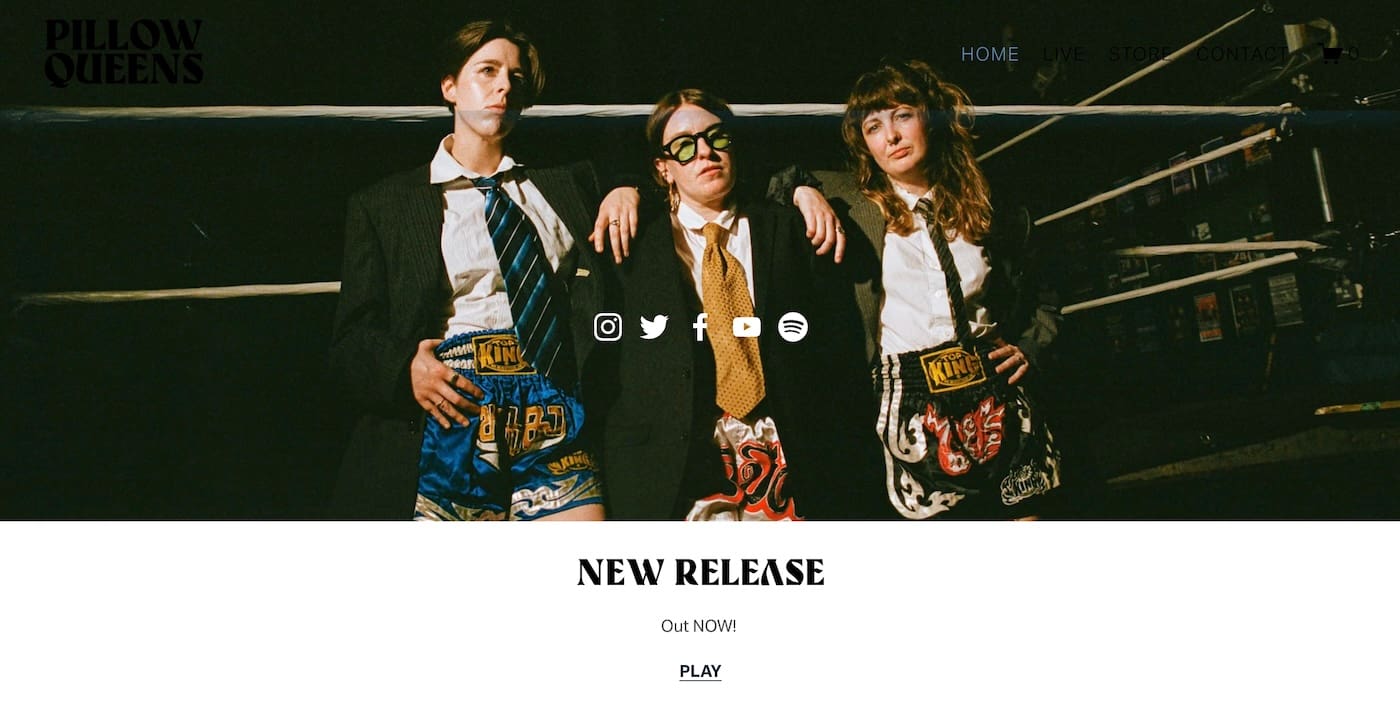
10. Pillow Queens

pillow queens - best band website

The Irish indie rock band Pillow Queens has been highly praised for their lyrical content and vocals since their inception in 2016.

This self-proclaimed “ragged-edged” approach to composition and performance is instantly reflected in their band website.

Launch the homepage, and visitors are instantly presented with a high-quality photograph of the band members in a striking pose.

This is followed by clear information about their latest album, placing the cover artwork center stage along with links to play and purchase.

Additional pages outline their upcoming tour dates, each complemented by links to redirect the visitor to ticket sales outlets.

There’s also a comprehensive store for merchandise, allowing the band to make money in addition to sales from their studio albums.


Recommended reading: The 10 best music grants for independent artists.


9. Cowboy Junkies

cowboy junkies - best band websites

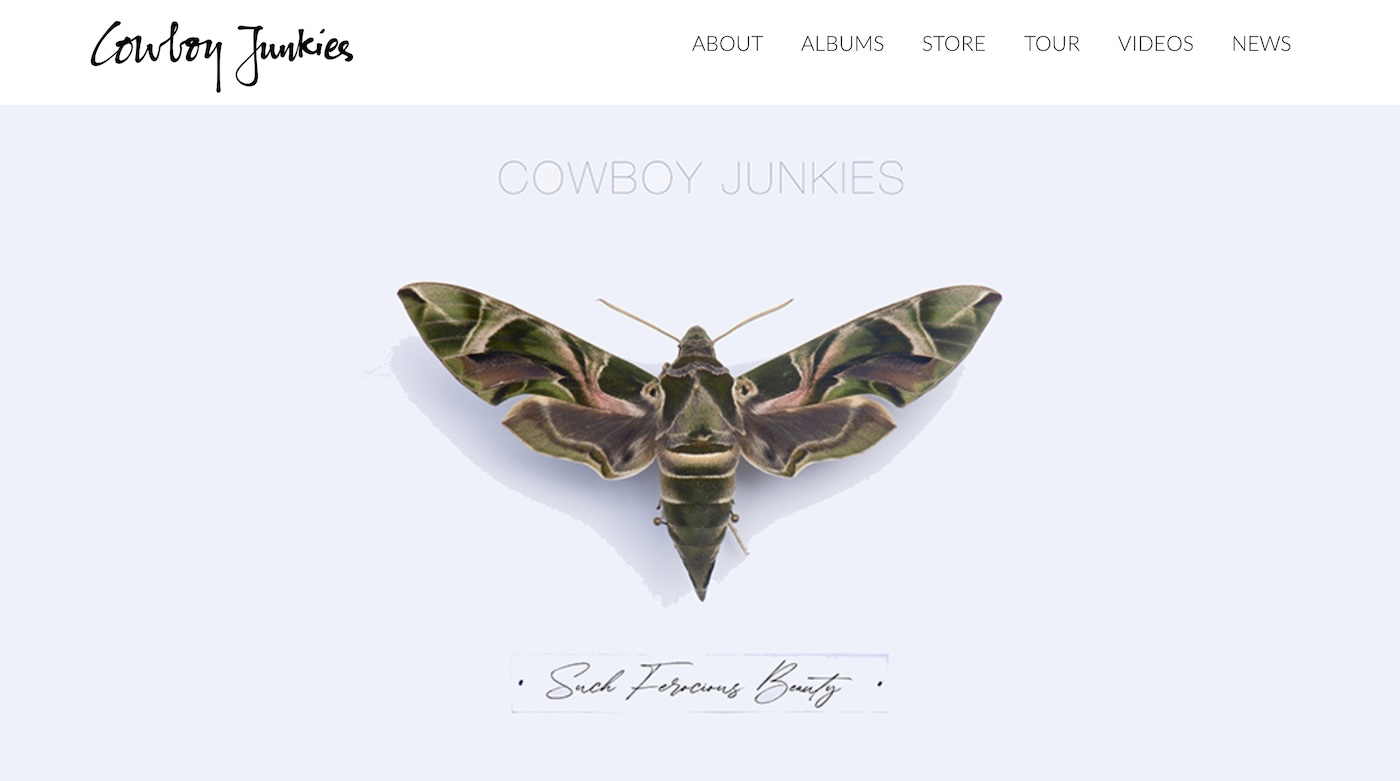
The Canadian folk and country music band Cowboy Junkies has left an indelible mark on the scene over the last few decades.

Formed in 1985, their discography has significantly expanded over the years, resulting in multiple award nominations, including the Juno Awards.

Their adept mixing and mastering skills are evident across many albums, all of which are featured prominently on their website.

You can find music videos of their songs through a link to their YouTube channel and a wealth of information on upcoming tours.

The Cowboy Junkies homepage also features a clear link to the mailing list, keeping fans informed about any upcoming developments.

With an attractive scrolling image banner and a merchandise store, it’s a comprehensive band website that includes numerous features.


8. Imagine Dragons

imagine dragons - best band website

Genre: Pop rock, alternative rock, indie pop

The American pop band Imagine Dragons has earned a reputation for vibrant live performances that match their upbeat music.

Regarded as the biggest breakthrough band of 2013, they’ve continued to tour extensively and release new songs that resonate with fans.

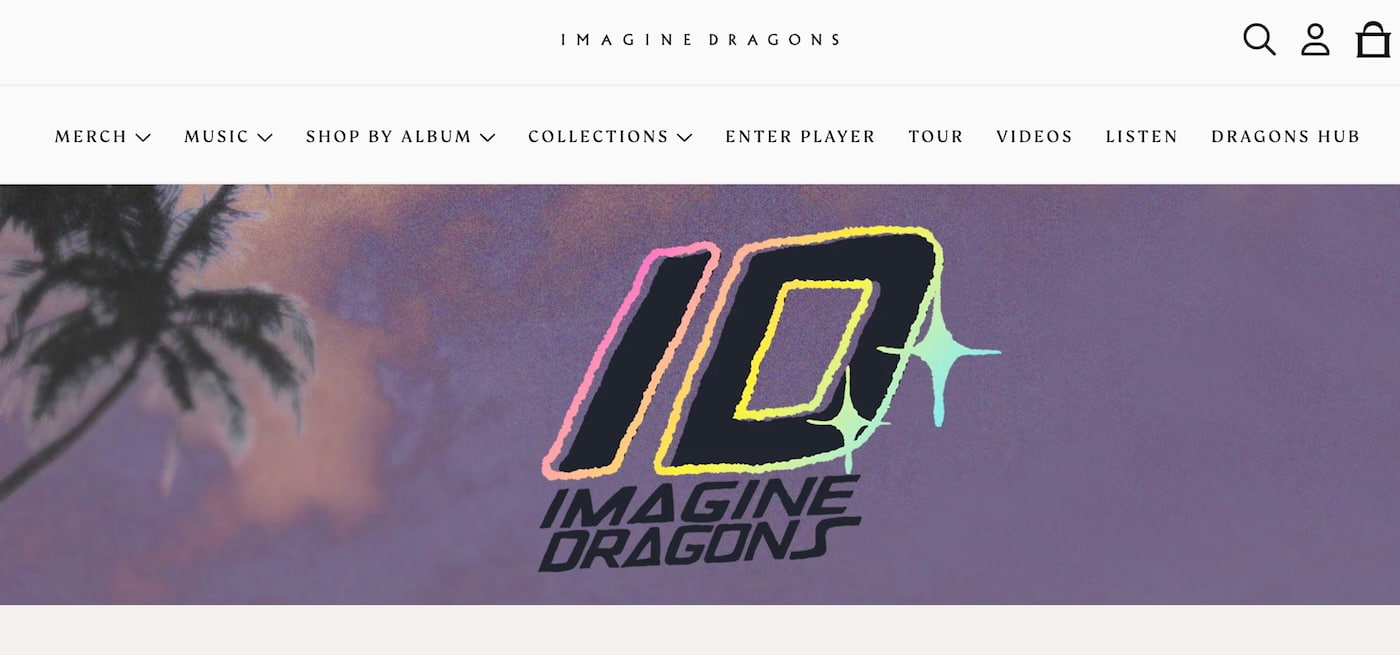
Their band website has a firm focus on selling albums and other merchandise, with dedicated pages for various categories and collections.

This includes everything from tees and physical media, including CDs, vinyl records, and even cassette tapes.

It’s an approach to website design that maximizes potential music royalties, complementing income from Apple Music and Spotify.


Related read: Mechanical royalties vs. performance royalties.


7. Simple Plan

simple plan - best band website

Another popular American band with a reputation for energetic live shows and a rich discography is Simple Plan, founded in 1999.

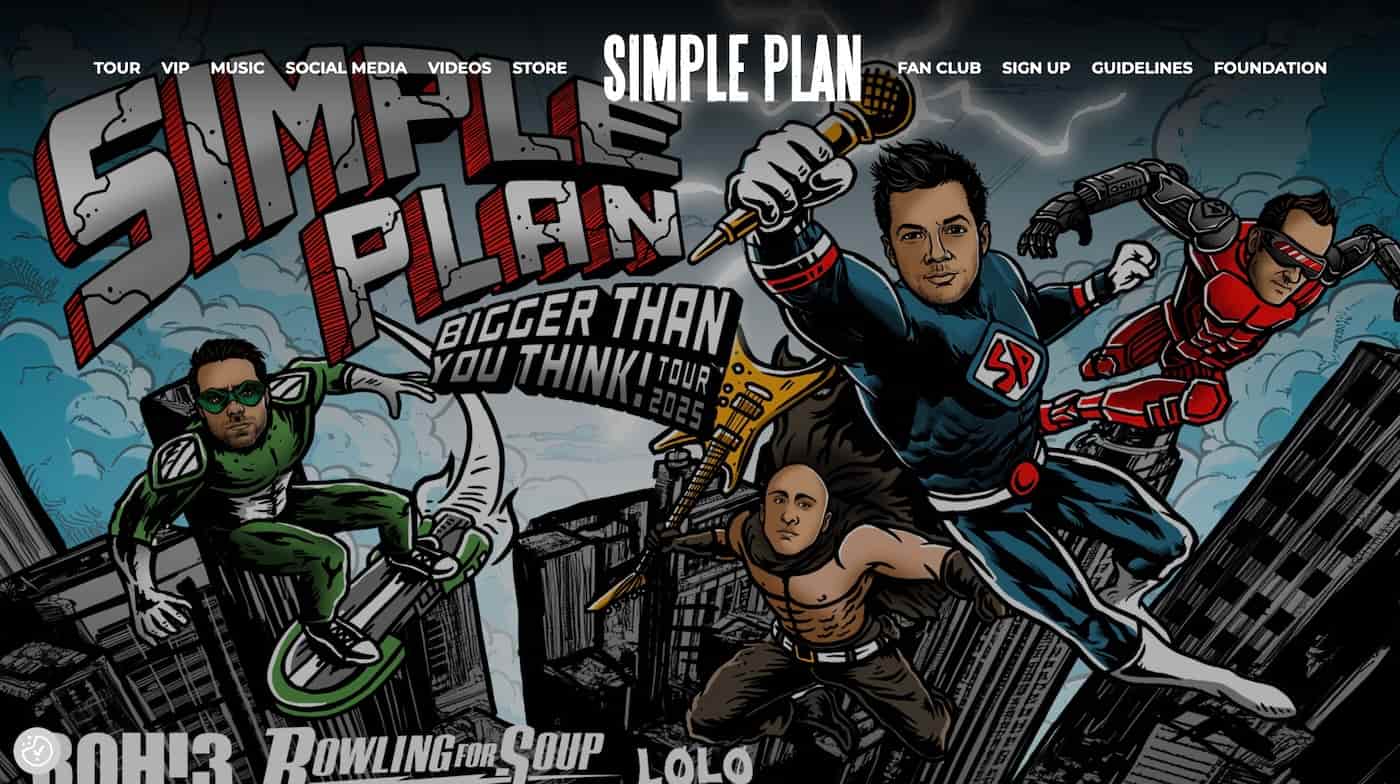
With six studio albums and numerous singles to their name, the band’s website boasts a wealth of archival material to draw from.

This is reflected in the website’s impressive selection of categories, covering tours, music, videos, and a VIP section for members.

On the homepage, the Simple Plan website prominently features its Amazon Prime documentary, providing links to view it online.

Additional site features include the ubiquitous store for merch sales, as well as a link to the band’s charitable foundation.

With many features to inspire your band’s website, it’s a solid resource that demonstrates how to combine visual flair and functionality.


6. Weezer

weezer - best band website

Weezer needs little introduction to anyone with a passing interest in music, having been publishing music for several decades.

The American band’s four members have made many lasting contributions to the music industry, both through the band and as solo artists.

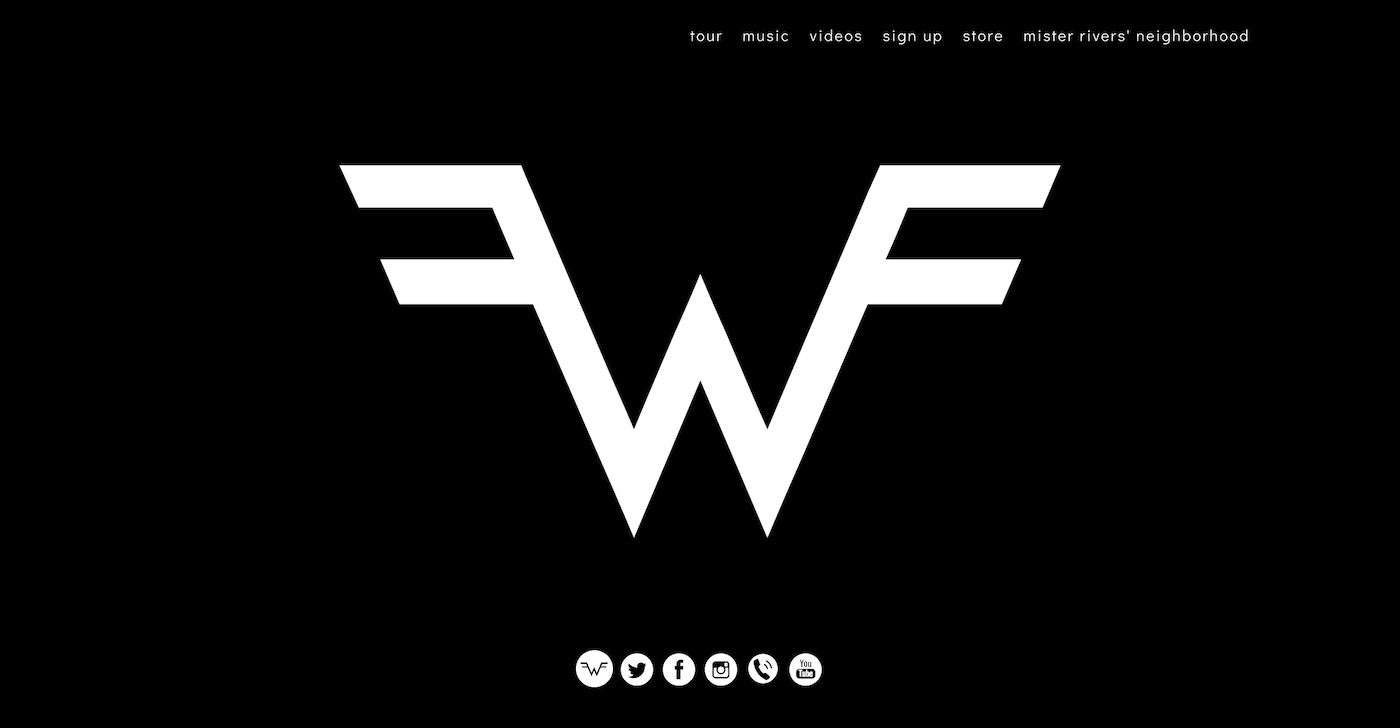
Weezer’s website is notable for its striking simplicity, with the band’s logo set against a jet black backdrop on the landing page.

Directly beneath the logo are a series of icons linking to social media pages, including Facebook, X, Instagram, and YouTube.

At the same time, the site’s navigation links are located across the top of the page, informing fans of tour showings and sharing music videos.

The result is a perfect example of minimalist graphic design done right, creating a smooth and engaging user experience.

In addition to the band’s core pages, there’s also a link to Mister Rivers’ Neighborhood for those interested in more content.

These include integrated tools for Spotify, Apple Music, and other playlist creation platforms, as well as a dedicated Discord server.

With Weezer’s return to Glastonbury in 2025 demonstrating their ongoing relevance, their website will continue to evolve.


Get Early Access
To Promo Hype


5. Blur

blur - best band website

The British band Blur sat at the forefront of the emerging Britpop scene in the 1990s, defining the genre for a generation.

The band quickly rose to international fame, in part due to the highly publicized “Battle of Britpop” with their rival band, Oasis.

With numerous chart-topping hits, Blur became renowned for their intricate music production and innovative instrumental arrangements.

This reputation for innovation is presented on their website, which hits visitors with gorgeous black and white footage on the homepage.

Showcasing the band’s instruments and music production equipment through quick edits, it instantly captures the attention.

Additional resources are available for fans, including a music page, the latest releases, and an online shop for merchandise.

It offers super easy navigation and includes a mailing list to provide fans with regular updates on the band’s latest albums and other news.


4. The Rolling Stones

the rolling stones - best band website

One of the most recognisable names in rock and roll is undoubtedly the Rolling Stones, which formed way back in 1962.

Still active today, the Rolling Stones have released countless albums and singles, with a lengthy list of Grammy Awards to their name.

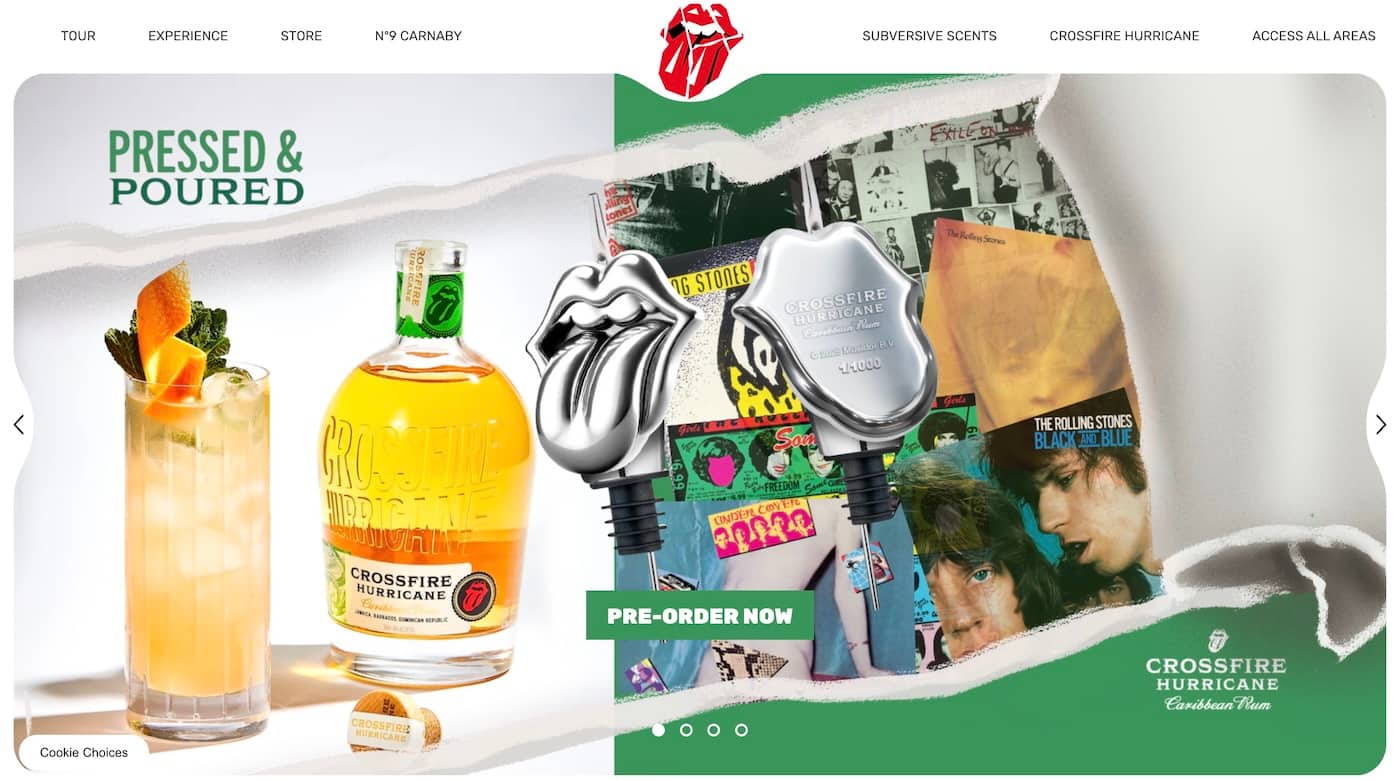
Their iconic track record is presented beautifully on one of the best band websites available, with a truly stunning homepage image.

Packed with color and boasting a collage-like design, it’s a textbook example of how an excellent website captures the visitor’s attention.

At the same time, this minimalist homepage belies the site’s comprehensive selection of information available through the main menu.

This includes a page for their tours, a robust store for merchandise, and a unique Journey page with interactive elements.

It’s an exceptionally crisp and wonderfully designed band website that echoes the band’s effortless music recording experience.


3. Alice In Chains

alice in chains - best band websites

If you’re a fan of tougher and grungier rock music, Alice in Chains delivers these genres in style with distinctive vocal inflections.

The band formed in Seattle in 1987 and has evolved into an international group with a reputation comparable to that of Pearl Jam.

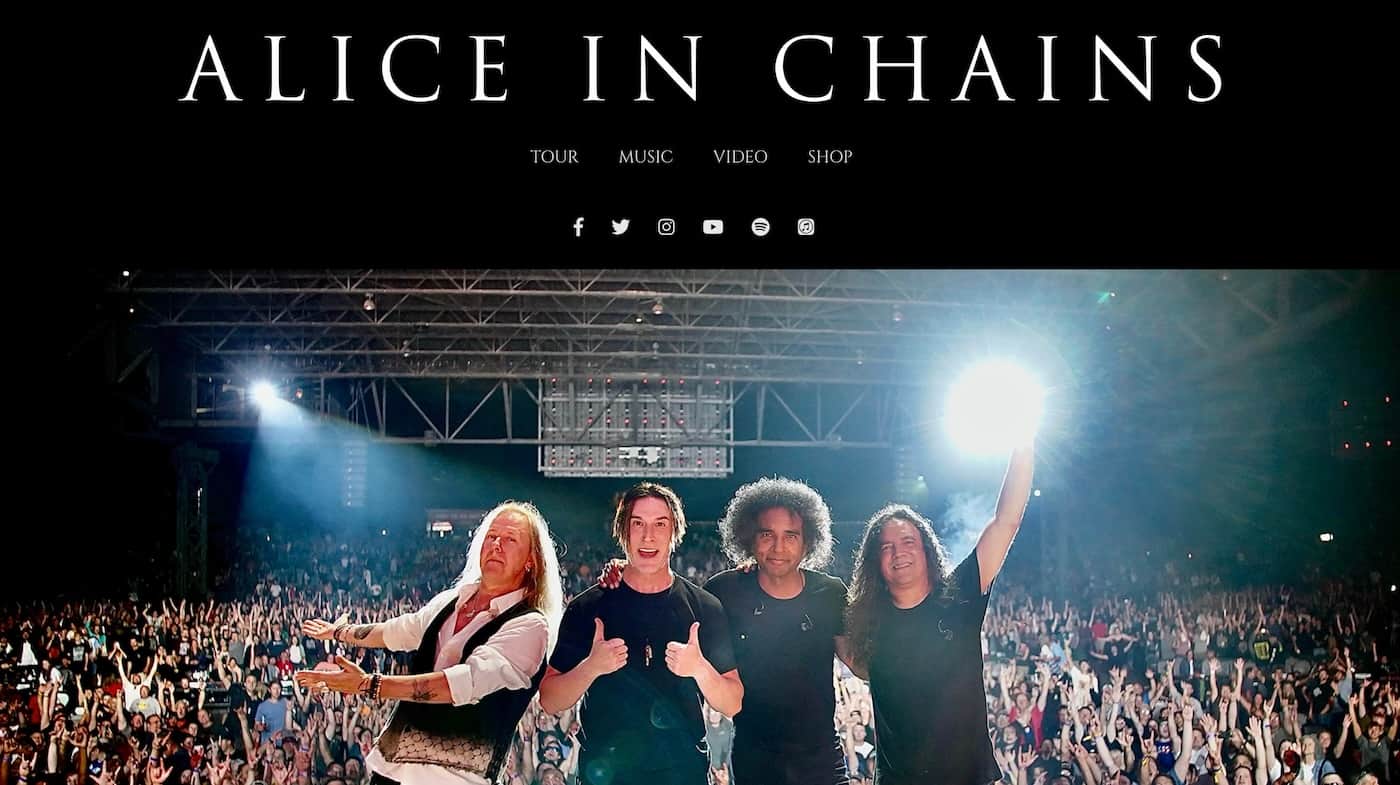
Highly regarded for their dynamic and powerful stage presence, Alice in Chains’ website showcases this on the homepage.

Featuring a high-quality photo of the band performing, it complements the overall site design and bold use of the band’s logo.

There are dedicated webpages for tour information, music releases, and videos of the band’s performances and music videos.

The homepage also features links to the store, where you can purchase tees, hoodies, and exclusive limited-edition vinyl records.

Visitors can also listen to the band’s music directly on the site, with embedded audio players to keep people on-site.

With easy access to the Alice in Chains social media accounts on Instagram, X, Facebook, and more, it’s another impressive site worth referencing.


Find out more: How to get gigs as a musician.


2. Five Finger Death Punch

five finger death punch - best band websites

Another notable heavy metal act with one of the best band websites is the uniquely-named Five Finger Death Punch.

After achieving massive success with their debut album, The Way of the Fist, the band has established a firm presence in the metal scene.

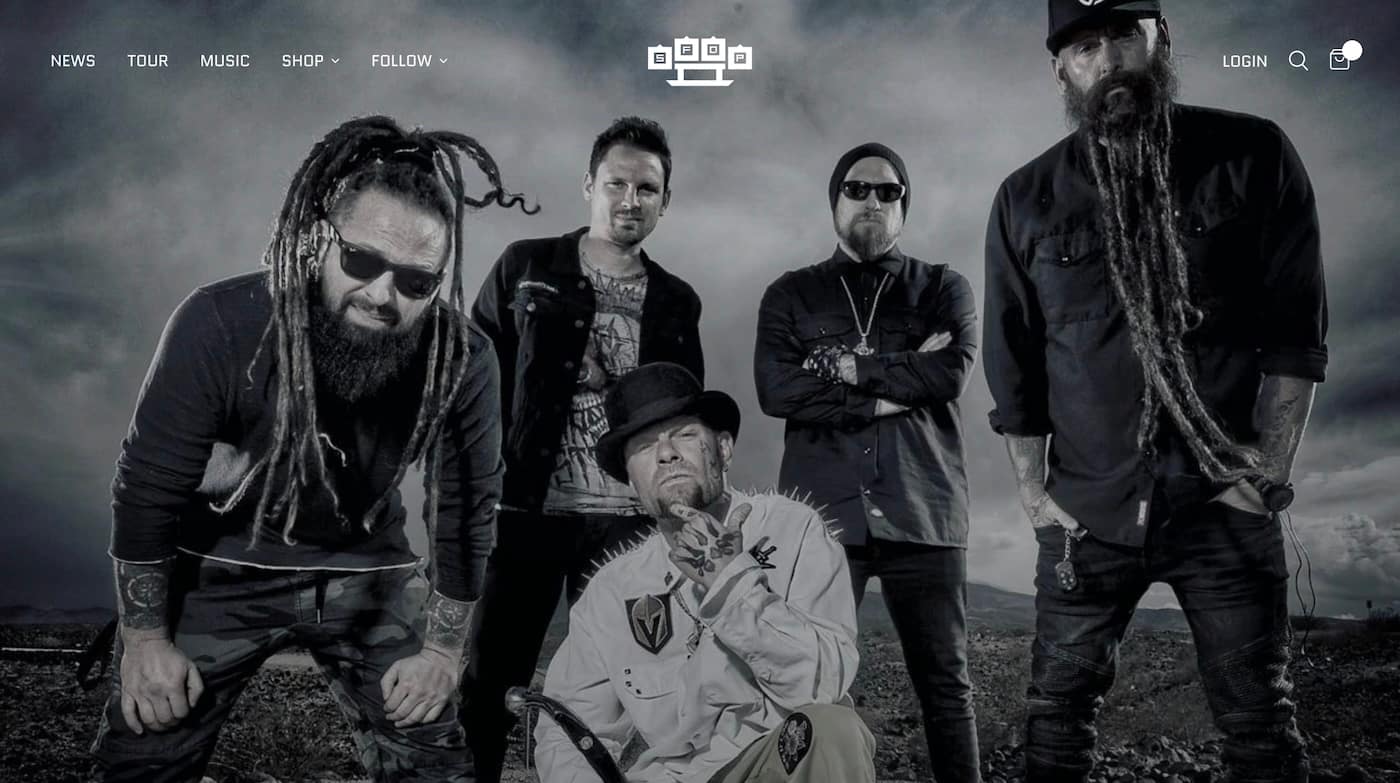
Their website presents everything in a slick and neat design, with a monochrome image of the band members on the landing page.

There are easy-to-read links to the site’s various pages in the top left-hand corner, with login options on the opposite side.

News, Tour, Music, and Shop categories form the site’s structure, with a Follow option to help fans connect on social media.

With effortless navigation thanks to the professional layout and clear links to streaming services, it’s another impressive band website.


1. The Cure

the cure - best band website

Regardless of your preferred genre, most musicians are familiar with the work of the iconic post-punk British band the Cure.

This revolutionary band changed the music scene landscape, from the way songs are structured to rethinking the blending of genres.

Comprising members Robert Smith, Jason Cooper, and Simon Gallup, the Cure’s legacy surpasses that of most bands of the era.

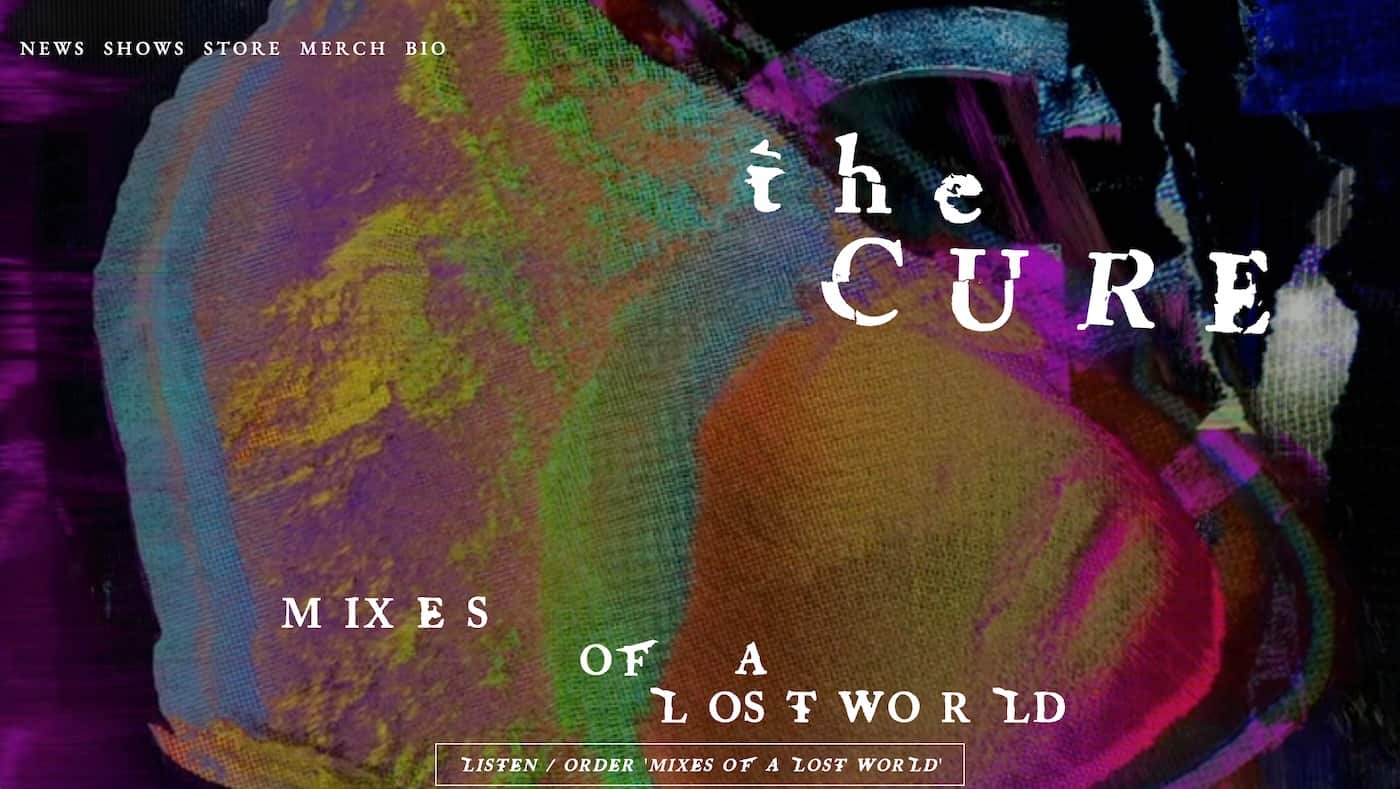
This carefully crafted idiosyncratic branding is instantly reflected through the homepage’s surreal animation and layout.

Undulating colored patterns are matched with the band’s logo, with animated elements introduced as you scroll down the page.

Sections covering the latest band news, collaborative projects, and upcoming releases are all presented with clarity and precision.

There’s also a merchandise store packed with products, including an impressive selection of limited edition vinyl releases.

With the Cure celebrating forty years of music, the site stands as a visually appealing testament to their rich and fascinating legacy.


Up next: Top 10 record labels looking for artists.


How To Build A Band Website

Setting up a dedicated professional website for your band is a core element of promoting your tour dates and new music.

Here’s how to build a band website from the ground up with a user-friendly interface and visually appealing design:

  1. Register a domain name/choose a web host: The first step to setting up a band website is to register your domain name, which should match your band’s name. You should also consider trademarking your band name to protect it from plagiarism and other infringements by outside parties.
  2. Add the main pages: Once your website’s domain name has been registered, it’s time to add the essential pages to flesh out the content. This includes a visually stunning homepage, contact page, media pages for music and videos, and a dedicated page for information about upcoming concerts.
  3. Upload images and videos: With the pages created, the next step is to upload visual assets, including pictures and videos that attract and retain the visitor’s attention. You can use photos and videos from previous gigs, as well as design elements like your band’s logo, all combined with a defined color scheme.
  4. Include contact information and social media links: A great band website should make it as easy as possible for fans and music industry professionals to contact you for more information. Including links to social media pages also increases your odds of going viral on TikTok and other platforms.
  5. Add a merchandise store: If you have branded merchandise, an online store is another essential feature to include in your band’s website. They’re relatively easy to set up with payment processors, and you can share design showcases with fans across social media to drive sales.

As your career evolves, you can introduce new media from performances and promote your music to your dedicated fan base.


Summary

Creating a band website sits at the heart of promotion, whether you’re a South Korean girl group or an established act.

By referencing the best band websites in this guide, you can ensure that yours covers the essential features with a visually striking web design.

And, by including an online store and selling tickets for upcoming shows, your band website will become a consistent source of revenue.

Music Marketing In 2026: The Definitive Guide for Independent Artists

Music marketing is a core aspect of the music business, whether promoting emerging artists or high-profile established acts.

Used to drive awareness and build a dedicated fan base around a recognizable brand, it also drives consistent revenue streams.

This ultimate guide to music marketing breaks down the processes, benefits, and effective promotional strategies you can use to market your music and brand.


Get Early Access
To Promo Hype


Music Marketing 2025: The Definitive Guide For Independent Artists

Building and promoting a brand to generate revenue sits at the heart of music marketing for artists, bands, and producers.

Here’s everything you need to know about marketing your music to achieve creative and professional success.


What Is Music Marketing?

Music marketing is the process of promoting the creative works of songwriters, bands, and music producers.

Once new music has been made, marketing efforts can be initiated to promote the releases across various platforms.

Marketing strategies can also be implemented to highlight upcoming live performances, merchandise releases, and artist collaborations.

It covers everything from digital marketing on social media to television commercials, radio spots, and print media marketing.

By combining these approaches, artists and music producers can generate income through sales, music royalties, and other revenue streams.


Learn more: The ultimate guide to music royalties.


Why Marketing Your Music Is Important

Knowing how to market your music effectively confers numerous benefits that make the effort worthwhile.

Here are some reasons why you should consider implementing a music marketing strategy for your creative works:


Establishing Your Brand

With the music industry expanding, the opportunities for independent artists to share new music releases have never been greater.

To achieve this, artists must establish a recognizable brand that enables audiences to connect with the music in a unique and meaningful way.

Marketing ensures this branding, from the artists’ or band name logo to other visual assets, becomes a key part of their appeal.


Building A Fan Base

With a clear brand in place, marketing strategies can then be used to nurture and grow a dedicated fan base.

By creating a sense of connection on social media platforms and music blogs, artists can write songs that resonate and keep the audience engaged.


Connecting With Music Industry Professionals

As independent musicians gain exposure through marketing, they’re more likely to gain the attention of music industry professionals.

Such exposure can lead to publishing or record label deals that provide access to significantly greater marketing resources.

These organizations help artists promote their work to much larger audiences, further catapulting them toward commercial success.


Generating Revenue Streams

Perhaps the most common function of marketing is revenue generation, and marketing for music relates to various streams.

It can allow artists to earn money from both physical and digital music sales, as well as through live shows and merchandise.

Revenue can then be reinvested in resources that create great music, such as building a recording studio or buying new instruments.


Collaborating With Independent Artists

There is no shortage of high-profile brand collaborations, and the music industry is no exception to this relationship.

Songwriters and producers can reach new audiences, increase visibility, and boost revenue by collaborating with successful independent artists.

These collaborations can then form the basis for new marketing campaigns that leverage their collective online fan base.


Building A Music Career

Ultimately, the core benefit of marketing music is the formation of a viable, long-term music career that allows for creative development.

Successful marketing strategies make it easier for record labels seeking artists to find talent that matches their style.

They can also be used by independent artists who want to retain complete creative control of their brand and future musical direction.


Read next: Music publishing 101.


Key Components Of Music Marketing

As with music production, marketing music incorporates a range of processes that each play a pivotal role in the process.

Let’s break down these components in more detail, from the principal platforms used to the types of ad campaigns.


1. Official Websites & Electronic Press Kits (EPKs)

The first port of call for music bloggers and journalists when reviewing the works of independent musicians is their official website.

This website serves as a showcase of their ability to write and record music that deserves to reach a larger audience.

It includes new songs, high-quality photos, and music videos, with external links to their YouTube channel and social media profiles.

When building anticipation for release day, electronic press kits are used to reach out to the press and generate buzz.


2. Distribution On Streaming Platforms

Music streaming platforms form the backbone of exposure and income for independent musicians and music producers.

Apple Music, Spotify, TIDAL, and other platforms can all be used for performance royalties and to promote upcoming live events.

Independent musicians can utilize music distribution services to distribute their content across various platforms while retaining 100% of the royalties.


3. Promotion On Social Media Outlets

Social media and the music business are inextricably linked, with Facebook, X, TikTok, and Instagram playing a crucial role in driving artists’ success.

Marketing strategies often incorporate social media to reach potential fans, while going viral on TikTok can be a career game-changer.

They’re also excellent platforms where artists can sell merch, generating additional passive income while attracting new fans.


4. Paid Ad Campaigns

If you have the resources to do so, investing in paid ad campaigns can significantly expand your reach and increase your exposure.

Ads can increase your online streams and physical sales, resulting in consistent mechanical and performance royalties.

You can establish metrics and monitor ad performance to ensure your marketing budget is delivering the intended results.


5. High-Quality Content Creation

While it stands to reason that great music is the standout content for musicians and producers, other assets are also needed for marketing.

These can include assets such as music videos and photos from performances, as well as logos and other designs used on releases and merchandise.

It can also feature behind-the-scenes footage, documenting your journey to becoming a music producer and the process of completing tracks.


Get Early Access
To Promo Hype


How To Create A Music Marketing Plan: Step-By-Step

Creating a music marketing plan is crucial for ensuring that any investment yields a worthwhile return.

Here’s a concise step-by-step guide to help you create a marketing plan that delivers results on a budget:


Step 1: Research Your Target Audience

Understanding the interests and habits of your target audience is fundamental to running successful promotional campaigns.

It provides insights into their behaviors, such as their preferred streaming platforms, favorite tracks, and demographics.

You can also learn more about other popular music genres they’re interested in and how this can influence future projects.

By researching your target audience, you can tailor ad campaigns and social media posts to their liking and gain more exposure.


Step 2: Study Similar Artists

Creating successful marketing strategies is easier when you understand what has worked for other artists in the past.

By studying artists within your genre you admire, you can analyze their approach to branding and getting real results.

This research can also help you on a creative level, gaining deeper insights into music theory and other aspects of the craft.

You can put this theory into practice by creating cover songs of these artists and reaching out for potential collaborations.


Step 3: Set Clear & Measurable Goals

Music marketing strategies can be tangibly measured across various metrics, providing valuable insights into your success.

To refine your strategy, these metrics and goals should be clearly defined from the outset, including the tools needed to measure them.

You can establish key performance indicators based on various metrics, including streaming and sales data, as well as social media engagement.

By tracking this data, you can gain insight into which platforms yield the most optimal results for your time and money.


Step 4: Establish A Budget

Music marketing strategies require an initial investment to launch, which means establishing a budget for your campaigns.

When budgeting for marketing, factor in other expenses, such as music production equipment and instrument costs.

If your budget is limited, you can launch smaller-scale test campaigns, using A/B testing to evaluate which assets yield the best results.

Spreading your budget across multiple campaigns can also improve your outcomes and provide you with more data to work with.


Step 5: Implement Your Action Plan

Once your plan is finalized, it’s time to implement it across your chosen platforms and wait for the results to come in.

Be ready to respond to comments and feedback, since this will further drive engagement with your fan base.

You can collect and track performance data using various tools, weighing up the results to streamline your next campaign.


Also read: How to trademark a band name.


Music Marketing Resources

Marketing your music can be complex, with numerous factors to consider that will impact your approach.

These factors range from creating your brand assets to managing your social media pages and responding to comments.

Here are some valuable tools and resources you can use to streamline your workflow when marketing your music:

  • Chartmetric: Tracking data is essential for growth, and Chartmetric is an excellent tool that utilizes revolutionary predictive algorithms to aid in this task.
  • Google Analytics: A widely used resource for all types of creatives, Google Analytics can deliver additional insights that songwriters and musicians can use to refine their marketing strategies.
  • Design and editing tools: If you need to create a logo or edit a music video, platforms like Canva and Capcut include game-changing tools for musicians.
  • Social media management tools: Managing social media channels is simplified with specific tools, such as Hootsuite, which can be used for scheduling posts and monitoring comments and likes.
  • Digital music distribution services: Uploading multiple tracks to Spotify, Apple Music, and other platforms can be a time-consuming process. Digital music distribution services perform this and other related tasks for you for a monthly subscription fee.

You can use free tools or sign up for trial periods to decide which tools best match your needs and marketing workflow.


Top 3 Best Music Marketing Strategies

Marketing music requires a comprehensive approach to ensure all opportunities for growing an audience and income are seized.

If you’re approaching music marketing for the first time or looking to refine your strategy, here are some examples to consider.

  1. Take a multi-platform approach: Utilizing all available platforms is vital for any successful marketing campaign, whether for a new release or upcoming gig. In addition to utilizing social media and collaborating with music journalists, consider submitting music to radio stations and podcasts.
  2. Incorporate live performances: While digital music is experiencing unprecedented growth, the demand for live music remains equally important in marketing strategies. A gig allows fans to meet you in person, creating a strong connection and word of mouth.
  3. Consistently engage with your audience: On the topic of fan engagement, responding to comments, emails, and other forms of communication is integral to effective marketing. This includes networking with industry professionals to increase your chances of getting gigs and other deals.

By combining different platforms and engaging with constructive feedback, your marketing strategy will deliver optimal results.


Trending: The 10 best music grants for independent artists.


Music Marketing Tips

We’ve covered the essential processes for promoting your music, but here are some additional tips to further enhance your approach:

  • Follow music industry trends: Capitalizing on the latest industry trends ensures that your marketing campaigns are in tune with the current state of music culture.
  • Pitch to playlist curators: Getting your music featured on curated playlists on Spotify and other editorial playlists can significantly enhance your global reach.
  • Create a YouTube channel: If you don’t already have a YouTube channel, setting one up can expand your revenue streams and provide a platform for live performances and music videos.

Experimenting with content and gauging feedback from your fans will ensure these tips elicit the best response.


Summary

Understanding how music marketing works is crucial for musicians and producers to differentiate themselves from the competition.

Whether releasing singles or promoting an upcoming tour, marketing plays a pivotal role in building hype and generating sales.

As you launch new campaigns, you can refine your promotional content to create visually stunning assets that resonate with fans.

How to Get Gigs as a Musician in 2026: 10 Steps to Book More Shows

Knowing how to get gigs as a musician is a vital element of performing to audiences who’ll appreciate your style.

From open mics in your local bar to multi-act festivals, playing your new music live is a thrilling experience that drives your career.

This guide explains how to find venues interested in your act and establish a strong reputation among industry professionals to help secure more gigs.


Get Early Access
To Promo Hype


What Is A Music Gig?

A music gig is a casual expression relating to a live music performance by solo artists or bands in various venues.

The expression dates back to the American jazz scene of the 1920s, during which time artists referred to performances as “gigs.”

Ranging from intimate events in coffee shops to large-scale concerts in arenas, music gigs are a core source of income for musicians.

Many successful independent artists find their break performing at gigs, capturing the attention of record label A&R representatives.

While the rise of digital streaming has impacted the state of the live music industry, gigging remains a necessary activity for artists.


Recommended read: A complete guide to music royalties.


How To Get Gigs As A Musician In 2025: Step-By-Step

If you’re hoping to land your first gig or revive your band for an upcoming tour, you’ll need to adopt a proactive approach.

Follow this step-by-step guide to getting gigs as a musician, from creating an online presence to reaching out to venues.


Step 1: Set Up A Professional Website

Building a strong online presence is crucial for all musicians seeking to establish a career and secure more gigs.

A professional website is often the first port of call for venue owners and agents, helping them decide whether to book gigs.

This means taking the time to make everything look polished and professional, with precise contact details and links to social media.

It should also include high-quality photos and videos of previous gigs that instantly capture the visitor’s attention.

If you’re working from a home recording studio, you can include shots of the band in recording sessions and other material.

Electronic music producers can add value to a website by sharing music production tips and other resources with fans.

Once your website is ready, include a link to it on all communications and update visual assets as your music career progresses.


Step 2: Use Social Media To Gain Exposure

Social media accounts are reliable platforms for promoting music gigs, upcoming releases, and other events.

If you aren’t already on X, Facebook, and Instagram, you should set up accounts and connect with fans and local musicians.

Facebook event planners can be used to gauge attendance levels and link to websites where attendees can book tickets.

Social media accounts can also be used for paid promotions, such as pushing upcoming events to Facebook users in your area.

While it can be challenging to go viral on TikTok, it pays to post content across all channels and establish a strong online presence.

By sharing your musical journey with fans, you can drive ticket and merchandise sales directly to your target audience.

It can also help gather feedback, engage with fellow musicians in your city, and ultimately land more gigs.


Also read: A beginner’s guide to music production.


Step 3: Create An Electronic Press Kit (EPK)

Electronic Press Kits (EPKs) are widely used by creatives across all sectors, including artists and bands, filmmakers, and photographers.

An EPK for musicians should contain a variety of assets, beginning with an introductory biography and up-to-date contact information.

This can be complemented with a selection of visual and audio assets that highlight your particular style and level of experience.

If you’ve created a music video, you can include it in your EPK, featuring footage of audience members responding to your performance.

You can tailor a specific EPK to a particular client, such as when pitching for corporate events or private parties.

It’s also recommended that you trademark your band name to protect it legally if another band uses your name.

As you gain more experience playing live, update your EPK to include new videos and photos of gigs that give a good impression.


Step 4: Network With Other Musicians

Writing and recording music is inherently sociable, with many artists connected to musicians and performers in their area.

These networks can be used to find gig opportunities, whether seeking advice or hosting live performances with other musicians.

You can collaborate with other artists to brainstorm local bars and music venues that might be interested in hosting your musical acts.

If you’re a solo act, consider partnering with other musicians in a supporting role or as part of a multi-act lineup.

The more gigs you perform, the stronger your network will become, creating additional opportunities for gig slots at local shows.


Step 5: Gain Experience At Local Venues

While headlining at a major festival is an excellent goal, for most musicians, setting a more realistic goal is recommended.

Those looking to land their first music gig will find more opportunities to do so at local bars and music venues.

You can start by compiling a list of local venues of interest and then contact them with links to your website and social media accounts.

Attending gigs by other artists at these venues will give you a clearer idea of the setup used and their preferred musical style.

If you don’t have enough songs for a complete gig, consider joining the venue’s list of opening acts to test the waters.

Once you’ve contacted smaller venues and landed your first gig, consider any constructive criticism to improve your next performance.


Get Early Access
To Promo Hype


Step 6: Reach Out To Booking Agents & Promoters

Many independent artists lack the professional experience and contacts to guarantee regular, well-paying gigs.

Reaching out to booking agents can help overcome this barrier, providing access to a network of venues seeking new artists.

Booking agents represent acts across all popular music genres, earning a commission or taking fees for successful bookings.

They also collaborate with promoters to market upcoming gigs online and in real life, liaising with music industry journalists.

By reaching out to booking agents and seeking representation, artists can focus on refining and perfecting their performance.


Step 7: Consider Performing For Free

Musicians who are struggling to land gigs often choose to perform at events for free to gain experience and exposure.

While this is a common tactic for new artists, established acts can also benefit from giving free performances.

For example, performing at charity events can bring additional attention while also raising money for a valuable cause.

Charity concerts can generate substantial sums of money, with high attendance levels and overwhelmingly positive responses.

It’s an excellent option for new acts to reach otherwise inaccessible audiences with lower risks for the venues.


Step 8: Submit Music To Radio Stations & Podcasts

Successful radio station DJs and podcasters play a pivotal role in the music business, promoting new acts to their audiences.

Many musicians seeking to build their reputation submit music to radio stations in the hope of gaining widespread exposure.

Each radio station has specific procedures for submissions, so check to see what’s expected before sending original music.

You should also ensure your music sounds polished and professional, paying for mixing and mastering services if necessary.

If a station picks up your music, reach out to see if they’re available for interviews, and use these opportunities to promote your upcoming gigs.


Learn more: How to mix music.


Step 9: Contact Venues You Admire

While local venues are likely to respond favorably to your emails, that doesn’t mean you should restrict your outreach.

If you have a shortlist of top-tier music venues you’d love to perform at, there’s no harm in sending your information.

Many acts, ranging from top music producers to iconic bands, began their careers at popular underground venues.

If you receive rejections, they can still provide insights into the music industry and what is expected from professional musicians.


Step 10: Distribute Your Music Online

Distributing music online is a reliable way to make money as a music producer, singer-songwriter, or band.

In addition to generating revenue, digital music distribution can also be used to promote live music gigs to your fan base.

Artists can utilize platforms like Spotify to share information about events, including links to websites where they can book gigs.

The best music distribution services streamline the process of uploading music to Apple Music, Spotify, TIDAL, and more.

Musicians can utilize these services to gauge the popularity of their tracks and play music that resonates with their audience.


Setlist Best Practices

Certain qualities transform an average live music performance into something truly unique and memorable.

Here are some best practices to consider when creating and performing a setlist at a live show:

  • Showcase your professionalism: Becoming a full-time musician requires a level of professionalism, both in your performance and off-stage. There may be record labels looking for artists in the audience, so present yourself accordingly throughout the gig.
  • Rehearse your set thoroughly: Stage fright and other factors can quickly derail a performance, but thorough rehearsal can minimize this risk. The better you know your material, the more relaxed and confident you’ll appear on stage.
  • Create a musical arc: The best gigs take the audience on a journey, telling a story in the songs they perform. Take the time to consider the structure of your gig to capture the essence of this concept.

By performing at the top of your game, you’ll increase your chances of getting signed to a record label and reaching new fans.


Trending: Music publishing 101.


Top 5 Tips For Landing More Gigs

The step-by-step guide above outlines a range of processes you can undertake to increase your chances of landing gigs.

Here are some additional tips to make landing gigs much easier:

  • Create a demo: A dedicated demo targeting a specific venue can significantly increase your chances of capturing their attention. Ensure your communications are always personalized, researching the event beforehand.
  • Hone your communication skills: Clear communication is the key to working with venue owners and promoters. It also applies to interacting with the audience, whether telling stories or engaging in banter.
  • Perform at open mic nights: Local venues frequently host open mics, providing excellent opportunities for impromptu live performances. Keep track of upcoming open mics at your preferred local bars and attend them whenever possible.
  • Apply for music grants: If you’re a gigging musician or band with a track record, you may be eligible for one of many music grants. Check the application criteria and, if successful, reinvest the money into instruments and other gear.
  • Always follow up after events: Feedback is key to growth, whether from booking agents, venue owners, or your core fan base. Always follow up after each event to gauge the reception and improve your performing style.

By honing your musical abilities and performing style, you can build a consistent reputation that attracts new gigs.


Frequently Asked Questions

In case you still have any queries surrounding the concept of gigging, here are answers to the most commonly asked questions:


1. How Much Should You Charge For A Gig?

Band and artist fees for gigs vary wildly, influenced by the venue type and capacity, the artist’s level of fame, and industry averages.

When setting your prices, compare your profile to similar acts, read other artists’ riders, and consider your travel and other expenses.


2. What To Wear At A Gig?

While there are no fixed rules about what to wear at gigs, dressing to impress will help leave a lasting impression.

You don’t have to mimic the iconic outfits of famous artists, but select a wardrobe that captures your personality and style.


3. How To Get Gigs Online?

There are many excellent online resources for finding gigs, with multiple booking sites available for use.

The booking site Bandzoogle has helped artists earn $100 million in direct-to-fan sales, so consider this and similar platforms.


Summary

Gigs play a crucial role for artists and bands to earn income while promoting their music to a live audience.

Combined with music and merchandise sales, revenue from gigs enables you as a musician to transform your passion for music into a career.

By applying the advice in this guide, you can land more gigs at bigger venues with increasingly larger crowds.

Music Publishing 101: What It Is and How It Works in 2026

Breaking into the music industry can be challenging for independent artists, but music publishing presents numerous opportunities for success.

Securing a music publishing deal enables artists to reach significantly larger audiences and access valuable resources for promotion.

This guide provides a comprehensive overview of music publishing, covering everything from negotiating deals to royalty streams and sync licensing.


Get Early Access
To Promo Hype


Music Publishing 101: What It Is & How It Works In 2025

Whether you’re a solo artist or an electronic music producer, landing a publishing deal can transform your career prospects.

Here’s everything you need to know about music publishing, from the basic concept to how it works for artists.


What Is Music Publishing?

Music publishing is the process of promoting and monetizing musical compositions, generating revenue opportunities.

Revenue from royalties and licensing deals is then distributed to those responsible for making music, such as songwriters and composers.

Acting on behalf of the songwriters to protect their compositions, music publishers also help with copyright and intellectual property management.

Additionally, music publishing incorporates comprehensive marketing strategies that connect artists with other talent in the music business.

With the industry forecasting strong growth, understanding how it works is crucial for independent artists seeking a deal.


Types Of Music Publishing Companies

Before we break down the role of music publishers in more detail, it’s crucial to understand the various types of publishing companies.

Here’s an overview of the principal types of music publishing companies to be aware of:

  • Major publishers: These publishers have a global reach, controlling millions of songs written by thousands of songwriters and composers. The “Big Three” in this category are Sony Music Publishing, Warner Chappell Music, and Universal Music Publishing Group.
  • Major-affiliated publishers: Independent publishers that partner with majors are classed as major-affiliated publishers, which are run as independent operations. These publishers will leverage resources and tools commonly used by major publishers, such as royalty collection systems and administrative tools.
  • Independent publishers: With their self-funded model and internal administrative processes, independent publishers often cater to niche music genres. They’re usually more flexible than larger companies, with a personalized approach to working with independent artists.
  • Writer-publishers: Singer-songwriters who manage their own publishing and retain complete control are classified as writer-publishers. This self-managed approach ensures 100% retention of income, but requires additional time and resources to manage the business.

Understanding how these types of publishing companies operate ensures you approach those that best match your requirements.


Read more: How to submit music to radio stations.


The Role Of Music Publishers

Music publishing companies primarily focus on promoting songs and collecting royalties for signed artists.

There are, however, additional roles and responsibilities that music publishing companies undertake, such as:

  • Administration and legal protection: Music publishing encompasses various aspects of administration related to copyright ownership, intellectual property, and royalty payments. They handle registration with collection societies and other legal and administrative tasks.
  • Artist & Repertoire services (A&R): Many publishers invest considerable time and money into scouting new talent at gigs and festivals. This allows them to connect artists for potential collaborations on music projects and upcoming tours.
  • Negotiating rights: With deep connections in the music industry, publishers ensure artists secure the best possible deals when licensing their music. This can include competitive advances and terms of agreement, as well as access to global markets.

These responsibilities ensure that artists have complete protection of their creative works while maximizing revenue opportunities.


Music Publishing Companies Vs. Record Labels

Music publishing companies and record labels are sometimes confused, but there are key differences between them to be aware of.

While successful independent artists frequently work with both, their responsibilities and focus have distinctions, including:

  • Copyright ownership: Music publishing focuses on the control and exploitation of song copyrights, encompassing both the composition and lyrics. Record labels, on the other hand, own the sound recording copyright, relating to the specific recorded version of a song.
  • Promotion and marketing roles: Working with a music publishing company ensures that songs are promoted to other musicians and industry professionals. For record labels, this marketing focuses on promoting releases to the public in both physical and digital formats.
  • Artist brand and image: When it comes to building an artist’s brand and developing their career, record labels play a dominant role. They work with artists to build a fan base, promote them on social media, and arrange interviews.

In many cases, artists will have separate deals with a label and publisher based on the aforementioned copyright ownership.


Related read: The top 10 record labels looking for artists.


Intellectual Property: Composition Vs. Master Copyrights

The topic of copyright ownership and its relationship to intellectual property is central to the relationship between music publishers and songwriters.

Let’s examine the role of the composition copyright and the master copyright owner, and how it affects royalties paid.


Composition Copyright

The first type of copyright is the composition copyright, which offers legal protection for the original song structure.

This encompasses all aspects, including the melody, rhythm, and harmony, as well as the types of chords used in the arrangement.

Asserting a composition copyright ensures exclusive rights to the writers and composers to use their work in various ways.

This covers everything from the reproduction and distribution of the work to its live performance and use for other derivative works.

Songwriters gain automatic protection, becoming the copyright owner of the composition once a tangible medium has been produced.


Master Copyright

The master copyright holder is distinct from the composition copyright holder, based on the specific sound recording of a song.

As such, the owner is responsible for recording the music, with specific benefits related to monetizing that content.

This individual is often associated with a record label, managing the recording studio, and overseeing the mixing and mastering of the final song.

They are allowed to license the recording for use in other media, while also controlling the distribution and use of that recording.

If you’re an independent recording artist who funded your productions, you will retain ownership of the master recording.


Understanding Publishing Deals

Acquiring a publishing deal enables songwriters and music producers to make money through a revenue-sharing arrangement.

Let’s break down the different types of publishing deals and how each affects payment splits and responsibilities.


Music Creators Vs. Publisher’s Share

Music publishing deals can vary depending on the individual circumstances of each artist, with a 50/50 split the most common arrangement.

The artists typically receive their share directly, based on royalties generated through various types of performance.

While the best music producers can land more favorable deals, negotiation is still recommended when striking a deal.

Once you achieve commercial success and secure airplay on radio stations, you can renegotiate contracts for more favorable terms.

The type of deal also influences the management and distribution of shares in various ways, which we’ll cover next.


Full-Publishing

Under the terms of a full-publishing deal, the songwriter transfers all of the ownership rights and copyright to the music publisher.

In exchange, they can access an advance payment from the publisher, which ties into various ongoing royalties.

Any upfront payments to artists must be recouped through sales and licensing deals before standard royalties are paid.

Since the publisher has been granted exclusive rights to administer content, they can assist with collaborations with other artists.

Publishers will also offer financial support to artists, nurturing their creative development and access to music production resources.

Major artists can secure highly lucrative publishing deals, particularly when they have extensive back catalogs of music available.


Co-Publishing

Once you’ve started producing music like a pro, you may decide that balancing responsibilities with a publisher is your best option.

Co-publishing enables publishers to share in the ownership of the composition copyright, in exchange for providing services and advances.

This allows writers to retain their entire share, along with 50% of the publisher’s share, for a total of 75% of the copyright income.

Under a co-publishing deal, artists can access the same level of services as their full-publishing counterparts.

Access to resources, such as recording studios and industry connections, is available to foster the artist’s career.

This co-ownership arrangement serves to motivate the publisher further to seek out consistent revenue opportunities.

Independent artists considering this publishing style should be clear about the contract, including the duration and relevant terms.


Publishing Administration

With a music publishing administration deal, songwriters can retain complete ownership of their music, including its use and distribution.

This arrangement scales back the publisher’s role to managing administrative tasks on behalf of the artist.

One of the primary administrative tasks in this deal is registering creative works with the relevant performance rights organizations.

This includes processing the paperwork for registration and continues through the collection and distribution of royalties.

For these services, the publishing company will charge a fee of between 10% and 25%, with additional potential fees.

Since publishers don’t adopt any copyright ownership, it’s an appealing option for artists seeking to maintain their independence.


Get Early Access
To Promo Hype


Types Of Music Publishing Royalties

The collection of music royalties is a key factor in securing a publishing deal, as various royalty streams are available.

Here’s a breakdown of the main types of royalties, including public performance royalties, mechanical royalties, and sync licensing deals.


Public Performance Royalties

Earning performance royalties comes through a variety of outlets, occurring whenever music is publicly performed.

This encompasses a variety of venues, including bars, restaurants, shopping malls, and a range of other platforms.

Airplay on radio stations generates performance royalties, along with any live concerts and performances on streaming services.

If you have a publisher, they are responsible for collecting and distributing royalties paid from the relevant performance rights organizations.

These organizations also take a fee for their services, dividing the total royalties between the songwriters and publishers.


Mechanical Royalties

Songwriters can also earn money through mechanical royalties, which pay out based on physical sales and digital downloads.

Distinct from sound recording royalties, mechanical royalties are paid directly to songwriters and publishers through a mechanical society.

They are triggered for each physical sale and can also be generated when music is streamed on platforms such as Spotify and Apple Music.

When collecting mechanical royalties, it’s essential to ensure that your metadata is up-to-date and accurate.

This includes implementing the correct ISRC codes and providing the song’s information to the collection society.

In most publishing deals, these processes are handled by the publisher, who liaises with the collection society on behalf of the artist.


Sync Royalties & Licensing

Another common approach to monetization for artists is through sync licensing deals and the use of music in specific content.

Publishers leverage their industry connections to access various sync opportunities, including those for movies, TV shows, and commercials.

Unlike mechanical and performance royalties, sync licensing can include an upfront one-time fee paid to the rights holders.

Such deals can provide artists with significant exposure, particularly when the song is licensed for a major movie or television series.

Sync licenses are commonplace for generating royalties for major artists and are a key feature of the entertainment industry.

In addition to generating royalties for the composition copyright holder, they also provide money for the master recording owner.


Learn more: How to trademark a band name.


Essential Music Publishing Organizations

In addition to publishing companies, other notable organizations support various processes to help songwriters and publishers succeed.

Each of these organizations plays a unique role in the industry, and can be used in combination to maximize revenue opportunities.

Here are some key organizations connected to music publishing, from royalty collection societies to platforms for independent artists.


Performance Rights Organizations

To collect royalties from public performances, artists and publishers must work with performance rights organizations.

These organizations represent composers, songwriters, and publishers by collecting royalties whenever music is broadcast and performed.

Licensing music users, such as bars, streaming platforms, and radio shows, obtain licenses from PROs to access music to use publicly.

Different performance rights organizations are available depending on the territory in which music is being distributed.

In the United States, the American Society of Composers, Authors and Publishers (ASCAP) is widely used for collecting performance royalties.

Another option for collecting performance royalties is Broadcast Music, Inc., which represents over 22 million works across multiple genres.

Such organizations implement robust systems to track music usage by licensed users, determining royalties based on the overall number of plays.

Despite controversy between music rights groups, they remain critical to the collection of performance royalties for artists and publishers.


Mechanical Rights Organizations

The collection of mechanical royalties bears a substantial similarity to performance royalties, albeit using different collection societies.

In this case, these societies are responsible for tracking, collecting, and distributing royalties based on physical media sales and digital downloads.

The principal mechanical royalties collection society in the United States is the Mechanical Licensing Collective.

Created as a result of the Music Modernization Act, this society implements a rigid assessment of music use in the relevant formats.

These protocols are designed to ensure that songwriters and publishers are fairly compensated for the reproduction of their work.

It’s essential to be aware of some crossover between mechanical royalties and performance royalties when it comes to streaming platforms.

This crossover enables artists to receive both types of royalties from their work whenever it is streamed online.

Additional collection societies for mechanical royalties are available outside of the United States for artists with international distribution.

In the United Kingdom, there’s the Mechanical-Copyright Protection Society, which is a part of the PRS for Music organization.

There’s also the BIEM International Mechanical Rights Organization, which represents artists and publishers in multiple regions.


Publishing Administration Companies

While songwriters with publishing deals can use the aforementioned collection societies, there are other methods for collecting royalties.

This includes working with a dedicated publishing administration company to distribute popular music genres worldwide.

Such partnerships transfer the administration and registration of music, which the administration company then manages.

Licensing requests are also handled by the publishing administration company, with financial reports provided to the artist.

The arrangement allows artists to retain 100% of copyright ownership in exchange for a small monthly subscription fee to the platform.

It’s an agreement that many independent artists opt for, since it allows them to retain a high degree of flexibility and creative control.

This includes exploring marketing and promotion strategies independently, with no restrictions on the evolution of musical styles.


How To Get A Music Publishing Deal

If you’re an artist or music producer looking to land a publishing deal, there are steps you can take to improve your chances.

These steps can also help you get signed to a record label, building contacts in the music industry to unlock new opportunities:

  • Promote your music: Generating a buzz and building a fan base doesn’t happen overnight, so promoting your music is crucial to capturing attention. You can set up an artist website and use live performances to promote your previous and new releases.
  • Record a high-quality demo: While it would be great if an A&R scout happened across your performance, for most artists, landing a deal requires a proactive approach. This means building a recording studio to create high-quality demos that showcase your style and production skills.
  • Collaborate with other artists: As with other entertainment industries, the music industry is as much about who you know as your artistic abilities. By collaborating with other artists, you can expand your business network while also strengthening your catalog.
  • Network on social media: Social media and music are closely intertwined, with music business professionals all on X and other platforms. While it’s a challenge to go viral on TikTok, networking with employees from publishers costs nothing and can pay huge dividends.
  • Negotiate your contract carefully: Once you’ve proven your value to a music publishing company, it’s time to negotiate the deal. Be absolutely clear on the terms and leverage for a better deal, seeking professional advice whenever possible.

By creating a shortlist of preferred publishers and learning from feedback, you can increase your chances of securing a deal.


Read this next: The best music distribution services.


The Future Of Music Publishing

The music industry is undergoing a series of radical changes due to the rise of accessible production tools and social media.

New genres are continuing to emerge, reflecting the diversification of creative influences on a global scale.

This changing landscape is also impacting the future of music publishing in various ways, including:

  • The impact of artificial intelligence: The rise of artificial intelligence is a double-edged sword, ranging from the benefits of AI music production tools to concerns about copyright ownership. As technology continues to develop, its impact on music publishing will also evolve.
  • Content saturation from competitors: Thanks to the ascendence of free and affordable recording and editing tools, making music is increasingly democratized. On the flipside, this has led to content saturation and high levels of competition from artists seeking a publishing deal.
  • Enhanced transparency through blockchain: Another technological innovation that is impacting music publishing is blockchain technology. While industry analysts anticipate a revolution in music royalties facilitated by blockchain, this is unlikely to occur in the near future.
  • Unpredictable physical sales: Physical sales of CDs have been consistently declining over the years; however, vinyl records have experienced a resurgence in popularity. Independent artists can respond to these trends by focusing on exclusive, limited-edition physical sales directly to their core target audience.
  • Distribution platforms for independent artists: Many independent artists have realized they don’t need a publishing deal to reach the primary streaming services. Digital distribution services enable instant uploads and schedule management to Apple Music, Spotify, TIDAL, and other streaming services.

Following the latest music industry trends will ensure you’re up to speed on the latest developments surrounding music publishing.


Summary

Landing a music publishing deal is highly competitive, with thousands of independent artists striving to break into the mainstream.

Understanding how music publishing works will help you assess your options and capitalize on other services and revenue streams.

By utilizing digital distribution platforms, you can collect royalties across streaming services while maintaining complete creative control.

The 10 Best Music Grants for Independent Artists in 2026

Whether developing an arts education or providing financial assistance to small ensembles, music grants are vital resources for musicians from all walks of life.

With many organizations offering grants, applicants need to know what is required of them to access funding.

This guide breaks down the best music grants you can apply for today, covering the application process and funding level range.

Get Early Access
To Promo Hype


What Are Music Grants?

Music grants are forms of funding opportunities for musicians, singer-songwriters, producers, and other music industry creatives.

They are designed to help musicians learn, perform, and make music, launching new projects and recording and producing material.

While some organizations that provide music grants don’t place restrictions on how the funds are used, others stipulate clear conditions.

They also have unique requirements for eligible applicants when requesting financial assistance, making them highly sought-after.

Different music grants are available for amateur music creators and professional musicians, with varying levels of financial support.


Who Is Eligible For Music Grants?

Eligibility for one of the many music grants in the United States or elsewhere will vary based on a range of factors.

This includes the individual function of a given grant, the type of funding opportunities you’re looking for, and the geographical location.

Specific eligibility criteria can also be applied based on the stage you’re at in your music career and any track record of success

In general, however, you may be eligible for one of the many music grants available to up-and-coming artists if you’re a:


Songwriter Or Composer

If you’ve mastered how to write a song and are looking for additional funding, you may be eligible for several grants.

Demonstrating your track record and supplementing this with additional information on collaborations will increase your odds of success.


Music Producer

Funding is also available for music producers who can demonstrate creative and professional development.

These funds can be used to upgrade your studio gear, cover the costs of session musicians, and other requirements.


Independent Musicians

With the rise of the independent music sector, an increasing number of grants are available to assist with career development.

These initiatives are typically aimed at fostering the grassroots sector, providing up-and-coming solo acts and bands with opportunities to develop.


Related read: The ultimate guide to music royalties.


The 10 Best Music Grants In The US

Independent musicians and songwriters have an impressive selection of grants available to help foster their careers.

Here’s our selection of the 10 best music grants for launching projects and finding professional support and communities.


10. Salt Lick Incubator

Funding level: $5,000 – $15,000

A popular resource for grants is the nonprofit organization Salt Lick Incubator, which awards funds to contemporary genre musicians.

Money can be used to master various processes taught at the best music production schools, as well as marketing and branding.

Recipients of grants can access direct support and mentorship from industry professionals to streamline their creative efforts.

It’s a song-driven grant that requires a feasible project proposal, but with up to $15,000 available, the effort is worthwhile.


9. Dolly Parton Songwriters Award (BMI Foundation)

Funding level: $20,000

The BMI institute in the United States is perhaps best known for managing performance royalties for independent musicians and artists.

They also offer the Dolly Parton Songwriters Award, helping emerging artists gain funding for studying music and buying instruments.

There’s up to $20,000 up for grabs, with genres like blues, Americana, and contemporary Christian popular among applicants.

With Dolly Parton once again returning to number one in the charts, it’s a grant with considerable pedigree behind it.


8. Tennessee Arts Commission

Funding level: $1,000 – $25,000

The Tennessee Arts Commission was established to assist artists across a range of skill sets, from visual arts to music.

Independent musicians and composers can apply for performance-based or composition-based grants according to their needs.

You don’t have to have matching funding to apply, and the average amount per recipient is an impressive $5,000.

Eligibility requirements include demonstrating income from work, with this income being a significant source for their livelihood.


Also read: The 10 best music distribution services.


7. Reel Change: The Fund for Diversity in Film Scoring

Funding level: $20,000 average

Some music funding is oriented toward supporting diversity initiatives, such as the Reel Change Fund for women in film scoring.

This allows film composers to mix music and cover studio costs and other fees for orchestrating and recording music.

Since its inception, Reel Change has provided money to over 30 grantees, with brands like Steinberg and Native Instruments providing services.

Applicants are reviewed by a dedicated board of experts and leading film music composers to assess their viability for funding.


6. AmplifyWorld Artist Fund

Funding level: $1,000 – $50,000

Initially launched in 2024, the AmplifyWorld Artist Fund has helped many artists develop their careers and access resources.

Designed to empower new artists to create a sustainable income stream, the fund can be used for production and promotion.

You can also use it to learn more about music theory for producers, engage with music communities, and fund tours.

The institution also enables independent artists to connect with music industry professionals and build reputable networks.


Get Early Access
To Promo Hype


5. New York Foundation For The Arts

Funding level: $8,000 – $20,000

With an extensive history of supporting artists, the New York Foundation for the Arts helps with all stages of careers.

While some grants are used for specific projects, these can be used in a broader capacity to support an artistic vision.

Grants available through the New York Foundation for the Arts vary, from funding for music producers to general grants for other arts.

As such, it pays to check back in to see what new grants are available over time, then apply for one that matches your needs.


4. ASCAP Foundation

Funding level: $3,000 – $5,000

Like the New York Foundation for the Arts, the ASCAP Foundation awards a variety of grants for songwriters and composers.

There are awards for emerging songwriters to help master song structure, arrangements, and music promotion.

Additional services from ASCAP also extend to scholarships to help students with fees at a range of high-profile schools.

The institution has a considerable pedigree, with the acclaimed composer and lyricist Stephen Schwartz hosting ASCAP events.

With an extensive roster of workshops and seminars also available, the ASCAP Foundation is one of the most comprehensive organizations.


3. Musicians Foundation

Funding level: $500 – $3,000

Professional musicians can access funds directly through the Musicians Foundation based on specific eligibility criteria.

You need to verify your income from performance, composition, and arrangements to access the available funds.

Applications are reviewed by a dedicated committee, which may request additional documentation before processing the request.

If you’ve become a music producer with a proven track record, it’s well worth considering applying here for funding.


2. Foundation For Contemporary Arts

Funding level: $500 – $45,000

With close to $29 million in grants already approved, the Foundation for Contemporary Arts is a hugely popular resource for funding.

They support a range of artists and collectives working not only in music, but also in dance, theater, and visual arts.

Funds can be applied to all popular music genres, with additional emergency grants also available for closing projects.

They can be as high as $45,000, making it a solid choice for seeking funding for bands and other musical collectives.


Recommended read: The best online music production courses.


1. National Endowment for the Arts

Funding level: $10,000 – $100,000

One of the most prestigious institutions in the United States, the National Endowment for the Arts, offers a multitude of grants and support.

Many successful independent artists have used this funding to launch projects, acquire equipment, and connect with industry professionals.

While funding levels vary, they can reach high sums, particularly for subgranting programs through local arts agencies.

With total funds approaching $368 million nationwide, it has a proven track record of helping independent artists succeed.


How To Choose The Best Music Grant

With various grants available to artists, it’s important to approach choosing the best one with a clear view of what they offer.

Let’s break down the factors you need to consider when choosing a grant:

  • Career stage: Different grants apply to different stages of music careers, with some for newer artists and others for professional musicians. If you’ve reached the stage of trademarking your band name and performing regularly, this will influence your choice of grants.
  • Project requirements: A detailed breakdown of your project’s requirements will enable you to identify grants with optimal funding and support. Outline your expectations for studio time, mixing and mastering costs, and other project requirements.
  • Current location: Some grants are restricted in terms of location, only awarding funds to musicians and producers in a specific city or state. You can refine your search accordingly and complete application forms based on your current location.

You can also request additional information from grant providers if you’re unclear on exactly what the money can be used for.


How To Apply For Music Grants

Applying for a music grant requires following a series of steps to ensure the application process runs smoothly.

If you’re considering seeking funding, here’s how you can streamline the application process:

  • Take the time to research your options: Before compiling your documentation for an application, you should be clear about what options you have. Dedicating time to research will ensure your efforts are directed where positive results are most likely.
  • Verify requirements for eligible applicants: Different grants require different criteria for eligibility, so reading through these requirements is a must. Age, location, career status, and other factors are often needed, depending on a specific grant.
  • Gather the relevant documentation and evidence: When applying for grants, various documents are expected to be provided with the application. This can include letters of support from educators, samples of your musical work, and a budget spreadsheet.
  • Learn from feedback and rejections: Acquiring grants is highly competitive, with thousands of musicians seeking funding for their careers. If your application gets rejected, ask for more information and evaluate your strategy moving forward.

By securing grants, you can increase your chances of making money as a music producer or singer-songwriter.


Read this next: How to build a home recording studio.


The Best Music Grants Available Outside of America

We’ve covered a selection of grants available for musicians, producers, and songwriters in the United States.

For those working outside the US, these grants offer opportunities for funding and support through their programs:

  • PRS Foundation: This UK-based funding organization offers a range of initiatives and access to money for producers and creators in the country. They benefit various career levels, from early-stage artists to international opportunities.
  • Music Capital Scheme: If you’re an artist based in Ireland, this scheme comes with full support from the Department of Culture, Communications, and Sport. Over 200 groups have used the Music Capital Scheme to access funding for instrument purchases and other requirements.
  • Creative Australia: Another government-backed resource for artists, Creative Australia’s grants apply to a range of musical skills. This includes record label development schemes and programs dedicated to contemporary music.
  • Factor: The Foundation Assisting Canadian Talent on Recordings has various programs for musicians who meet its eligibility standards. In addition to artists, managers, record label owners, and other industry roles can also apply for funding.
  • NZ On Air: The New Zealand government’s funding platform, NZ On Air, supports new artists when money is needed for producing music and promoting audio and video content.

Make sure you verify the application requirements before you apply to ensure that it matches their guidelines.


Summary

Producing music and building a career is a costly venture, making music grants valuable resources for independent artists.

By applying for grants from the institutions covered in this article, you can finance your latest projects and develop your career.

You can also consider researching local opportunities for support in your city or state, including initiatives and available funding.

How To Trademark A Band Name In 2026: A Step-By-Step Guide

Choosing your band name is the first step to making your mark in the music industry and building your reputation as a band.

By learning how to trademark a band name, you can gain legal protection for your name, logo, and other brand assets.

This article provides an easy-to-follow, step-by-step guide to the trademarking process for your band name, including essential resources for the application process.


Get Early Access
To Promo Hype


What Is A Trademark?

A trademark represents a unique identity, defined as a word, phrase, logo, or distinctive symbol for a particular brand.

While many companies trademark their business name, trademark registration can also be performed by artists and bands.

A trademark forms an aspect of intellectual property, with a registered trademark offering legal protection for its owner.

Distinct from other forms of intellectual property, such as copyrights, trademark rights protect against unauthorized use of your name by other bands.

By combining these types of intellectual property, bands can protect both their band name and their associated musical works.


Trademark Vs. Copyright

An understanding of trademark law and how it can protect your band name can be enhanced through the application of copyright registration.

While trademark registration covers your band name and logos, copyright is pivotal for the accurate collection of music royalties.

For physical media sales and digital platforms, setting up mechanical royalties can be performed to earn money from CD and record sales.

Additionally, you can earn revenue through performance royalties, monetizing your music on streaming platforms, and live venues.

These allow songwriters and music publishers to collect and share royalties across multiple sources for a consistent income.


Related read: Mechanical vs performance royalties.


Benefits Of Trademarking For Artists

Becoming an established band with a large following requires more than just writing a song that resonates with your fans.

It also requires trademark registration of your band name to protect your creative works from unwanted legal procedures.

Here are some additional benefits of trademark registration for artists and bands that make the process worthwhile:


1. Brand Recognition In The Music Industry

Using a registered trademark for your band name serves as a means of cementing your brand recognition in the music business.

This name recognition can help with everything from getting gigs as a musician to landing a deal with an established record label.


2. Retaining Intellectual Property Rights

There are many examples of bands losing their rights over a brand name due to legal battles, which can cause severe reputational damage.

Ensuring you’re the trademark owner of your band name and logo provides robust protection from any use by other bands.


3. Providing Opportunities For Commercial Use

Trademark registration of your band name can significantly increase your chances of landing a music publishing deal for commercial use.

Such deals allow bands to enhance their business value, generating income through merchandise and endorsements.


How To Trademark A Band Name In 2025: Step-By-Step

Up-and-coming bands and artists looking to drive their careers forward must register a trademark to protect their assets.

Here’s how you can trademark your band name in 10 steps, from verifying its availability to the complete registration process:


Step 1: Decide On Your Band Name

Bands, singer-songwriters, and music producers are all eligible to register their performing names as trademarks.

Before initiating the process, you need to decide on your desired band name and create alternatives in the event your first choice is taken.

You can draw inspiration from your favorite band names to create something catchy, memorable, and distinct from others.


Step 2: Perform A Trademark Search

With your band name selected, the next step is to perform a trademark search to verify whether or not the name is available.

Bands spanning the most popular music genres are often registered, so this search will ensure your name isn’t taken.

You can perform a trademark search directly through the U.S. Patent and Trademark Office using their Trademark Electronic Search System (TESS).

Additional research for band names on streaming services is also advisable, highlighting any clashing names from bands not yet trademarked.


Learn more: The best music production software.


Step 3: Select Your Trademark Class

With over forty trademark classes recognized by the U.S. Patent and Trademark Office, bands need to select the appropriate class.

The most relevant classes for bands and singer-songwriters are as follows:

  • Musical recordings in Class 9: Selecting this class ensures your band name is protected when used on physical formats and digital downloads.
  • Apparel in Class 25: If you have plans to release T-shirts and other branded merchandise, you’ll need to register your band name in this class.
  • Entertainment Services in Class 41: This class covers live performances, such as concerts and tours.

Make sure you’ve correctly registered for all relevant trademark classes to take advantage of the advantages each has to offer.


Step 4: Understand The Strengths Of Trademarks

While all registered trademarks enjoy legal protection, your choice of band name can affect its strength and resilience to disputes.

Here are the five levels of trademark strength to consider before filing your application:

  • Fanciful: This type of name has no outside meaning, such as a completely made-up name.
  • Arbitrary: Arbitrary band names use an ordinary meaning, but one with no associations to music.
  • Suggestive: A suggestive band name creatively uses words to suggest the tone and style of your band.
  • Descriptive: Descriptive band names take a more literal approach to naming conventions for artists.
  • Generic: If you’re hoping to use a generic term like “Rock Band,” you may find your application is rejected.

The stronger and more original your brand name is, the more your unique identity will stand out above other musicians and bands.


Get Early Access
To Promo Hype


Step 5: Consider Consulting With A Trademark Attorney

If you’re struggling to understand how to file new applications and have money available, you can consider consulting a trademark attorney.

A trademark attorney can help you get everything set up correctly, as well as advise you in the event of trademark disputes.

Their advice can be invaluable if you’re making money as a music producer or band through commercial use, such as live shows and merchandise.

An attorney can also help with filing an “intent to use” application, allowing you to reserve the trademark for a band name.


Step 6: Select A Trademark Filing Basis

“Intent to use” and “use in commerce” are the two primary options when selecting a filing basis for your band name.

We’ve discussed the role of “intent to use” for registering a band name before setting out to release music and perform gigs.

Alternatively, if your band is already active, you need to select the “use in commerce” filing basis and provide evidence of your activity.

This can include a copy of a released album cover or merchandise, which then provides instant protection for your band name.


Step 7: Prepare & File Your Trademark Application

With the above steps completed, you’re now ready to prepare and file your trademark application with the USPTO.

After creating an account and verifying your identity, you can upload the relevant documentation in the correct format.

Choosing “standard character” ensures protection in all fonts, while “special form” is applied to logos and other visual assets.

You’ll then be asked to pay the associated fees, which can increase depending on the number of filing classes you’ve opted for.

Once your application is filed, you can focus on making music ready for distribution when the trademark has been approved.


Step 8: Fix Issues Raised By The Patent And Trademark Office

Once your trademark has been filed and reviewed, you may be asked to fix any issues raised by the Patent and Trademark Office.

These can be substantive issues that require radical changes, procedural issues, and any additional legal requirements.

If there’s a conflict with another name, such as your choice being confusingly similar to another, you may have to revise the application.

Likewise, choosing a band name that may be viewed as misleading or one that uses immoral language may also be subject to review.


Recommended read: How to submit music to radio stations.


Step 9: Monitor Your Trademark For Infringements

The steps for monitoring any infringements of your band name trademark are similar to the initial name verification process.

You can check for infringements on the Trademark Electronic Search System (TESS) or use third-party trademark monitoring tools.

Setting up Google Alerts for your band name will also instantly flag any unauthorized uses so that you can take action against them.


Step 10: Keep Track Of Trademark Renewal Requirements

Trademark renewals and extensions are requested by all artists, from Taylor Swift to independent rock bands and singer-songwriters.

In the United States, the renewal of band names is required between the fifth and sixth year following the initial registration.

Bands then have to renew their name again following the ninth year, filing a Declaration of Use (and/or Excusable Nonuse) with the USPTO.


Frequently Asked Questions

If you still have queries surrounding how to trademark your band name, these answers to frequently asked questions provide further clarification:


1. Is trademarking your band name necessary?

While trademarking a band name isn’t mandatory, the legal protections it offers make the process worthwhile.

Many successful independent artists use trademark registers to ensure their name and band logos are protected under the law.


2. What can bands & songwriters trademark?

A range of assets can be submitted for trademark protection by bands to help build brand recognition across entertainment services.

These assets include:

  • Band names
  • Band logos
  • Catchy slogans and phrases
  • Band tour names

In some instances, song and album titles can also be trademarked, particularly if used as part of a commercial venture.


3. How long does the registration process take?

Registering a trademark can be a lengthy process, from the initial application and review to receiving the final registration.

In the United States, this can last between 12 and 18 months, depending on whether any complications arise during the process.


4. What are the costs associated with trademark registration?

The costs associated with trademarking a band name can vary, covering basic fees, surcharges, and potential attorney fees.

The USPTO’s base application fee is $350, but providing insufficient information can result in a $100 surcharge.

Conducting a pre-filing trademark search can also increase the budget, along with periodic maintenance fees.


5. Can I copyright my band name?

Solo artist and band names are not subject to copyright, which is instead used for songs, lyrics, and artwork.

Copyrighting your music allows for revenue generation based on associated royalties across different media platforms.

It can also be used to generate print royalties through the sale of printed sheet music of your original works.


Read next: How to build a home recording studio.


Trademarking Tips

Getting your band name trademarked can be challenging, especially if you lack experience in this process.

Here are some trademarking tips to help you choose and implement a registered band name:

  • Consider how your name impacts the band logo: While many artists focus on their stage name or band name, it’s just as vital to consider how band logos are presented. When choosing a band name, explore how it will appear as a logo before you register.
  • Promote your music on multiple platforms: Registering a band name ensures your brand is instantly recognizable. By promoting your music on social media and elsewhere, you can foster an image and build a reputation.
  • Clarify trademark ownership: If you’re in a band, you’ll need to be clear from the outset which members are taking ownership of the trademark. This will avoid potentially troublesome legal issues should the band split up in the future.

You can consult with an attorney if you have concerns and verify that everything is above board before applying for a trademark.


Essential Trademarking Resources

Whether you’re a band member or a solo artist, acquiring trademark protection is an essential process for protecting your brand.

Here’s a concise overview of the primary resources and institutions used for trademark registration:

  • United States Patent and Trademark Office: Registering a name for a solo artist or band in the United States must be done through the United States Patent and Trademark Office. The process is relatively straightforward, with plenty of online resources to help get everything right.
  • Trademark Status and Document Retrieval: Once you’ve filed for trademark registration, you can track the application via USPTO’s Trademark Status and Document Retrieval service.
  • World Intellectual Property Organization: If you’re seeking more protection with a global audience in mind, the World Intellectual Property Organization can help you trademark your band name worldwide.

By conducting thorough research into the names used by other bands, you can register your name with confidence.


Summary

Knowing how to trademark a band name grants you the exclusive right to use your name across a broad range of media.

If you’re a singer-songwriter, trademarking your artist name confers the same advantages, as well as enhancing your brand recognition.

By acquiring a trademark, your band name is guaranteed legal protection as part of an overall approach to intellectual property.

Mechanical vs. Performance Royalties: What’s the Difference?

Mechanical and performance royalties are two different types of revenue streams used in the music industry to ensure artists are compensated for their work.

Understanding the differences between mechanical royalties and performance royalties is critical for maximizing revenue across multiple platforms.

This guide breaks down how mechanical royalties and performance royalties are paid, whether on streaming services or through physical sales, as well as everything else you need to know.


Get Early Access
To Promo Hype


What Are Music Royalties?

Earning money through music royalties can be accomplished through various methods, each with different triggers for payments.

These payments are made to the owners and creators of the original work, including the songwriters, publishers, and record labels.

How music royalties are generated and distributed varies depending on the type of royalties and any agreements between parties.

If you’re considering making money as a music producer, publishing deals and record label partnerships will impact your royalty shares.


Types Of Music Royalties

While the two most common types of music royalties are mechanical and performance royalties, there are other mechanisms available.

A familiarity with these models will increase your ability to generate income whenever you write a song for public consumption.

Here’s an overview of the two other main types of royalties to be aware of:


Sync Royalties

Synchronization royalties, usually abbreviated to sync royalties, are based on the reproduction of songs in various visual media.

This includes movies, TV shows, video games, and commercials, with revenue from these platforms paid to the rights holders.

Such rights holders may receive an upfront payment, but there are circumstances in which sync royalties are generated for subsequent usage.


Print Royalties

A less common form of royalties is print royalties, which are initiated through the sales of sheet music in physical and digital formats.

Print royalties are typically split between the songwriter and publisher, with percentages between parties based on contracts.


Recommended read: The best digital audio workstations (DAWs).


The Importance Of Music Royalties

Music royalties are a vital means of income for songwriters and producers, allowing creators to be compensated for making music.

Additional benefits from music royalties that artists can take advantage of include:

  • Diversifying income streams: Combining multiple types of music royalties allows rights holders to access a diverse range of income sources. This income is also freed from the potential restrictions of other markets to ensure consistency over time.
  • Incentivizing long-term productivity: As artists build up a discography of content, their overall revenue from royalties continues to expand. This growth incentivizes the investment of time and creative effort in producing new music.
  • Ensuring ownership and control of music: Collecting royalties requires clarifying and establishing ownership and rights to music. This process allows artists to produce and register work that meets the standards expected from music industry professionals.

By combining sources of royalty payments with a robust marketing strategy, artists can earn revenue whenever their music is played.


The Role Of Copyright In Music Royalties

Understanding the relationship between music royalties and types of copyrighted songs ensures artists get paid for their creative works.

There are two copyright types to be aware of: songwriting copyrights (also called composition copyrights) and master recording copyrights.

The former focuses on the original songwriter and covers all aspects of the song structure, such as lyrics, melodies, and arrangements.

On the other hand, master recording copyrights are used by recording artists to generate revenue, such as through releases of cover songs.

If you’re a songwriter who also produces and records music, these distinctions will help you evaluate your role more effectively.

The role of music publishing also factors into copyrighted songs, with publishers helping artists distribute and promote their work.

Registering music with the Copyright Royalty Board can help avoid copyright disputes that may negatively impact revenue.


Learn more: The best AI music production tools.


Mechanical Royalties Vs. Performance Royalties

Mechanical royalties and performance royalties are generated and paid out based on a complex combination of criteria.

Let’s break down the differences between mechanical royalties and performance royalties, so you can effectively implement both sources.


What Are Mechanical Royalties?

The process of collecting mechanical royalties has changed over the years, notably with the advent of streaming services.

Let’s explore how mechanical royalties function today, from the types of sales that trigger royalties to the dedicated collection societies.


When Are Mechanical Royalties Paid?

Mechanical royalties are paid based on the sales of albums, EPs, and singles across a range of media formats.

Their collection is generally focused on physical media sales, generating revenue each time an artist sells a CD or vinyl record.

Here’s a breakdown of all the sources of revenue that mechanical royalties can generate:


Physical Sales

Before streaming platforms emerged, mechanical royalties were typically paid by record labels and then collected by music publishers.

Under this system, mechanical royalties are paid each time a CD, vinyl record, or cassette is sold to consumers.

Typically, music publishers and record labels negotiate a licence to reproduce your works, securing mechanical royalties for sales.

Today, many successful independent artists release physical media as part of a broader distribution initiative alongside digital formats.


Digital Downloads & Streaming

Sales of individual tracks and albums as digital downloads also generate mechanical royalties for copyright holders.

Apple Music, Amazon Music Digital Store, Qobuz, and Bandcamp are just a few online stores where digital downloads are available.

Each sale triggers royalties, with online streaming platforms also triggering this royalty type whenever music is played.

This expands the platforms to include Spotify, which also bundles royalties, and TIDAL, known for its high-quality audio streaming.


Get Early Access
To Promo Hype


How Are Mechanical Royalties Collected?

Collection societies are vital for collecting mechanical royalties, with the Mechanical Licensing Collective (MLC) the go-to platform in America.

Recently listed as one of the most innovative companies in its field, the MLC collects and distributes royalties to its members.

If you’re signed to a publisher, they will likely manage this aspect of the business on your behalf, sometimes through another agency.

In the past, the Harry Fox Agency was frequently used, with Music Reports (MRI) also involved in collection and distribution.

Additional collection societies are operating outside of the United States that manage the process in their respective territories.

American songwriters and producers can also access the services of a Collective Management Organization (CMO).

These also often handle performance royalties, allowing for the international collection of revenue from multiple royalty streams.

As the music industry evolves, new societies are expanding services to include mechanical royalty collection for their members.


What Are Performance Royalties?

As the name implies, performance royalties focus on gathering and distributing fees to rights holders whenever music is performed publicly.

It’s a hugely popular method of royalty collection that allows artists to exploit their back catalog of music fully.


When Are Performance Royalties Paid?

Performance royalties are paid based on a variety of scenarios surrounding the proper licensing of a song in a given context.

Let’s explore the various situations when performance royalties are generated in more detail:


Radio Airplay

Once your work has been appropriately registered with a collection society, it’s ready to earn money when broadcast on radio stations.

Radio stations pay a license fee that allows them to play specific songs, with collected royalties then distributed to songwriters and publishers.

Payment is assessed using various methods to determine airplay, ranging from pay-per-play to royalties based on representative samples.

Royalties from radio play can be lucrative, with tracks from the best music producers of all time gaining frequent plays.


Related read: How to submit music to radio stations.


Digital Streaming

Earnings from digital streaming services like Spotify and Apple Music also trigger songwriting performance royalties for each play.

This only applies to interactive streaming services, with non-interactive platforms paying royalties to the sound recording copyright holder.

As with radio play, collecting performance royalties from digital streaming services requires membership in a collection society.

Some independent artists use dedicated music distribution services, since these allow for multiple uploads across various platforms.

They also provide access to a range of tools for monitoring song performance, while allowing members to retain all royalties earned.


Live Performances

The final main category for performance royalties is live performances, which covers a broad range of situations.

Venue owners of all types pay license fees that permit them to play songs from popular music genres to their customers.

Such venues include bars, restaurants, gyms, and nightclubs, accessing an extensive database of songs ready to use.

Performance royalties are also gathered from the use of music at larger events such as pop concerts and classical music performances.

If live performances include mixed programs, the performance royalties will then be adjusted according to the proportion of each genre.

Claiming performance royalties from such events means understanding deadlines for making claims to ensure they’re fully paid.


How Are Performance Royalties Collected?

As with mechanical royalties, there’s a specific set of steps needed to collect performance royalties from your music.

The primary source of revenue from performance royalties comes through Performing Rights Organizations (PROs).

There are different Performing Rights Organizations in each territory, with ASCAP and BMI two of the main PROs in the United States.

Music users pay these organizations license fees, allowing them to perform the music in venues and report usage accordingly.

Once your music is registered with a PRO, each time a song is played publicly, performance royalties are generated.

The PRO then managed the collection and distribution of all performance royalties to songwriters and publishers.

The share between these parties can vary, but is typically arranged as a 50/50 split, with publishers sometimes sharing additional revenue.


Mechanical vs. Performance Royalties Comparison

Mechanical royalties and performance royalties generated can help independent artists become full-time musicians.

Let’s recap some of the core differences between mechanical and performance royalties outlined in this guide:

  • Source of revenue: The primary distinction between the two types of royalties is the source of revenue, from physical media to live performances. Combining these resources ensures your income stream is fully optimized.
  • Collection agencies: If you’re collecting mechanical and performance royalties, you’ll need to register with the correct collection societies. You may also need to register with international collection societies to earn money from global territories.
  • Copyright implications: While mechanical royalties are paid based on the copyright of the music composition, performance royalties also pay the sound recording rights holder.

It’s also important to note how on-demand services work, with both mechanical royalties and performance royalties paid.


Read next: The best music production software.


How To Optimize Your Royalty Collection

Generating the maximum possible income from royalties requires a comprehensive approach to the process.

Here are some reliable ways you can optimize your collection of royalties across all distribution platforms:

  • Ensure your work is correctly registered: Eligibility for the various types of royalties requires registration and membership to the relevant collection societies. While songs are automatically copyrighted when finished, you can secure additional peace of mind by registering them with the U.S. Copyright Office.
  • Collect multiple types of royalties: Diversifying your royalty connection strategy allows you to earn money from various sources over time. Setting up mechanical royalties, performance royalties, and licensing deals will optimize your revenue streams.
  • Proactively promote your music: Building a fan base is essential for generating plays on streaming platforms or through physical sales. You can promote your music in various ways, using a website, live gigs, and social media.
  • Track your music’s usage: Monitoring the performance of your songs enables better decision-making regarding promotions and preferred platforms. The best music distribution services include robust analytics tools to help independent artists assess all aspects of performance.

By securing music gigs and leveraging social media networking, artists can drive fans to their accounts on streaming services for enhanced revenue.


Summary

Songwriters and music publishers rely on mechanical royalties and performance royalties to earn consistent revenue from music played.

Incorporating both ensures your music generates income from streaming services, physical sales, digital downloads, and more.

By collecting income from multiple sources, you can reinvest the royalties into new equipment and marketing your brand as an independent artist.

Performance Royalties: Everything Indie Artists Need to Know

Performance royalties are a popular source of revenue in the music industry, allowing artists to earn money for their creative works.

Learning how to claim performance royalties ensures consistent revenue from radio stations, streaming services, and other platforms.

This guide covers everything you need to know about performance royalties, from how they work to helpful resources for collecting money.


Get Early Access
To Promo Hype


What Are Performance Royalties?

Performance royalties are a subcategory of music royalties that deliver payments based on the public performance of musical compositions.

Public performance fees are paid to songwriters and publishers whenever songs are played in the following situations:

  • Broadcasts: Broadcast music platforms, including terrestrial radio stations and television shows, are eligible for public performance royalties.
  • Interactive digital streams: Music users on Spotify, Apple Music, and other streaming services boost performance fees whenever they listen to a song on these platforms.
  • Non-interactive streaming services: Additionally, royalties are paid whenever music is engaged with on platforms such as Pandora and digital radio stations.
  • Live performance in venues: Performance royalties cover a range of venues, including bars, restaurants, clubs, festivals, and performances at concerts.
  • Miscellaneous public uses: The use of songs as background music in shopping centres or waiting rooms can also be used to collect royalties.

Understanding how performance royalties are generated allows artists to make music that generates a consistent revenue stream.


How Do Performance Royalties Work?

Performance royalties generated based on the different sources outlined above are collected and distributed to composition copyright holders.

This is typically the original songwriter or publisher, depending on any arrangement between these parties, often with royalties being split.

Overseeing the collection of royalties are Performing Rights Organizations (PROs), with different organizations in various countries.

By acting as intermediaries, these organizations can track performances across various outlets and calculate the royalties generated.

Several factors can influence the royalties paid, including the type of performance, how popular a song is, and the duration of play.

As such, anyone looking to make money as a music producer must evaluate their options to ensure optimal compensation for their work.


Read more: How to build a home recording studio.


Performance Royalties Vs. Mechanical Royalties

While performance royalties are essential for generating income, other models, like mechanical royalties, are also necessary to address.

Understanding the differences between mechanical royalties and performance royalties allows artists to maximize their revenue.

The core distinction between the two approaches is how royalties are triggered, with mechanical royalties covering different sources.

Mechanical royalties paid are based on the following mechanisms:

  • Sales of physical media: Each time a CD or vinyl record of a single, EP, or album is sold, mechanical royalties are available for properly registered work.
  • Digital music downloads: Purchasing digital downloads on websites such as Beatport can also initiate mechanical royalties.
  • Play on interactive streams: Representing a crossover with performance royalties, mechanical royalties can also be triggered through conventional streaming services.

Just as performance royalties have specific collection societies, so too do mechanical royalties use dedicated societies for revenue distribution.

Both, however, are paid to songwriters and publishers, allowing each approach to be combined to generate additional royalties.


How Music Copyright Impacts Performance Royalties

Understanding how copyright impacts performance royalties allows you to produce music that is eligible for revenue.

With many controversies arising due to a failure to register a composition, it’s vital to ensure you’re registered as the copyright holder.

Here’s how music copyright works concerning collecting royalties from public performances:


Composition Copyright

The composition copyright refers to the underlying musical piece, covering the lyrics, melody, and other arrangements.

As such, the copyright holder is typically the individuals who wrote the song, who earn money when it is performed live.

The composition copyright holder also has the power to license the use of their songs to other parties, such as for cover songs.


Master Copyright

Another key aspect of music publishing that affects royalties is who owns the master recording, which focuses on a specific sound recording.

The copyright for this uniquely produced version is held by recording artists and associated record labels, who earn various royalties from its use.

Master recording copyrights are also relevant to various licensing deals, such as synchronization licensing for use in a movie.


Learn more: How to record music at home.


Who Earns Performance Royalties?

Understanding how copyright impacts royalties from performances helps to break down exactly how royalties are paid.

Let’s explore these payment arrangements in more detail and how payments are often split between multiple recipients:

  • Songwriting performance royalties: Songwriting performance royalties paid to performing artists and writers are commonly set at 50% of the overall royalties.
  • Publishing royalties: In most arrangements, the additional 50% of paid royalties goes to the publisher’s share. The publisher may have a further agreement to share a portion of their percentage with the songwriter.
  • Performing Rights Organizations memberships and fees: Membership of a PRO is necessary for collecting royalties, with one-off membership fees and other associated fees to be mindful of.
  • Additional stakeholders: In some instances, royalties from performances are distributed to third parties, including any featured artists on a song or to the sound recording copyright holder.

Before signing a deal, it’s essential to clarify how revenue will be collected and distributed between songwriters and publishers.


When Are Performance Royalties Paid?

Whether you’re becoming a music producer or working as a songwriter, understanding how performance royalties are paid is essential.

We’ve outlined platforms that trigger performance royalties, each with varying payment rates and other factors to consider.

Here’s a more detailed breakdown of how each of these sources of revenue is implemented when collecting performance royalties:


Digital Streams

Earning royalties from digital streams is complex, with different streaming services offering various rates per song play.

Perhaps the most common form of digital streams comes from platforms like Spotify, which has millions of uploads per year.

For such streaming services, the service usually collects the royalties and distributes them directly to the rights holders.

Rates vary, ranging from approximately $0.01 per stream through Apple Music to around $0.00437 for Spotify.


Live Performances

For royalties generated from a live performance of copyrighted music, the process is managed by a Performing Rights Organization.

Institutions such as ASCAP and BMI manage the collection and distribution of royalties, passing on a split to artists or publishers.

Rates payable vary based on various factors, including the size of the venue, the nature of the performance, and any admission charges.

All venues need to apply for a license to legally use copyrighted music, which ensures artists are adequately compensated.


Public Broadcasts

As with live performance royalties, revenue generated through public broadcasts isn’t fixed, with various factors influencing the amount.

Also managed by Performing Rights Organizations, these royalties are paid out to songwriters, publishers, and record labels.

Licensing fees are collected from radio stations and television networks and then distributed to the copyright holders.

Songwriters and publishers take a 50/50 split, while the record label may receive a share due to sound recording ownership.


Visual Media

Copyrighted music used in TV, films, and adverts is also subject to royalties under the performance umbrella.

The popularity of the songs and recording artists impacts potential for royalties, as well as how frequently it is reused in visual media.

Here’s an overview of the different types of visual media, along with payment ranges for associated royalties:

  • Network television: Fees from play time on network television shows can vary considerably, with new artists earning between $500 and $5,000 for a song. Established artists can earn much more, particularly those who are trending.
  • Cable television: With lower viewership compared to their network counterparts, cable television broadcasts typically generate a much smaller royalty stream.
  • Video and DVD sales: Physical media sales are often associated with mechanical royalties for CDs and vinyl records. However, video and DVD sales are sometimes linked to performance royalties depending on the licensing agreement.
  • Streaming services: Visual media streaming services such as Netflix also pay royalties for performances, although such platforms don’t disclose the specific rates they adopt.

Income from these sources often depends on specific licensing agreements between the copyright holders and outlets.


Radio Airplay

Royalties from radio airplay are another source of income that artists and publishers can collect, although with some caveats.

Whenever a song is played on terrestrial radio stations that use the AM/FM platform, songwriters and publishers are paid.

However, recording artists are exempt from inclusion in payments in the USA, since the USA isn’t a signatory to the Rome Convention of 1961.

This convention implemented neighboring rights, which ensure recording artists are also paid for the sound recording.

Songwriters and publishers can submit music to radio stations and increase the revenue gained from wider exposure.


Get Early Access
To Promo Hype


How Are Performance Royalties Collected?

If you’re considering earning money for your music through performance royalties, it’s essential to understand the mechanisms involved.

With songwriters missing millions in royalties from gigs, verifying everything is above board means you won’t lose out on income.

Let’s break down how royalties from performances are collected, from the key institutions to how performance is tracked and distributed:


Registering With A Performance Rights Organization

Before you can start earning money from public performances, you need to register your work with a Performance Rights Organization.

In the United States, the PROs include ASCAP and BMI, each of which licenses music to venues and broadcasters.

Becoming a member requires an initial registration or membership fee, and the PRO will also take a share of ongoing royalties.


Tracking Performance & Distribution Of Royalties

Working with a PRO provides access to various data points and metrics used to track song performances and determine royalties.

This includes reporting from licenses and venues, as well as additional sampling techniques for certain performance types.

By conducting this assessment, the PRO can determine precisely what the songwriter and publisher are owed.

Once royalties are determined, the relevant parties each receive their share based on pre-determined revenue splits.


Using Digital Music Distribution Services

If you’re an independent artist focused on streaming services, you can use digital music distribution services to streamline your efforts.

The best music distribution services allow members to retain 100% of royalties earned across all primary streaming services.

You can also gain insights into your performance on digital services to promote platforms that generate optimal streaming royalties.


Performance Royalties Tips

Recording artists can maximize the performance royalties paid for their work through a range of methods.

If you aren’t already signed to a record label that is handling performance royalties on your behalf, consider the following strategies:

  • Use international performance rights organizations: With performance royalties available through various territories, using an international performance rights organization can open up new revenue streams. Joining a Collective Management Organization will allow your recorded music to generate royalties across various legal zones.
  • Verify you’ve properly registered: A common issue faced when collecting songwriting performance royalties is a lack of thorough registration and metadata. Ensuring everything is up to date helps avoid potential disputes and ensures all your royalties are paid promptly.
  • Promote your music widely: To maximize your performance royalties, it’s essential to dedicate efforts to promoting your music to fans. By driving the audience to your latest releases, your income from music played will grow.

When entering into negotiations with a record label or music publishers, make sure you’re clear on how royalties are collected and split.


Performance Royalties Resources

Whether learning how to trademark a band name or enhancing your royalty collection process, there are resources available.

Performance royalties are no exception, with several resources you can use to streamline the process and collect regular revenue.

Here are some resources you can use when considering performance royalties for your musical compositions:

  • SoundExchange: A popular resource for the collection and distribution of digital performance royalties based on sound recordings is SoundExchange. They handle royalties that derive from digital performances on satellite radio, digital cable music providers, and webcasters.
  • American Society of Composers, Authors, and Publishers (ASCAP): The organization ASCAP provides services both for outlets looking to acquire licenses and royalty collection for songwriters and music publishers. They focus on performance royalties from venues such as restaurants and bars, as well as television, radio, and streaming services.
  • U.S. Patent and Trademark Office: Legally protecting your artist or band’s brand name is vital for ensuring the ability to seek recompense in the event of plagiarism. You can use the Patent and Trademark Office to register your band’s trademark in the United States.

There are also royalty payment calculators and market aggregators available to help assess your income from performance royalties.


Other Types Of Royalties

Performance royalties are an excellent method for generating a consistent and reliable revenue stream from your musical creations.

Here’s a brief overview of alternative sources of royalty payments you can include alongside performance royalties:

  • Synchronization royalties: Many of the best music producers of all time earn money through synchronization royalties. Also known as sync licensing, this pays songwriters and publishers music royalties for music used on TV shows, movies, and commercials.
  • Print royalties: If you’re reproducing and selling sheet music, you can earn money from their sales through print royalties. Selling sheet music isn’t as lucrative as other royalty types, but it is worth considering for specific music genres.
  • Mechanical royalties: We’ve discussed how performance royalties can be combined with mechanical royalties to open up new revenue streams. Ensuring your creative works are eligible for mechanical royalties will bring income through physical media sales.

By including multiple sources of royalties, artists can diversify their income to ensure their revenue streams are fully optimized.


Read next: Top 10 record labels looking for artists


The Future Of Digital Performance Royalties

With music technology evolving rapidly, the future of performance royalties is likely to see changes in the coming years.

Let’s explore some of the emerging technological trends and how they will play a growing role in managing and collecting performance royalties:

  • Artificial intelligence and music: Using AI music production tools streamlines workflows, but the technology is creating challenges around copyright protection. As AI-powered music software develops, robust measures need to be implemented to protect artists’ work from theft.
  • Blockchain music: The rise of blockchain in the music industry is set to radically change the way artists share their work with fans worldwide. This includes the emergence of smart contracts and more robust methods for monitoring how royalties are paid.
  • User-centric payment models: While streaming services typically pay performance royalties based on individual streams, some are adopting user-centric models. This initiative aims to improve artists’ revenue in niche genres by incorporating user engagement into the decision-making process.

Staying abreast of the latest developments in the music industry will ensure that your own music delivers optimal revenue.


Summary

Earning money as an independent artist requires a diversified strategy, with performance royalties one of the core revenue streams.

Collecting performance royalties from radio airplay, non-interactive streaming services, and elsewhere is also largely hands-off.

This allows artists to bring in revenue while focusing on what matters the most: writing and producing great music for their fans.

Mechanical Royalties: What They Are & How They Work

Mechanical royalties offer artists and songwriters a reliable source of income, but they’re also often confusing and opaque.

By understanding how mechanical royalties work, you can incorporate them into your overall revenue strategy and gather the income you deserve.

This guide explores mechanical royalties for music creators, covering how they function, who gets paid, and resources you can use.


Get Early Access
To Promo Hype


What Are Mechanical Royalties?

Mechanical royalties fit into a broader scope of music royalties and were traditionally based on the reproduction of music in physical media.

This includes the mechanical reproduction of music on CDs and vinyl records, with payments made to artists based on sales.

The payment of mechanical royalties is based on who made the music’s composition, as opposed to the owner of the sound recording.

Today, mechanical royalties have been extended to include forms of online sales, including plays on streaming services and digital downloads.

This changing landscape has seen the rise of various music royalties platforms, often with the backing of major artists.


How Do Mechanical Royalties Work?

We’ve touched on the basics of mechanical royalties and how payments are made based on physical sales, digital downloads, and streams.

The copyright owners of a given piece of music, including independent artists and music publishers, impact this structure.

Copyright for music is broken into two main categories, with one copyright for the composition and another for the sound recording.

As a rule, the individual songwriters responsible for writing a song are the primary recipients of most mechanical royalties.

However, if the songwriters have signed a publishing deal, their publishers may take responsibility for registering and collecting payments.

This can include checking rates with the Copyright Royalty Board and registering with organizations like the Mechanical Licensing Collective.


Read more: How to become a music producer.


Mechanical Royalties Vs. Performance Royalties

Of all the types of royalties, mechanical royalties and performance royalties are the most commonly collected by artists.

That’s why it’s essential to understand the differences between the two models to ensure optimal royalty collection across all media.

Perhaps the key difference in performance royalties is the general source, with a focus on public performance and broadcasting.

If your music is played on the radio or used in a TV show or movie, songwriters and publishers will receive performance royalties.

Additionally, performance royalties are paid whenever copyrighted music is played in venues such as restaurants, bars, and clubs.

Collecting performance royalties also works differently, with ASCAP and BMI being two notable organizations for this task.

By understanding these distinctions, artists can promote their music across multiple platforms and collect optimal music royalties.


Mechanical Royalties, Performance Royalties, & Streaming Services

One area where there is overlap between mechanical royalties and performance royalties is in how they relate to streaming services.

Both of these royalty types can be triggered when music is streamed on platforms like Spotify, which can create confusion.

This is because streaming music is considered to be both a public performance and a mechanical reproduction.

When this occurs, royalties are paid for both mechanical royalties and performance royalties, provided both have been set up.


Who Can Collect Mechanical Royalties?

We’ve touched briefly on the relationship between songwriters and publishers when it comes to getting mechanical royalties paid out.

Most artists and labels use Mechanical Rights Organizations to handle the licensing of music and the collection of related royalties.

To use these services, artists or publishers will register works with the relevant MRO and split revenue based on prior agreements.

In the USA, there’s the Mechanical Licensing Collective, which focuses on music distributed across digital streaming services.

For independent artists, digital music distribution services often include tools to ensure royalties are paid promptly to their members.

You can also learn how to trademark a band name to protect further your brand, including logos and other visual assets in the process.


How Mechanical Royalties Are Paid

Now that we’ve covered the types of mechanical royalties and the various methods of collection, let’s explore how they’re paid.

While the process varies depending on whether it relates to streaming royalties or sales of physical formats, the core steps are as follows:

  • The piece of music is reproduced as physical albums or singles on CD or vinyl records, or uploaded for distribution on streaming services.
  • Based on the number of copies sold or downloaded, the mechanical royalties are calculated in line with the pre-determined payment structure.
  • Once the MRO has made this calculation, royalties are paid to the songwriters or publishers through direct deposits on a monthly or quarterly basis.
  • If the songwriters have received advanced royalties from publishers, payments will be used to recoup these costs from the publisher.
  • Royalty statements are then created outlining collections, deductions, and amounts distributed between each party.

It’s essential to understand how this arrangement can vary depending on the platform and any contract made with music industry publishers.


Learn more: How to make money as a music producer.


Rates For Paid Mechanical Royalties

The rates paid for mechanical royalties can vary depending on the source or platform through which it is presented to audiences.

Here’s an overview of how mechanical royalties are paid based on streaming services, digital downloads, and physical sales.


Mechanical Royalties From Streaming Services

Streaming royalties often make up the bulk of royalties for artists, particularly when collected across multiple platforms.

Also known as on-demand or interactive streaming, these platforms cover all of the most popular music genres along with small niches.

As we’ve touched on earlier, whenever music is streamed on such platforms, both mechanical royalties and performance royalties are eligible.

For mechanical royalties based on streaming services, the rate of pay varies between platforms, with an average of around $0.06 per 100 streams.

In terms of payment rates per individual stream, different platforms offer various rates, including:

  • Spotify: Approximately $0.00437 per stream.
  • Apple Music: Approximately $0.01 per stream.
  • Tidal: Approximately $0.01284 per stream.
  • YouTube (Official Artist Channels): Approximately $0.00069 per stream.
  • Amazon Music: Approximately $0.00402 per stream.

Payout amounts can vary depending on the listener’s location, their subscription status to premium memberships, and other factors.

Understanding this variability of rates helps artists to assess which offers fair market value and plan their uploads accordingly.

It’s also important to factor in performance royalties if activated, since this revenue impacts the final royalty split.


Mechanical Royalties From Digital & Physical Sales

Additional income from mechanical royalties can be gained through digital downloads and physical sales of CDs and vinyl records.

Many of the best music producers of all time have earned significant sums through physical media sales and topping the Billboard charts.

While streaming royalties are frequently accumulated, their small individual amount can make it challenging to generate a decent revenue stream.

Digital downloads are more lucrative, with mechanical royalties paying approximately 9.1 cents for each song sold as a download.

Mechanical royalties for CD and vinyl sales are also a higher percentage, with rates of 8.5% or higher not uncommon in the music industry.

In the United States, the Mechanical Licensing Collective is the go-to society for collecting royalties from physical media sales.

Some factors that can impact mechanical royalties through physical sales include:

  • The record company sales price of the item, also known as the “dealer price,” will influence decisions surrounding royalty rates.
  • Any terms and conditions between the artist and publisher, such as advance payments and shares of ownership.
  • The number of units sold, with potential bonuses for surpassing pre-established sales figures.
  • Where the physical media is sold, and any related shipping costs or local regulations that impact the retail price and profit margin.

Artists should also be mindful of royalty rates concerning inflation, with the former consistently lagging behind the latter in recent years.


Get Early Access
To Promo Hype


Mechanical Royalties & Publishing Agreements

Partnering with a music publisher is an excellent way to gain access to marketing resources and get music submitted to radio stations.

The topic of mechanical royalties and how they relate to publishing agreements includes various factors that artists must consider.

Before signing a contract with music publishers, factor in the following considerations:


Artist Advances & Publishing Agreements

In a typical agreement with music publishers, the songwriter hands over 100% of the copyright and royalty collection rights.

This excludes the writer’s share of the income from public performance, with the publisher and artist splitting revenue on a 50/50 basis.

If the songwriters have taken an advance on the royalties, their 50% share will be dedicated to recouping the advance payment.

Once this has been recouped, they are then able to collect ongoing royalties at the pre-arranged rate moving forward.


Co-Publishing Agreements

Another common approach to music publishing is through a co-publishing agreement, which offers an exception to the 50/50 split.

Here, both the songwriters and publishers own half of the song’s copyright, which increases the writer’s share to an overall 75%

This is due to the writer’s dual role as a writer and publisher, allowing them to take an additional 25% of the publishing share.


Controlled Composition Clauses

In some deals between an artist and a record label, the label receives a discount on mechanical royalties owed to the songwriter.

A controlled composition clause allows the label to lower the rate to 75% of the statutory rate and limit songs subject to this rate.

While unenforceable regarding mechanical royalties from streaming, this can significantly impact an artist’s royalties from physical sales.

This makes negotiation a must, ensuring as limited a reduction of royalties as possible for all writers of a given song.


Music Royalties & The Music Modernization Act

The Music Modernization Act, passed in 2018, provided a series of notable updates to how the music industry manages royalties.

Designed as a blanket license, the Music Modernization Act streamlines the licensing and payment of music for streaming services.

The result is a direct flow of royalties through the Music Licensing Collective (MLC) and its complete administration of mechanical royalties.

Thanks to the creation of a centralized copyright database, rights holders can be easily located and paid their owed royalties.

The process also simplifies the process of claiming “black box” royalties, which previously was problematic due to incomplete registrations.

Music created before 1972 was also protected through the Classics Protection and Access Act, helping established artists retain revenue.


Mechanical Royalties & International Distribution

Music sales are an international business, but global distribution also creates complications when collecting mechanical royalties.

This means approaching international mechanical royalties on a case-by-case basis, registering with the regional collection society.

Different countries have their own society for mechanical and public performance royalties, as well as differing rates.

Recently, the Mechanical Licensing Collective has enrolled over 100 indie distributors from 20 countries to help streamline the process.

It has been designed to serve as a highly efficient portal to help songwriters collect mechanical royalties from multiple sources.

Distributors can access a range of publicly available data, simplifying how unmatched royalties are identified and claimed.


Recommended read: Find out how to get signed to a record label.


Alternatives To Mechanical Royalties

Mechanical royalty payments are frequently used in the music industry to help artists maximize their income, but other royalties are also available.

In addition to performance royalties discussed above, here are other types of royalties you can access:

  • Synchronization royalties: Synchronization royalties, also called sync licensing, are when songs are used in visual media, such as movies, TV shows, and video games. You can
  • Print royalties: Print royalties are generated whenever a piece of sheet music is sold, paying out to the creator of the musical composition. While not as lucrative or standard as mechanical royalties and performance royalties, print royalties can be worth considering for specific genres of music.
  • Direct licensing: If you’d prefer to bypass mechanical royalties organizations entirely, you can consider direct licensing with music users. This includes entering into negotiations with the source and cutting out the middleman to streamline the process.

Exploring these and other monetization options ensures your revenue is optimized above and beyond collecting mechanical royalties.


Mechanical Royalty Tips

Optimizing the mechanical royalties paid out for your creative efforts can be a challenge, especially if you lack experience.

Here are some tips to help maximize your mechanical royalties across music streaming and sales of physical albums and singles:

  • Register with multiple organizations: There are several organizations available for registering songs, and using one mechanical collection society can limit your income. Instead, register with various societies to increase your overall mechanical royalty rates worldwide.
  • Optimize your metadata: By optimizing your song’s metadata and ensuring accuracy, proper tracking is ensured, ensuring mechanical royalties are paid based on correct information.
  • Negotiate your splits with publishers: If you’re working with major music publishers, take the time to negotiate the best possible deal for splitting revenue from mechanical royalties. Alternatively, using a digital music distribution service for independent artists can often be beneficial, allowing you to retain 100% of royalties earned.
  • Promote your music online and offline: Using a dedicated artist website and social media can significantly improve your streams and downloads. Likewise, getting gigs as a musician can also drive attention to your music and increase your mechanical royalties.

The more opportunities you seize to promote your music, the higher the traffic to streaming services and downloads will become.


Read next: The best music equipment for beginners.


Mechanical Royalties Resources

Artists and music producers have a wealth of valuable resources to help with everything from music production tips to generating revenue.

This includes many resources to assist with mechanical royalties, from collection societies to royalty calculators and much more.

Here are some excellent resources to help you optimize your mechanical royalties across all platforms:

  • The Mechanical Licensing Collective: If you’re based in the United States, the Mechanical Licensing Collective is the primary source you need to use. You can also use it to find out more information regarding statutory rates and licensing information that can help your collection.
  • Copyright Royalty Board: The Copyright Royalty Board is another valuable resource that has helped songwriters increase mechanical royalties. They also provide access to royalty calculation tools and can help with challenges and legal disputes.
  • Royalty Exchange: Musicians can use Royalty Exchange for a variety of services, including the sale of royalty streams to investors for lump-sum upfront payments. This opens up new possibilities for artists looking to generate revenue based on their work quickly.
  • Billboard and Indie Music Academy: If you’re assessing the performance of charting songs and want to estimate royalties, Billboard and Indie Music Academy can help. These platforms offer calculators for determining income from streaming royalties based on specific platforms and usage.

Spend time researching each of these organizations and resources to clarify what’s expected from artists when registering their work.


Summary

Earning money from songwriting through mechanical royalties is a reliable way to acquire consistent revenue.

With mechanical royalties from streaming services and physical sales, you can optimize how your musical work generates income.

Combining mechanical royalties with performance royalties and other revenue allows you to build a successful and profitable career.