Music Theory For Producers: Everything You Need To Know In 2026

Understanding the rules surrounding composition and production is essential for creating music with emotional depth.

Music theory for producers builds on the foundations established in classical music and extends it across all modern music genres.

This guide explores the foundations of music theory and how producers can apply them throughout the creative process.


Get Early Access
To Promo Hype


What Is Music Theory?

The principles of music theory cover the overarching structure and related elements of musical composition.

This begins with concepts like notes and pitch, extending into rhythm, melody, harmonies, and chord progressions.

Music theory is instrumental for learning how to make music across all genres, providing the framework for the process.

These principles can then be applied to the use of music production software, editing notes, chords, and other theory-based parameters.

By outlining the language of music, this theory enables producers to craft vivid and emotionally engaging songs that resonate with listeners.


Discover Promo Hype’s music distribution services.


Why Learn Music Theory For Music Production?

It can be tempting to overlook the complexities of music theory when starting out, particularly when creating electronic dance music.

However, taking the time to learn music theory can elevate your ability as a music producer in a variety of ways.

Let’s take a look at some of the main reasons why understanding music theory can improve what a music producer does:

  • Understanding music notation and terminology: Basic music theory, including musical notation and other music terminology, can significantly streamline the overall production process.
  • Streamlining production workflows: Understanding the structural elements of music allows producers to compartmentalize their workflow on complex projects. By breaking a track down into its constituent elements, they can be edited and mixed with greater focus.
  • Enhancing musical composition and song arrangements: While some producers don’t write songs, those with a grasp of music theory have the option to do so. They’re also better positioned to provide constructive feedback when working with a dedicated singer-songwriter.
  • Clarity of communication when collaborating: Knowing how to read sheet music is vital for producers working with other musicians and collaborating on projects. This skill is as critical for compositions as it is for managing recording sessions with live instruments.

These skills are fundamental if you’re considering a professional career in music production or collaborating with other producers.


How Music Theory Benefits Music Production

There are other benefits to understanding music theory concepts, in addition to the many practical advantages discussed above.

Here’s why you should include music theory in your overall approach when becoming a music producer:

  • Overcoming creative blocks: Inexperienced composers and producers often encounter difficulties when creating music. A clear grasp of music theory allows you to beat creative blocks and explore new structures and elements.
  • Developing a critical ear for music: Music theory concepts enable producers to cultivate a discerning ear, which can significantly enhance decision-making. It also ensures that track elements are correctly reviewed throughout the post-production pipeline.
  • Enhancing musical vocabulary: Investing in the best music production equipment is of little value if it’s not utilized to its full potential. With a broader musical vocabulary, producers can express a more dynamic range of emotions.

The more music theory you understand, the greater your ability to refine each music composition to deliver a distinctive sound.


Learn more: Find out how to get signed to a record label.


Music Theory For Producers: Everything You Need To Know In 2025

Whether you’re focused on electronic music or producing songs for bands and singers, music theory will guide your creative journey.

Let’s break down the essential music theory every producer needs to know to enhance their workflow and quality.


Step 1. Start With Basic Music Theory Concepts

Before you can begin exploring specific structural elements of music theory, you’ll need to start with the overarching concepts.

This begins with an examination of how notes function and relate to pitch, as well as their representation individually or as chords in musical notation.

How notes correspond to scales and chords is closely related to the black and white keys on a piano roll, which also corresponds to notation.

You should also learn about intervals, which reference the distance between two notes and form the basis of scales in whole-step or half-step measures.

These foundations of song structure and the relationship of the 12 notes in the chromatic scale lay the groundwork for music composition.


Step 2. Understand Rhythm & Groove

Another core aspect of musical theory is rhythm and how this can be used to create a specific groove in your music.

Represented as time signatures in music notation, they outline the meter of the song, including the number of beats in each measure.

The rhythm provides the pulse around which other elements are tied together, and the tempo at which the music is performed.

Most popular music falls within a tempo range of around 80 beats per minute for hip-hop to approximately 120 BPM for dance music.

Once a rhythm has been established, producers can work on the groove, creating a sense of feeling and emotional depth.

By arranging percussion and instruments with complementary rhythmic patterns, compositions can develop a distinct and pleasing character.


Step 3. Learn About Melody

In most styles of music, melody is the most recognizable element of a song that people are likely to sing or hum along to.

Typically applied to vocals, melodic arrangements can also be used for lead instruments, such as the guitar and piano.

Put simply, a melody is a sequence of individual notes that define the core of a song in line with the established rhythm.

While pop music melodies are known for their simplicity, complex melodies can be found in genres such as jazz, progressive rock, and others.

Melody can also be broken into phrases for choruses and verses, which can streamline composition and make it easier for musicians to remember.

Once you’ve grasped the core principles of melody, you can develop harmony and melody to open up your creative options.


Step 4. Explore Scales & Modes

In music theory, the concept of scales refers to the arrangement of a sequence of notes in descending or ascending order.

Scales provide the foundation for both melody and harmonic structure, from the individual notes played to the intervals between them.

Related to the concept of scales are musical modes, which refer to different types of scales and are categorized into seven main types.

Each mode incorporates different notes for a scale, bringing a variety of color nd variation depending on the mode used.

Let’s take a closer look at some of the main types of scales used in music composition and when to apply them.


Major Scales

Major scales are commonly used in popular music for creating a bright and uplifting vibe for melodies and harmonies.

They are identified by a specific pattern of whole and half steps: whole, whole, half, whole, whole, whole, half.

Within a single octave, a major scale is comprised of seven notes; for example, C major uses C-D-E-F-G-A-B-C notes.


Minor Scales

If major scales are excellent for uplifting and bright music, minor scales possess a more somber and downbeat tone for compositions.

Minor scales use an interval pattern based on whole steps and half steps, with the following sequence: whole step, half step, whole step, whole step, half step, whole step, whole step.

An example of how notes are used in minor scales is the A minor scale, which consists of the notes A, B, C, D, E, F, and G in a scale.


The Pentatonic Scale

The pentatonic scale reduces the number of notes from the standard seven notes in major and minor scales to five notes.

For example, a C major pentatonic scale uses a note structure of C-D-E-G-A, with the omitted notes creating a unique consonant sound.

It’s a flexible alternative to traditional major and minor scales, with versatile applications when composing melodies and harmonies.


Step 5. Learn About Chord Progressions

A basic understanding of notes and scales lays the groundwork for chords and chord progressions, adding depth to musical structure.

Chords represent a combination of notes played together, from simple two or three-note chords to more complex note orientations.

Different types of chords can then be arranged in sequences as chord progressions, both within the song’s root note and exploring other keys.

Understanding familiar chord progressions frequently used in music will help you to incorporate them into your songs.

For example, progressions using the first, fourth, and fifth chords of a major scale are widely used in many contemporary genres.

If you’re writing a song in C major, the chord progression in this key would follow the C-F-G-C sequence.

The more variety you use in your own chord progressions, the greater degree of expression and complexity your songs will exhibit.


Get Early Access
To Promo Hype


Step 6. Explore Harmony & The Circle Of Fifths

The concept of harmony refers to the way two or more notes sound when played together, influencing chords and melodies.

By stacking notes on top of one another, more complex and rich sounds are created that enhance the emotional weight of the music.

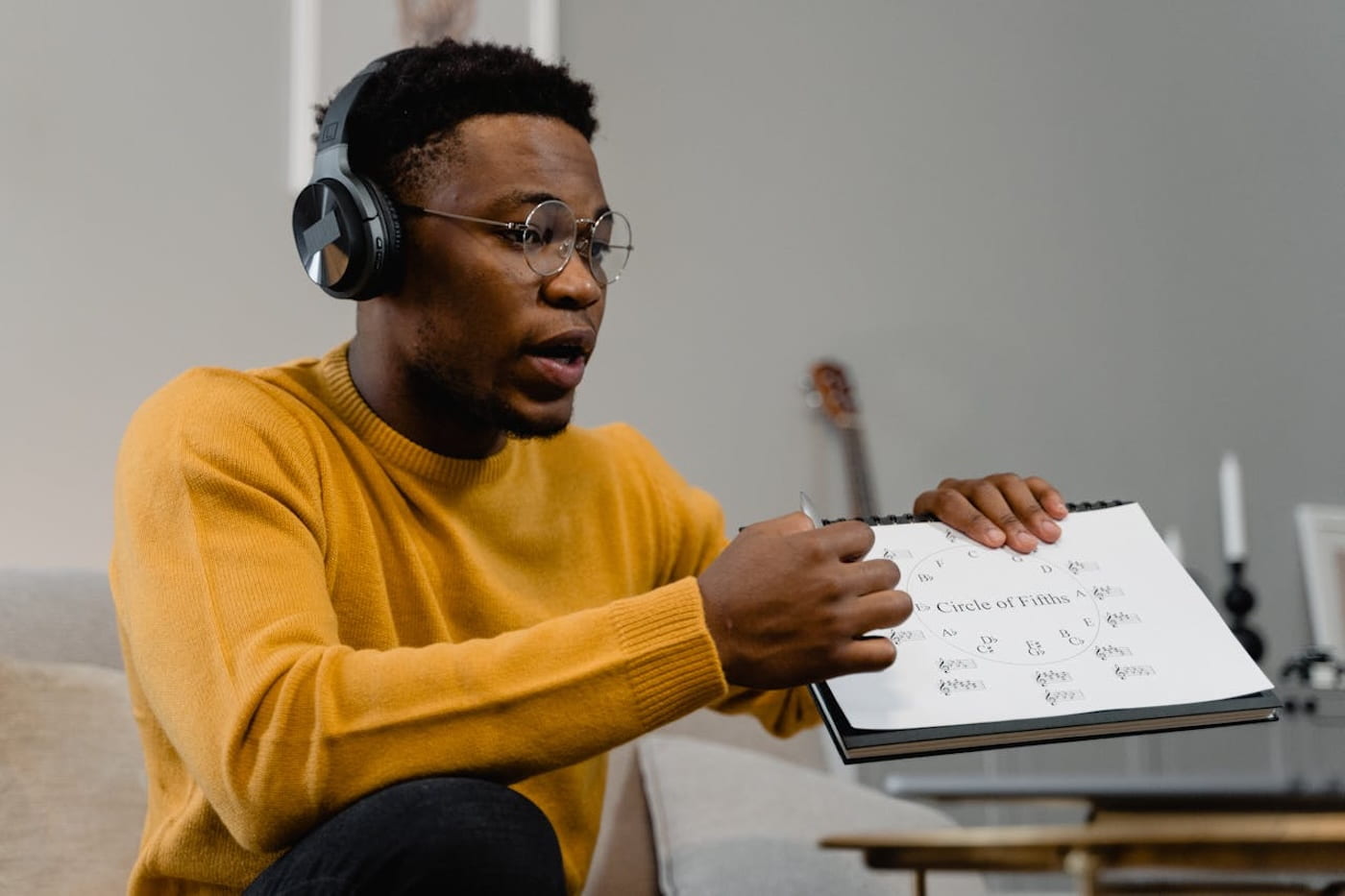
Altering the arrangement of notes can create different tonalities, and the circle of fifths is a valuable tool for understanding these relationships.

Through a visual representation of the different relationships between keys, composers can build chord progressions that sound harmonic.


Step 7. Apply Timbre & Texture

A sound’s timbre, sometimes referred to as tone color or tone quality, is the distinguishing characteristic of a particular instrument or sound.

Each instrument has a unique timbre, and combining instruments in arrangements allows composers to embellish them and create new textures.

Other elements of texture in music production can include dynamics and saturation, which enhance or distort specific elements of a song.

This can be used to make the music sound brighter and warmer, or conversely, create a brooding and foreboding presence.

By selecting the appropriate instruments, producers can apply timbre and texture in their editing to manipulate the overall piece.


Step 8. Use Reference Tracks & Tools

Using reference tracks when producing music can be a secret weapon for mixing, ensuring the song sounds polished and professional.

They can also streamline composition and help you to understand better how to arrange songs across popular music genres.

You can create a list of songs you admire and break down their structure to see how the writers and producers bring everything together.

This can be complemented by additional resources, including sheet music and lyrics, as well as videos breaking down the process.


Step 9. Experiment With Compositions

Once your familiarity with the fundamental rules of music theory is established, you’re ready to experiment with compositions.

Start by writing songs using a basic song structure, then expand your scope to include new melodic and chord progressions.

If you’re creating compositions using a MIDI-based virtual instrument, you can experiment with arpeggiators and other software tools.

Some music production software includes automatic chord generation, which can be further edited in your DAW’s piano roll.


Step 10. Apply Music Theory To Music Production

As your familiarity with music theory expands, you can apply what you’ve learned to various aspects of music production.

Many of the best DAWs include integrated music theory tools such as scale highlighting and the aforementioned builders for chord progressions.

They also include robust VST plugins for synthesizers and drum machines, allowing you to experiment with melodies and rhythms.

If you’re interested in software that features comprehensive support for sheet music notation, Logic Pro and Cubase both include this option.


Read more: Learn how to build a home recording studio.


Advanced Music Theory For Producers

Once you’ve mastered basic concepts, you can progress to advanced theory that elevates your ability to evoke specific emotions.

Here are some advanced music theory concepts that will enable you to create a more dynamic interplay between song elements:

  • Learning counterpoint: Counterpoint is a more advanced approach to melody in which two or more melodic lines are woven together to create polyphonic texture in songs.
  • Mastering modulation: Learning advanced modulation techniques elevates basic key changes by incorporating chromaticism and pivot chords, resulting in more unique and interesting transitions.
  • Understanding complex chord types: More complicated chords, like ninth chords and extended chords, can enhance your ability to compose chord progressions.
  • Experimenting with chord voicing: Chord voicing refers to the arrangement of notes within a given chord. Different voicings offer new approaches to developing a specific feel or character in songs.

You can explore online resources for additional music production tips that incorporate these techniques into the process.


Music Theory Resources For Producers

Music theory can feel complicated, particularly for beginner producers without any background in songwriting or performance.

Here are some platforms you can use to start producing music with an integrated approach to music theory:

  • YouTube tutorials: YouTube has long been a treasure trove of learning resources, featuring in-depth tutorials and guides that cover all aspects of music theory. You can gain a broad overview of the topic and learn why applying music theory to your chosen genre is beneficial.
  • Free and paid online courses: If you’re looking for a personalized approach to learning, there are online courses that offer foundational music theory courses. The best music production courses often include music theory as part of their curricula.
  • Music production schools: For those with the resources, attending one of the best music production schools will provide the most rigorous education on music theory. You’ll gain hands-on experience and receive face-to-face instruction on music theory application from professional educators.

You can also join music production and singer-songwriter forums where experienced creators share ideas and help with problem-solving.


Build A Loyal Following With Promo Hype

Once you’ve created beautiful music, it requires distribution across the major streaming platforms to reach the audience it deserves.

Promo Hype’s comprehensive services allow artist to distribute and promote their music with a selection of powerful tools.

Becoming a Promo Hype member provides access to the following features:

  • Unlimited music distribution on all streaming platforms: Reaching the largest audience possible requires a presence on all major music streaming platforms. With Promo Hype, artists can distribute tracks and albums on Spotify, TIDAL, Amazon Music, Apple Music, and more.
  • Robust marketing tools through the Promotional Toolkit: Once your songs are uploaded to streaming platforms, you’ll need to promote them to your fan base. Promo Hype’s Promotional Toolkit includes powerful features for managing your marketing budget.
  • In-depth data analytics via the personalized member Dashboard: Understanding the behaviors of your audience is vital for managing your music content online. You can use the Promo Hype Dashboard to dive into a range of performance metrics and insights.
  • Access to the Promo Hype Community hub: Connecting with other independent artists is essential for building a network of potential collaborators. The Promo Hype Community is also a great resource to help you learn music theory and other production concepts.

Join today and connect with other successful independent artists to take your professional music career to the next level.


Summary

A solid grasp of music theory ensures each element complements the other, providing a harmonic foundation that underpins a song.

The basic music theory outlined in this guide provides a solid foundation for music producers to create unique experiences for listeners.

As your understanding of music theory develops, you can apply these new techniques to your recording and editing processes.
How To Become A Music Producer In 2026: A Complete Beginner’s Guide

Producing music professionally is a dream job for many, but it requires an understanding of various processes and tools.

Learning how to become a music producer means breaking down the production techniques and creating a streamlined workflow.

This guide covers everything you need to know to become a music producer, from core skills to essential equipment.

So, without further ado, let’s dive into how to get started producing music and all that’s required.


Get Early Access
To Promo Hype


What Is A Music Producer?

A music producer oversees all the processes needed for creating music, taking an overarching view of what each project entails.

Producers work closely with singer-songwriters and bands on individual tracks and albums to define the sound and style.

This ensures the music showcases a distinct creative vision, from the song structures to the instrumentation and production values.

As such, the music producer has a strong understanding of technical aspects, project management, and guiding the artists’ performances.


What Does A Music Producer Do?

A music producer tackles a variety of roles throughout the process to ensure projects are completed to the highest possible standards.

Here’s a brief overview of what a music producer does and how their role is crucial for production:

  • Scheduling recording sessions: If you’re producing music for a singer-songwriter or band, part of the role involves scheduling recording sessions and ensuring everything is ready to use.
  • Arranging songs and instrumentation: While not all producers write songs, they are heavily involved in the arrangement and instrumentation aspects of production.
  • Coaching the talent: If you’re working with new artists, your role will involve coaching singers and musicians to help them develop their music and establish a unique style.
  • Legal and administrative tasks: A professional record producer also handles legal tasks related to copyright and other duties, including negotiations with record labels and royalty payments.

Additional roles can also include hiring session musicians, managing production budgets, and liaising with music industry professionals.


Essential Music Production Resources

Whether you’re new to the process or developing a music production career, there are excellent resources to help you succeed.

Here’s an overview of the resources you can use to start producing music like a professional:

  • YouTube tutorials: If you’re new to the learning process, there are many YouTube tutorials to help you grasp the basics and begin the creative process.
  • Online forums and communities: Online forums are excellent for overcoming obstacles and receiving direct advice without incurring any costs.
  • Music production courses: The best online music production courses can streamline the learning process and streamline your creative journey.
  • Attending a music production school: If you have the time and money, attending one of the best music production schools will make it easier to break into the music business.

You can also learn by partnering with other producers and musicians to gain a deep understanding of their workflows and styles.


Music Production Equipment List

Before you can become a music producer, you’ll need to invest in the best music production equipment for recording, editing, and mixing music.

Here’s an overview of the core hardware, software, and accessories required to become a successful music producer:

  • Computer/laptop: The best PCs for music production have powerful processors and plenty of RAM to ensure projects run smoothly.
  • Music production software: Music production requires digital audio workstations, with free options like Audacity or professional DAWs, such as Pro Tools and Cubase.
  • Audio interface: The audio interface is vital for connecting and recording vocals and instruments, with affordable options available for a basic studio setup.
  • MIDI keyboard/controller: Using a MIDI keyboard streamlines compositions and removes the necessity for using the DAW piano roll.
  • Microphones: If you’re recording vocals or traditional instruments, you can pick up condenser microphones at a range of prices.
  • Headphones/monitor speakers: A good pair of headphones or monitor speakers is essential for mixing, mastering, and checking the audio quality of your productions.

You can also check out specific gear based on your chosen genre, such as the influential software used in techno or other styles.


How To Become A Music Producer In 2025 (Step-By-Step)

Whether producing music for local bands or exploring electronic genres, the process of becoming a producer is essentially the same.

Let’s begin this step-by-step guide and break down how to become a music producer and launch a successful career:


Step 1. Set Up A Home Studio

Before you can start making music, you’ll need to build a home recording studio to transform a musical idea into a finished track.

Start by preparing your studio space and selecting a room that is free from background noise and other potential distractions.

Take the time to think through your workflow and set up your studio monitors correctly to ensure they deliver accurate results.

You can also incorporate acoustic treatment or soundproofing to control the environment and enhance the quality of recordings.

Once everything is set up, you can begin integrating any desired hardware and music production software for your projects.


Step 2. Learn Digital Audio Workstations

Digital audio workstations are essential for editing, mixing, and mastering your recordings, making them ready for publication.

The best DAWs offer comprehensive features for the entire process, with intuitive user interfaces that are easy to learn.

If you’re producing music for bands, free DAWs like GarageBand and Audacity are great entry-level options, while Pro Tools is used in the industry.

Alternatively, FL Studio and Ableton Live are primarily geared toward electronic musical genres, such as house, techno, and drum and bass.

You can also capitalize on the best free VST plugins to add more virtual instruments and effects plugins to the basic DAW software options.


Step 3. Understand Music Theory

Understanding music theory is vital for working on music projects and collaborating with singers, musicians, and fellow producers.

If you’re working with musicians, learning how to read sheet music will significantly streamline your workflow and collaborative efforts.

Core concepts to learn include notes and their relationships to scales and chords, as well as time signatures and the overall structure of a song.

These fundamentals can be expanded to cover chord progressions and harmonies, with online courses to help master the concepts.


Step 4. Master The Recording Process

Arranging and running a recording session involves setting up microphones and other equipment correctly before the artists arrive.

It also requires strong interpersonal skills to coordinate with the talent and ensure the session runs without any issues.

You can achieve this by fine-tuning your recording process, thoroughly testing equipment, and liaising with artists in advance.

Once you’re confident with the workflow, you can experiment with more unique recording processes to create music with a distinct sound.


Get Early Access
To Promo Hype


Step 5. Experiment With Audio Editing

DAWs include robust audio editing tools to help producers craft unique sound designs with polished and professional results.

Once you’ve gathered your recordings, you can experiment with these tools to bring depth, space, and character to your music.

Basic audio editing, such as noise reduction and volume balancing, can be further enhanced with the addition of reverb, chorus, and other effects.

These can be applied to samples, recordings, and MIDI sequences, depending on the assets used in your musical project.


Step 6. Learn Mixing & Mastering

While professional studios often employ a dedicated mastering engineer, learning how to mix and master is essential for most producers.

The mixing process is performed throughout the production pipeline, ensuring all elements are balanced and optimized in the mix.

Mastering typically occurs at the project’s conclusion, using multi-channel EQs, audio compression tools, and limiters.

If you’re unclear on the processes required, consider attending workshops to acquire a solid understanding of mixing and mastering.


Step 7. Write Music For Continuous Learning

Becoming a successful music producer won’t happen overnight, but engaging in the process will streamline continuous learning and development.

This means striving for a prolific output, creating a few demos, and assessing how you can refine your workflow for better results.

It also extends to composition and arrangement, exploring different types of chords, harmonies, and how to use instrumentals.

This approach to learning will improve all aspects of production, from mastering your DAW to mimicking the style of your favorite songs.


Step 8. Build Your Collaboration Skills

Another effective method for improving your production abilities is collaboration, working with other artists and producers on new projects.

The most successful independent artists frequently collaborate on songs to explore different genres and gain experience.

Working with other musicians and building positive relationships will also increase your ability to gain exposure in professional circles.

It’s an excellent way to develop the necessary people skills producers must have, building your skills from constructive criticism.


Step 9. Follow Industry Trends

The music industry is constantly evolving, with new tools and methodologies used by great producers you can learn from.

This makes following the latest industry trends a vital aspect of production, from the role of AI to the emergence of new subgenres.

Other industry trends include the growing role of spatial audio and the adoption of blockchain for music rights management.

By staying abreast of the latest developments, you can refine your production pipeline and create music with minimal friction.


Step 10. Distribute Your Music

Once you’re happy with the quality of your productions, your music is ready for distribution on streaming platforms and physical media.

You can create a list of record labels seeking artists and reach out to agencies looking for new acts to represent.

Alternatively, there are distribution and promotion services that streamline the process of uploading to Spotify, TIDAL, and other platforms.

Setting up a professional website and showcasing your music online is another excellent way to reach new fans and build your brand.


How Much Does Music Production Cost?

Before you can begin your music production journey, you’ll need to invest in the necessary hardware and software.

Let’s break down the costs associated with music production to help you effectively budget for your setup:

  • Basic setup: Setting up a basic home studio for production costs between $500 and $1000, with free DAWs and other resources available to keep costs to a minimum.
  • Intermediate setup: If you’re looking for a dedicated DAW along with various instruments, your music production budget will likely range between $ 1,000 and $ 5,000.
  • Professional setup: For a professional-level music production setup featuring high-end equipment and advanced features, the cost is upwards of $5,000.

You can begin with budget-friendly equipment to save money, replacing items with upgraded models as your production journey progresses.


Top 10 Music Producers of All Time

Producing music in the most popular genres is easier when you learn from successful producers with a proven track record.

Here are the best music producers of all time, whom you can research and discover their workflow and production techniques:

  1. Rick Rubin: One of the most iconic producers in the industry, Rick Rubin’s work spans multiple genres, including hip-hop and rock music.
  2. George Martin: Best known for his seminal work with the Beatles, George Martin is a renowned expert in arranging music and instrumentals.
  3. Quincy Jones: With tracks from Michael Jackson and Frank Sinatra to his name, Quincy Jones is widely considered to be the leading producer of pop music.
  4. Brian Eno: If you’re looking for an experimental approach to music production, Brian Eno’s work showcases a variety of pioneering production techniques.
  5. Nile Rodgers: Madonna, Daft Punk, and David Bowie are some of the major artists with whom Nile Rodgers has worked throughout his career.
  6. Max Martin: Another influential pop music producer is Max Martin, who has produced numerous chart-topping songs for artists such as  Britney Spears, Katy Perry, and Taylor Swift.
  7. Dr. Dre: One of the godfathers of hip-hop, Dr. Dre’s production companies have led the genre with releases from N.W.A. and Kendrick Lamar.
  8. Phil Spector: Spector revolutionized music production with his “Wall of Sound” technique, which remains influential to this day.
  9. Mark Ronson: Winner of nine Grammy Awards, Ronson’s production credits include Amy Winehouse, Lady Gaga, and Diplo.
  10. Timbaland: If you’re interested in electronic music genres, Timbaland’s futuristic productions showcase his musical knowledge and innovative techniques.


Reach New Fans With Promo Hype

Once you’ve finished your first track, it’s ready to be shared across major music streaming platforms with your target audience.

Promo Hype offers a range of services to help independent artists build their brand with a global audience, including:

  • Distribution on all major streaming platforms: Promo Hype provides comprehensive music distribution across Spotify, Amazon Music, TIDAL, Apple Music, and other platforms.
  • Powerful tools for promoting your songs: Once your tracks are uploaded, artists can use Promo Hype’s Promotional Toolkit to drive traffic and manage their ad spending.
  • A lively Community of like-minded artists: The Promo Hype Community is an excellent resource for sharing music production tips and connecting with other artists for collaborations.

With a robust Dashboard for analyzing your performance, Promo Hype covers everything needed to build a successful independent career.


Summary

Learning how to become a music producer requires a combination of technical proficiency, studio equipment, and musical knowledge.

By referencing this guide, you can begin the music production process and create music that stands out from the competition.

Aspiring producers can take their own songs to music industry events and reach out to labels to showcase their musical skills.

Top 10 Music Production Tips For Beginners In 2025

Starting with music production can be daunting, as it involves a variety of software, hardware, and production processes to learn.

These music production tips will help you to quickly master the basics, allowing you to focus on your creative flow.

Read on to discover how to streamline production through careful research and preparation to produce music with a professional sound.


Get Early Access
To Promo Hype


Top 10 Music Production Tips For Beginners In 2025

Whether you’re an aspiring EDM producer or looking to produce music for a band, the rules of production remain the same.

Here are the essential music production tips you need to transform musical ideas into great songs that impress your audience.


1. Learn The Basics Of Music Theory

One of the core requirements when writing a song is understanding music theory and how it informs the building blocks of song structure.

While a deep dive isn’t always necessary, some music theory for producers is required to provide the foundation for compositions.

If you’re creating minimal techno, a basic understanding of rhythm, harmony, and melody will nonetheless enhance your productions.

For producers working in genres with more emphasis on melodies, a grasp of this concept and various types of chords is essential.

Fortunately, beginner producers have numerous music theory resources available to them if the subject is entirely new.

Online reference guides, such as the circle of fifths, can help with arranging harmonies and chord progressions without costing money.

Many dedicated websites break down basic theory, streamlining the process of composing songs for different genres.

There are also music theory books for those who want to delve deeper and foster a more comprehensive musical development.

Understanding these concepts will make composition creation easier, speed up your workflow, and open up collaboration opportunities.


Reach a global audience with Promo Hype’s music distribution services.


2. Research Other Producers You Admire

Most people who decide to start music production do so after being inspired by established artists they admire.

This provides a strong foundation for early research, allowing for the absorption of the musical output of electronic music producers and bands.

The best music producers have extensive experience using the software and processes that beginners need to master.

By researching these producers, beginners can gather numerous music production tips that will streamline their workflow.

For example, many professional YouTube producer channels feature videos breaking down the audio production processes used for their releases.

This includes the hardware and other tools they use to ensure their music sounds good, and how their tracks are put together.

You can also attend clubs and live events hosted by other producers to see how their music sounds when scaled up for large venues.

Researching established producers is a tactic most successful independent artists use, offering deep insights into the music industry.


3. Create A Library Of Reference Tracks

Once you’ve created a list of other producers you admire, you can use this to create a comprehensive library of reference tracks.

These reference tracks should include examples of songs that use vocals, effects, and other instruments you’re considering using.

They can be powerful tools when learning how to make music, demonstrating song structure through intros, verses, and choruses.

If you’re a complete beginner, you can use these to directly copy a song’s structure to use as a template for a shallower learning curve.

Reference music is also crucial for matching volume levels, building arrangements in production software, and applying EQ and effects.

When building your reference library, aim to include tracks that use similar instruments and sit within your desired style or genre.

Try to use a lossless audio file format whenever possible, using commercially successful pop music with robust dynamic range.


4. Master Your Production Tools

Whether you’re using a free digital audio workstation (DAW) like Audacity or Pro Tools, mastering your gear is essential for producers.

The music production software market continues to expand, offering numerous options for new producers working on a tight budget.

Begin by exploring the software’s basic functions and learning how to import your own sounds into the user interface.

This will help you to build up a foundation of knowledge incrementally, from using the piano roll to create melodies to applying effects.

As your experience evolves, you can add new plugins and VSTs to apply to the same sounds and achieve different results.

Some producers prefer to use hardware instead of music production software, which typically has a steeper learning curve.

Most, however, opt to begin with DAW production, which is less challenging to master thanks to the proliferation of tutorials and courses.


5. Use Tutorials & Courses

On the subject of tutorials and courses, content is abundant online that will teach you how to produce music like a professional producer.

These tutorials cover a range of topics, from production tips specific to a particular genre to dedicated videos on various production techniques.

You can also find thousands of dedicated YouTube tutorials focused on specific DAWs and niche hardware producers.

If you’re struggling to achieve a particular lead sound, you can likely find free tutorials that break down the process in straightforward language.

Indeed, one of the advantages of the numerous tutorials online is the availability of varying processes used by producers.

For example, if you’re new to audio compression, you can find tutorials that apply it to vocals, drums, and across entire mixes.

This enables you to develop a comprehensive understanding of any given process or technique and create atmospheric sounds within your own mix.

If you’re willing to invest in your learning process, you can sign up for dedicated music production courses that offer in-depth lessons.

Such courses are broken down into easy-to-understand lessons or modules, making them accessible to beginners.

For those hoping to build a music career, attending a full-time music production school is a viable option.

While this option can be expensive, it provides access to high-level education and industry connections that can’t be found elsewhere.


Get Early Access
To Promo Hype


6. Understand Sound Design

Like song structure and composition, understanding sound design is a crucial element of music production that beginners must master.

Sound design is used to shape the sonic landscape of a song, elevating the original sound into something unique and new.

By mastering the associated techniques, you can explore broader creative options and deliver a depth and complexity on par with professionals.

While sound design varies between the most popular music genres, the core principles remain the same for all music producers.

Here’s a brief overview of some of the key characteristics of sound design and how it contributes to creating good music:

  • Creating a full audio space: Great sound design fills up the sonic space of a track, using panning for instruments, gain staging techniques, and processes that enhance stereo width.
  • Reshaping and sculpting audio: Designing sounds for music also involves reshaping audio samples and instruments across different tracks, from synth chords to vocals and drums.
  • Creating moments of contrast: Excellent music has a sense of dynamic range that sound designers can utilize to enhance moments of contrast, resulting in punchy effects.

With technology emerging to deliver sound design freedom for producers, the art form continues to evolve in exciting new ways.


7. Learn Mixing & Mastering

Following the previous step is the broader process of mixing and mastering, which polishes and optimizes tracks for other sound systems.

Mixing revolves around balancing the individual instrument tracks of a song to deliver a cohesive result that sounds good.

This includes balancing levels to achieve the same volume regardless of your sound selection, whether using a sample library or original recordings.

One of the most common mixing tips from professionals is to work on mixing throughout production to save time making corrections.

On the other hand, mastering typically occurs in the final stage of production, refining the overall sound and mixdown.

While big-name artists hire a professional mastering engineer, there are more affordable alternatives available to the average person.

If you’re working in a home recording studio, investing in a decent pair of studio monitors is also essential for optimizing mastering.

This will ensure it doesn’t sound out of place on other sound systems, such as when played on phone speakers or car stereos.

You can recreate the mastering chain used by professionals in a DAW, combining EQ, compression, noise reduction, and other processes.


Discover more: Learn how to read sheet music.


8. Practice Making Music Regularly

As with all creative pursuits, becoming a music producer requires frequent practice, which includes making complete tracks.

One of the most common pitfalls new producers fall into is focusing on minor details at the expense of overall composition and production.

While dedicating a few hours to learning new plugins and processes can be beneficial, it can quickly take up days or weeks of your time.

To avoid this, beginner producers should aim to finish songs as regularly as possible to streamline the overall workflow.

Each new song can be used to iterate and apply new production techniques, refine song structure, and enhance mixing and mastering.

The more music you complete, the easier it will be to create cohesive sounds throughout the mix, making the track feel polished.


9. Experiment With New Techniques & Equipment

Once your production skills begin to develop, you can explore new techniques and start experimenting with new equipment.

While a DAW is a great tool for production, there’s a wealth of hardware, including drum machines, synthesizers, and sequencers, to explore.

Begin by examining the personal studio gear used by iconic music producers to see what they incorporate into their workflow.

If your collection of music production equipment includes microphones, you can record vocals and other original sounds in place of sample packs.

Experimentation is also excellent when collaborating with singers and other musicians who bring their experience to the table.

If you have the time, you can learn an instrument and use it to record original melodies or chords to add to your productions.


10. Gather Feedback & Refine Your Workflow

Lastly, gathering constructive feedback is crucial for evolving as a music producer and enhancing your overall skill set.

Feedback from more experienced producers will help you identify and resolve any production issues you may have encountered.

Likewise, constructive feedback from fans of your preferred music genre can also shed light on areas for improvement.

You can use this feedback to refine your overall production workflow, focusing on problem areas and the necessary techniques to fix them.

In general, your music production workflow should be subject to continuous improvement and adaptable to specific projects.


Showcase Your Music With Promo Hype

Once you’ve completed your productions, you’ll need to promote your music to the largest possible audience.

Promo Hype provides all the tools needed for independent artists to reach a global fan base across all major streaming platforms.

By signing up for a Promo Hype membership, music producers can access the following services:

  • Instant distribution on all major streaming platforms: Reaching an international audience requires access to all major streaming platforms worldwide. With Promo Hype, members can distribute new releases on Spotify, Amazon Music, Apple Music, and TIDAL.
  • Comprehensive marketing with a dedicated Promotional Toolkit: Whether promoting a new single or upcoming event, Promo Hype helps artists achieve their goals. By utilizing the Promotional Toolkit, you can streamline your marketing strategies and allocate your budget effectively.
  • A lively community of like-minded artists and producers: If you’re struggling with music production or looking for collaborators, Promo Hype’s community is for you. This lively forum for like-minded artists provides a hub for networking and sharing tips.

With additional Promo Hype features, including powerful performance analytics, it’s the go-to platform for emerging independent artists.


Summary

Mastering music production techniques is crucial for creating professional-sounding tracks that meet industry standards.

By applying the music production tips in this guide, you can streamline your workflow and incorporate strategies used by your favorite artists.

As your production skills improve, you can explore new hardware and plugins that bring unique sounds to your music productions.

The Best Music Production Equipment For Beginners In 2026

Venturing into music production involves setting up the necessary equipment required for your chosen style and genre.

The best music production equipment for beginners allows for complete track creation on a budget, from sequencing to mastering.

This guide explores everything beginners need to produce music, from essential software to studio monitors and acoustic instruments.


Get Early Access
To Promo Hype


The Best Music Production Equipment For Beginners In 2025

Whether producing electronic music or collaborating with singer-songwriters, high-quality production equipment is essential.

Here’s everything you need to become a music producer and start creating music with a professional sound.


1. Computer Or Laptop

Price range: $300 – $500

Recommendations for beginners: Acer Aspire 5 A515, MacBook Air M4

One of the most essential items of equipment required to make music is a computer or laptop, which serves as the central hub.

The computer powers your chosen digital audio workstation and other software used for editing, recording, and exporting audio files.

As such, the requirements will vary depending on the software being used and the minimum specifications required for it to function.

If your existing computer lacks the necessary performance capabilities to run a DAW smoothly, you can upgrade components accordingly.

There are other methods you can adopt to improve your computer’s power and enhance the performance of a DAW.

Some of these methods include:

  • Upgrading to an SSD: SSD cards are now the standard in new computers, but if you’re working on an older PC, you should consider upgrading your hard drive to this format.
  • Adding more RAM: A lack of RAM is a common performance obstacle, so increasing this to a minimum of 16GB is essential if your PC is lacking in this area.
  • Investing in an external sound card: If you’re using the basic sound card included with your PC, you can achieve much more production-wise by upgrading this to an external version.

While some of the best music producers create music with unconventional hardware, the computer remains a crucial component of their workflow.

The flexibility of PCs also aids in budget management, allowing beginners to upgrade components over time.

As new hardware, such as drum machines and synthesizers, is added, producers can upgrade their audio interface to accommodate it.

This ability to iterate and improve the home studio applies to all other required equipment for a fully personalized setup.


Learn more about music production in the Promo Hype Community.


2. Digital Audio Workstation (DAW)

Price range: Free – $9.99/month

Recommendations for beginners: FL Studio, GarageBand

The next critical element of a music production studio is music production software, which producers typically use in conjunction with a digital audio workstation (DAW).

Your choice of digital audio workstation will depend on various factors, including your computer model and available budget.

The best DAWs deliver the complete music production pipeline, from recording and editing to mixing, mastering, and exporting files.

Covering the entire creative process, DAWs can interface with physical hardware, whether using a MIDI keyboard or recording vocals.

There are many options for new producers looking for a DAW, from free-to-use or budget-friendly programs to professional production suites.

Here’s an overview of some of the most popular DAWs and how to determine which one to use when making music:


Logic Pro X

If you’re creating music on a Mac OS system, Logic Pro X is the obvious choice for your digital audio workstation.

This hugely popular DAW is packed with tools for editing and mixing sounds, with a broad application across all genres.

It also features a streamlined and intuitive workflow and interface that’s not too challenging for beginners to learn.


Ableton Live

Dance music production is well-served by Ableton Live DAW, with its focus on beat creation and a wealth of instruments and plugins.

Ableton Live’s performance capabilities also open up its application as a powerful tool for producers gigging at venues,

The developers deliver frequent upgrades, such as the ability to integrate external synthesizers, which opens up a range of creative options.


FL Studio

Formerly known as FruityLoops, FL Studio is another dance music-friendly DAW with a fun and engaging user interface and range of tools.

A more affordable option, it’s nevertheless a powerful option with plenty of longevity and the ability to integrate hundreds of plugins.


Pro Tools

The go-to DAW for professional recording studios and music production schools, Pro Tools has long been the industry standard.

Pro Tools is traditionally associated with band music production, but its comprehensive editing features are robust across all genres.

It’s one of the more expensive DAWs, but a sound investment for anyone dedicated to producing music using traditional instruments.


GarageBand

A free-to-use DAW with a band-first approach to production is GarageBand, developed by Apple for Mac and iOS devices.

Its launch was a game-changer for independent artists, and GarageBand changed music production on portable devices.

Producers can perform all aspects of production with GarageBand, recording, editing, and looping instruments, and adding desired effects.


3. Audio Interface

Price range: $50 – $150

Recommendations for beginners: Focusrite Scarlett Solo, Native Instruments Komplete Audio 2

Another essential piece of equipment that producers require is an audio interface, which bridges the gap between analog and digital audio.

Suitable for all popular music genres, the audio interface enables you to connect and record instruments such as guitars and drums.

They’re also capable of connecting multiple microphones for recording entire bands, but the price increases accordingly.

Connections featured on an audio interface include 1/4 inch jacks for guitars and XLR connections for one or more microphones.

As such, your audio interface budget will be influenced by the number of inputs required for your creative workflow.


4. MIDI Controller/Keyboard

Price range: $50 – $200

Recommendations for beginners: Akai MPK Mini Mk3

Most newcomers to music production with limited hands-on experience are likely familiar with the piano roll featured in DAWs.

This visual representation of a piano allows producers to tap in notes on a grid to form melodies and chords with MIDI instruments.

While this process is satisfactory for creating music on a laptop, it can become time-consuming and inefficient over time.

That’s where the MIDI device comes into play, streamlining compositions through the use of a MIDI keyboard that eliminates the need for a piano roll.

Using a MIDI keyboard not only provides physical keys for composing melodies and playing chords, but also performance pads for percussion.

The result transforms the process of music production into a tactile, responsive experience, allowing for nuanced and experimental performances.

Other MIDI controller types that can be used for music production alongside a MIDI keyboard include drum pads and faders.

If you’re already proficient at playing the guitar or wind instruments, a MIDI controller of this type is an option worth considering.


5. Monitor Speakers & Headphones

Price range: Monitor speakers, $100-$500. Headphones. $40 – $120

Recommendations for beginners: Adam Audio T5V speakers, Sony MDR 7506 headphones

It should go without saying that producing music requires the best possible audio output to ensure the music sounds great.

This means investing in monitor speakers and headphones that deliver a balanced and accurate response to your music.

You don’t have to invest in high-end gear used at the best music production schools; budget-friendly speakers and headphones are available.

Likewise, if you’re focusing on laptop-based music production, you can forgo monitor speakers and allocate your budget to headphones instead.

When assessing monitor speakers for your studio, consider whether you need active or passive speakers, as the latter require separate amplifiers.

The two main types of headphones are closed and open-back, with the former offering impressive isolation and the latter a wider soundstage.


Get Early Access
To Promo Hype


6. Microphone

Price range: $60 – $120

Recommendations for beginners: Shure SM57, Audio Technica ATR2500x-USB

Another essential part of a home studio setup is a microphone, which is used for recording vocals and samples to use in your music.

You don’t have to spend a fortune on your first microphone; several quality options are available that deliver fantastic results on a budget.

However, upgrading to more expensive equipment will make a significant difference when recording vocals, real instruments, and other sounds.

There are two core types of microphones to consider investing in, which are fundamental aspects of what music producers do.

Let’s break down the difference between dynamic microphones and condenser microphones in more detail:

  • Dynamic microphones: These types of microphones are often used for live performances, but have a place in the studio for recording instruments such as drums and amplified guitars.
  • Condenser microphones: A more suitable format for new producers, condenser microphones are designed for vocal performance and other instrument recordings in a controlled setting.

As your studio expands, you can add new microphones to allow for multi-instrument and vocal recording sessions.


7. Audio Plugins & Sound Libraries

Price range: Free – $120

Recommendations for beginners: Waves’ Essentials Bundle/Loopcloud

Another core aspect of using a DAW for music production is the application of audio plugins and VST instruments on projects.

These are combined with sound libraries to create all aspects of a track, from percussion and effects to vocals and synthesizers.

Sound libraries can be purchased as sample packs, which are available for all genres and include a variety of samples to use.

These include individual percussion hits and drum loops, vocal accapelas, synth arrangements, and other elements.

Audio plugins can then be used to apply various effects to samples or MIDI instruments as part of the editing process.

Producers can purchase high-quality VST instruments and plugins that emulate classic hardware used in studio recordings.

For example, if you want your music to sound like it’s running through acoustic guitar amps, there are plugins that do the job.

You don’t have to spend money on plugins, and the best free VST plugins deliver exceptional performance when used correctly.

Here are some of the commonly adopted plugins used for music production:

  • Effects plugins: Effects plugins are essential for reshaping the sound of an audio file, whether manipulating frequencies or creating echoes and distortions. Most DAWs feature a range of effects plugins as standard, including reverb, delay, echo, chorus, and flanger.
  • Mixing and mastering plugins: Making music sound polished requires mixing and mastering, using EQs and other tools to balance frequency ranges and volume levels. Additional mixing and mastering plugins for audio compression and limiting can further add to your production value.
  • VST instruments: If you’re looking for emulations of classic synthesizers or drum machines, VST instruments are available to recreate their unique sounds. You can use your MIDI keyboard to perform your compositions, mapping parameters to your controller’s knobs and sliders.

There are numerous resources available for beginners to discover music production tips that help them utilize these plugins to their full potential.

As your production techniques evolve, you can introduce new plugins and VST instruments that complement your processes.


Enjoy global music distribution with Promo Hype.


8. Traditional Instruments

Price range: $50 – $250

Recommendations for beginners: Piano

Your chosen music genre and abilities heavily influence the role of traditional instruments in music production.

If you’re venturing into production for bands or singers, you’ll likely have an acoustic guitar and drums in your repertoire.

While such instruments are essential for rock and other similar genres, they can still have a place in setups for different music styles.

Many who produce in electronic music genres invest in percussive instruments they can perform and sample for their tracks.

Other popular instruments can also bring a more organic texture to dance music production, elevating production values.

They’re by no means essential for beginner music production equipment setups, but can play a significant role in specific workflows.


9. Cables & Accessories

Price range: $50 – $100

Recommendations for beginners: Neutrik XLR Connectors

Each music production setup requires the necessary cables and accessories to connect everything into a cohesive ecosystem.

Here’s an overview of some of the standard cable types and how they are used to connect music production equipment:

  • XLR cable: This is primarily used for microphones, offering noise reduction and interference reduction.
  • TRS cable (1/4″): Similar to a headphone jack, this is used for connecting monitors, mixers, and audio interfaces.
  • MIDI cable: While many new MIDI controller devices use USB, older MIDI-based hardware typically employs the standard MIDI cable.
  • USB cable: Most modern hardware utilizes the USB format, including USB-C and USB Micro.

Investing in spare cables and accessories, such as microphone stands, will ensure your setup is easy to use.


10. Workspace & Acoustic Treatment

Price range: Free/DIY – $500

Recommendations for beginners: AcouFoam Acoustic Panels

If you’re starting out producing music on a DAW, you won’t need to upgrade your workspace to accommodate new equipment.

Once you start introducing MIDI keyboards and other instruments, however, the limitations of your desk will soon be apparent.

Fortunately, office furniture can be purchased cheaply, and if you have more cash to spare, you can pick up dedicated desks for music production.

Likewise, acoustic treatment is an optional extra that can be added for a very low cost using a do-it-yourself approach.

There are also affordable acoustic treatment panels that you can add discreetly to problem zones without having to treat an entire room.


Related reading: Learn how to write a song.


Music Production Equipment Tips

Investing in the best equipment lays the foundation for producing music, but it can also feel daunting for beginners.

Fortunately, there are methods you can adopt that make it easy to master the fundamental processes and maximize the benefits of your gear.

Here are some music production equipment tips to help you get started smoothly:

  • Check out online tutorials: Music production involves many interrelated processes that can become overwhelming for newcomers. If you find yourself getting stuck or want to hone in on a particular technique, check out online tutorials and music production courses.
  • Learn basic music theory: A basic grasp of music theory will go a long way to streamlining compositions and making your music sound impressive. You can begin with basic melodies and harmonies, building up your knowledge of music theory from there.
  • Collaborate with other artists: If you have friends who sing or play piano or other instruments, getting them involved is an excellent way to hone your skills. They bring unique experiences to the table and can help you understand concepts quickly.
  • Experiment regularly: While referencing user manuals and tutorials provides a shortcut for learning, don’t underestimate the power of experimentation. Many producers have enjoyed happy accidents while playing around with plugins and VST instruments.

With countless tutorials from established producers to explore, mastering the basics of music production equipment has never been easier.


How Much Should Beginners Spend On A Home Studio?

Before building a music production studio, it’s essential to assess various factors to determine an appropriate budget.

Let’s explore some factors to consider that will play a role in the music production equipment you need:

  • Chosen style of music: Your preferred genre will play a significant role in the necessary equipment, particularly if you want to produce music for live bands. Research the core gear needed based on your musical preferences before investing any money.
  • Current computer setup: Investing in a brand new computer isn’t always necessary when becoming a music producer, as your existing setup may be sufficient. Check your computer’s specifications and compare them with your preferred software to determine if minor upgrades, such as additional RAM or a new sound card, will be sufficient.
  • Musical abilities: If you’re experienced playing traditional instruments and want to record them, you need to set up a home recording studio. This will add to the overall budget for condenser microphones and other essential equipment.
  • Future-proofing your production equipment: Investing in future-proof equipment may be more expensive upfront, and it may be out of reach for those on a budget. That said, if you have the funds to do so, it can save you hassle in the long term by avoiding piecemeal upgrades.

If your finances are limited, you can still start producing music using a basic setup that doesn’t break the bank.

Here’s an overview of what a basic setup entails, along with average prices to reference:

  • Laptop or computer: Producing music on a laptop or computer doesn’t have to break the bank, with entry-level options ranging from $300 to $500.
  • Audio interface: Budget-friendly audio interface options for beginner producers can be picked for $50 to $150.
  • Production software: DAWs range from completely free options, such as Audacity and GarageBand, to affordable subscription models for Ableton Live and Logic Pro X, which start at $4.99 to $9.99 per month.
  • Microphone: A basic, entry-level microphone can be purchased relatively cheaply, with a price range of between $60 and $120.
  • Studio headphones: Many sub-$50 headphones are suitable for music production, including those from reputable brands like Sennheiser and Beyerdynamic.

For those with larger budgets, this basic equipment setup can be enhanced with optional extras to improve the overall experience.

Studio monitors can be used as an alternative to headphones, and adding a MIDI controller will further enhance the workflow.

You can upgrade gear to better models and add new hardware as your music production evolves to meet new requirements.


Share Your Music With A Global Audience With Promo Hype

Once you’ve mastered music production and created amazing music, it’s ready to be shared with a large audience.

By becoming a Promo Hype member, you can reach a global fan base and showcase your skills as a music producer.

Here are some of the Promo Hype features used by successful independent artists to build their online presence:

  • Instant distribution across all streaming platforms: Music fans use various streaming platforms to access the artists they love. With Promo Hype, new music can be scheduled and released on Spotify, TIDAL, Apple Music, Amazon Music, and other major platforms.
  • Robust tools to promote new releases and gigs: Whether you’re promoting a new single or generating buzz for an upcoming gig, Promo Hype can help. By using the Promotional Toolkit, bands and producers can allocate marketing budgets for maximum impact.
  • In-depth analytics to understand audience behaviors: Understanding which streaming platforms yield the best engagement is vital for effective planning. Promo Hype’s dashboard features powerful analytical tools that enable you to delve into your performance metrics.
  • Community forums to connect with other artists: If you’re eager to collaborate with other musicians or seeking advice, Promo Hype members can connect in the Community. Share music production tips or discuss collaborations with like-minded artists.

With a dedicated support team of music industry experts, Promo Hype covers everything independent artists need to drive their careers.


Summary

Producing music is easier than ever, thanks to budget-friendly hardware and software that deliver high-quality results for newcomers.

Referencing this guide to the best music production equipment for beginners will ensure your setup matches your budget and requirements.

As you gain more experience, you can upgrade your setup and introduce new gear to streamline your music production efforts.

How To Start Producing Music Like A Pro In 2025 (Step-By-Step)

Producing music is a complex process that involves a series of steps and tools to bring creative ideas to life.

Learning how to start producing music like a professional can not only streamline your workflow but also enhance your creative abilities.

This guide explores the workflow and tools used by professional music producers and how you can incorporate these into your own productions.


Get Early Access
To Promo Hype


The Core Processes Of Music Production

Understanding how to create music like a professional requires a clear grasp of the core processes surrounding music production.

This begins with the overall workflow, from composing music and recording vocals to editing and mixing your audio files.

It can also include learning music theory for producers, progressing to advanced music theory, and areas like sound engineering.


Let’s take a brief look at the core processes of music production that a successful music producer uses:

  • Songwriting and composition: The music production process often begins with songwriting and composition to create the overall song structure. This includes determining the key the music is in, as well as the main melody, harmonies, and other elements of the song structure. While some music producers also serve in this capacity, it’s less common in specific genres, particularly electronic music production.
  • Instrumental arrangements: Music production for bands and singers often includes instrumental arrangements and production techniques to shape the overall sound. This includes layering different sounds in the mix to create a sense of atmosphere and character. A classic example of this approach to music production is evident in George Martin’s iconic instrumental arrangements for the Beatles.
  • Recording vocals and instruments: Band-focused music production processes are also employed for recording vocals, instruments, and other sounds to be used on tracks. This includes tracking, in which multiple individual tracks are combined, and capturing raw audio to run through various effects units. Beginner DJs have numerous affordable options for microphones that enable them to record singers and instruments without a large budget.
  • Editing audio: The next core step in music production is editing, where the recorded audio, samples, and MIDI instruments are reshaped using effects and other processes. During editing, timing is refined, mistakes are corrected, and the producer enhances elements to amplify their impact. This is achieved through plugins for digital audio workstations and tools that can be easily integrated into a production workflow.
  • Mixing and mastering: Lastly, mixing and mastering are used to bring all of the individual tracks that comprise a song together for a cohesive sound. This process prepares music for professional media, whether being broadcast on the radio or released in a digital file format.

Your approach will be influenced by your genre, with distinct music production processes for bands compared to those for electronic music.

Before you begin producing music, research the common studio setup types used for your preferred genre to see what you’ll need.


Learn more about music production in Promo Hype’s Community.


Music Producer Vs. Songwriter: Key Differences

Understanding what music producers do requires an understanding of the distinct roles that producers and songwriters play.

While many producers serve as songwriters on tracks, there are important distinctions between the two roles.

Both are fundamental for making music, but clarity on what distinguishes one from the other will improve your music production journey.

Here’s a brief overview of the core focus and roles of songwriters, as well as their relationship to the music production process.

  • Writing lyrics: One of the core processes in writing a song is crafting the lyrics, which music producers usually have little to no involvement with.
  • Composing melodies and arrangements: Once the lyrics are written, the songwriter composes melodies for vocalists, along with other instrumental arrangements.
  • Determining the emotional qualities: The songwriter is also responsible for establishing the tone and emotionality of a particular song.
  • Collaborating with other musicians: If the music requires collaboration with other artists and musicians, the songwriter typically leads the coordination efforts.
  • Performing at live events: While some songwriters prefer to sit behind the scenes, singer-songwriters are also performance artists. With complete control over all aspects of a song, singer-songwriters also create an image around their identity.

While some producers do handle these tasks, many leave it to songwriters and follow up with editing, mixing, and other production techniques.


How To Produce Music Like A Pro In 2025: Step-By-Step

If you’re a newcomer to music production or looking to explore new techniques, you can learn from the experiences of professionals.

Here’s everything you need to know to produce music like a pro, from the core recording equipment required to sound design techniques.


Step 1: Gather The Essential Equipment

Producing music like a professional begins with understanding the core equipment they use for recording, editing, mixing, and mastering tracks.

Let’s break down the essential music production equipment needed to perform the techniques that professionals adopt.


Laptop/Computer

Producing music like a pro requires a computer or laptop that can handle large projects, with a multi-core processor with a clock speed of at least 2.4 GHz.

A minimum RAM of 16GB is also required, along with a Solid State Drive (SSD) to speed up performance when making music.


MIDI Controller

Another core feature of a professional workflow is a MIDI controller, which replaces the need to use the piano roll in a DAW.

The best MIDI controllers and keyboards enable comprehensive mapping of parameters to knobs and sliders, allowing for streamlined production.


Audio Interface

The audio interface is the central hub of music making, connecting traditional and electronic instruments to the software.

If you’re approaching music production for bands, a larger audio interface with more inputs is essential for recording live sessions.


Headphones/Speakers

High-quality headphones and studio monitors are also essential for a home studio that can produce sounds on par with professional standards.

These ensure your own music sounds accurate on other systems, with mixing and mastering techniques delivering these results.


Microphone

If you’re recording vocals or samples, a quality microphone is essential, with both dynamic and condenser microphones to choose from.

The latter is more common in studios for recording singers and musicians, while dynamic mics are better suited to live performances.


Step 2: Set Up A Home Studio

Once you’ve lined up all your equipment, it’s time to focus on building a home studio to transform a musical idea into a fully fledged track.

While many beginner producers use their standard desk, there are ways to elevate your studio to music industry standards.

Here are some tips for setting up a home recording studio that reflects best practices and industry trends:

  • Choose a quiet room: Background noise and other distractions can impede your audio recordings and workflow, whether it’s street noise or from boisterous children.
  • The orientation of the space: Optimizing a home studio for acoustics means choosing a space that allows you to position your studio monitors in a way that minimizes standing waves and reflections.
  • Include acoustic treatment: Further improving the audio quality of recordings is acoustic treatment, which can be used to absorb sounds and reduce reflections.
  • Complete soundproofing: If your budget permits, you can install complete soundproofing in your home studio for additional control over recording sessions.
  • Quality microphone stands: Producers who frequently record vocals and instruments should invest in high-quality adjustable stands to facilitate quick setups for recording sessions.

By positioning your microphones and speakers optimally, you can produce sounds with greater accuracy and fidelity.


Step 3: Learn Basic Music Theory

Music production doesn’t require an in-depth knowledge of music theory, particularly when focused on specific electronic music genres.

That said, a grasp of music theory is undoubtedly beneficial for production techniques, particularly if you’re involved in compositional elements.

Understanding how notes and keys interact, as well as other music theory principles, will enhance the production process.

It will also improve your ability to collaborate with experienced musicians on projects, bouncing ideas and composing music together.

Some of the basic music theory that music producers should be familiar with include:

  • Notes, pitch, and duration: Notes provide the foundation for compositions, whether individually as melodies or in combinations as chords. The term pitch refers to how low or high the note is, while duration indicates how long a particular note is held.
  • Major and minor scales: Following on from notes are major and minor scales, which each have their own characteristics that can be used to create mood. You can use tools like the Circle of Fifths to understand the relationship between different keys and their related scales.
  • Chords and chord progression: Building on notes and melodies are chords, which are clusters of compatible notes played in unison. Different types of chords can be expanded into chord progressions that take the listener on a musical journey.
  • Rhythm/tempo and time signatures: The glue that holds a piece of music together is the tempo, which indicates the speed at which the music is performed. There are also different time signatures, which indicate the number of beats in a measure and the note value that represents one beat.
  • Melody and harmony: Melody and harmony are fundamental to lead vocals and other lead instruments used in a song. Melody represents the sequence of notes used, while harmony indicates how these notes correspond to chords.
  • Song structure: Each of these elements combines to form the overall song structure, which varies between music but typically combines specific structural elements. For example, most pop songs use the Intro – Verse – Chorus – Verse – Chorus – Bridge – Chorus song structure.

While you don’t have to read sheet music to understand these concepts, learning this will also enhance your approach to composing music.

Music theory is a broad topic, and many music producers build up their knowledge throughout their careers.


Step 4: Master A Digital Audio Workstation (DAW)

Another essential step for producing like an experienced professional is to strive for mastery of your chosen music production software.

Since your software is the brain of the operation, this means exploring the manual and other resources to understand how it works.

The best DAWs offer many features for music production, which can be overwhelming for newcomers when they approach the craft.

Let’s explore some methods you can implement that can streamline your approach to learning your DAW:

  • Learn the user interface and keyboard shortcuts: Whichever DAW you’ve opted to use, you should start by dedicating time to exploring the UI and keyboard shortcuts.
  • Use online resources and tutorials: There is no shortage of YouTube tutorials and other resources that can help you out if you’re struggling with a DAW.
  • Experiment with presets and templates: Exploring presets and experimenting with settings is an excellent way to learn how different parameters affect sounds.
  • Start with simple projects: While it can be tempting to jump straight into complex compositions, starting small will make the process easier to digest.

Mastering a DAW is an ongoing process that doesn’t happen overnight, but over time, your skill set will continue to expand.


Step 5: Build A Library Of Plugins & Sounds

Music production requires a solid library of sounds to edit and arrange in songs, along with plugins for adding effects, mixing, and mastering.

There are plenty of free VST plugins you can use, along with paid plugins that emulate hardware used in professional studios.

Your choice of plugins will depend on your chosen genre, with warm, analog-sounding plugins for bands and others better suited to dance music.

For sound libraries, there’s the option of purchasing sample packs, which include percussion hits, loops, vocal snippets, and sound effects.

If you have a microphone, however, you can use this for recording your own sounds, saving money on potentially expensive libraries.


Get Early Access
To Promo Hype


Step 6: Learn From Music Industry Veterans

In addition to using online courses and tutorials to master your DAW, you can also draw from the experiences of music industry veterans.

Many of the best music producers are happy to share their workflow with fans, exploring composition and other technical aspects of production.

These range from studio tours and how to optimize your setup, to applying effects and mixing tools to achieve a specific sound.

You can create a shortlist of the music producers who inspired you to start production and seek out YouTube channels and other resources.

If you’re also composing songs and writing lyrics, research other artists in your genre and see if they have helpful online content.

By drawing directly from professionals with tried-and-tested music production tips, you can refine your workflow accordingly.


Step 7: Begin Composing Music

If you’re a producer who focuses primarily on the recording and editing side of the process, you should consider composing original music.

This will help you to understand song structure better and practically apply the basic music theory outlined above.

A popular approach to mastering composition is to start learning an instrument, which has the added benefit of inclusion in your productions.

You can also more effectively collaborate with other musicians, riffing off their ideas and contributing to the composition process.


Step 8: Experiment With New Hardware & Instruments

Many of the most iconic producers and songwriters of all time are known for their experimental approach to the art form.

Producers like Aphex Twin and Flying Lotus, as well as bands like Radiohead, have earned their strong reputations through this approach.

New producers can apply this approach to their own music, whether expanding their collection of MIDI-based hardware or using traditional instruments.

This experimentation is the key to happy accidents, discovering unusual sounds and combinations for a unique listening experience.


Discover more: How to get signed by a record label.


Step 9: Learn Mixing And Mastering

Mixing and mastering are other core aspects of professional-level music production that are essential for polished results.

It begins with processes like gain staging and EQing, ensuring all elements of the track are balanced with optimized signal quality.

Reverb and delay are sometimes used to expand the soundscape, while audio compression and limiters further refine the audio.

While established artists typically hire a professional mastering engineer for their releases, it’s worthwhile to learn the basics yourself.

This will ensure your music sounds its best, whether you’re submitting it to radio stations or independent record labels.


Step 10: Collaborate With Other Artists

Learning how to create songs like professional music producers is easiest when drawing on as much knowledge as possible.

While online tutorials are great shortcuts for many processes, collaboration provides hands-on experience with other musicians.

It helps you to quickly learn concepts, gain insights into different instruments, and enhance your overall repertoire of production skills.

Partnering on collaborations is also highly effective for promoting your music to a broader audience and building a fan base.

If the chance arises, work on projects with new artists and other musicians whenever possible, refining your production style accordingly.


Tips For Becoming A Successful Music Producer

Success doesn’t happen overnight, but there are steps you can take to become a music producer with a thriving career.

Here are some tips you can use to increase your chances of success and get your music heard by the right people:

  • Reach out to record labels: The ideal goal for many music producers is to secure a record deal with a major label and gain access to the international market. While major labels might be out of reach for many, there are plenty of independent labels looking for new talent to sign.
  • Perform your music to a live audience: Singer-songwriters and bands have long used live gigs to promote their music and build an audience. The ongoing popularity of hardware-based gigs for electronic music presents an opportunity for dance music producers to explore.
  • Check out music production tutorials and courses: There is no shortage of online tutorials on YouTube offering in-depth explanations of music production equipment and processes. You can also sign up for music production courses that dive into the subject in detail.
  • Use distribution and promotion services: With multiple streaming platforms to juggle, distributing and promoting music can be challenging. Fortunately, digital music distribution and promotion services can streamline these processes to help you share your own songs worldwide.
  • Consider attending a music production school: If you have the time and financial resources available, dedicated music production schools can provide rigorous training and offer valuable career opportunities. Many successful artists have emerged from such schools over the years, becoming key players in the music industry.
  • Network with local artists and other music producers: Producers who have successful independent artists in their social circle often utilize these connections to expand their networks. This can lead to collaborations and multi-artist events that raise your profile as a producer.

By refining your learning process and building industry contacts, you can increase your chances of developing a dedicated fan base.


Unlock global music distribution and promotion with a Promo Hype membership.


Reach An International Audience With Promo Hype

Whether producing music for local bands or creating underground techno, your finished results deserve the biggest possible audience.

Promo Hype’s services encompass the most popular music genres, providing independent artists with a global reach.

By signing up for a Promo Hype membership, you can access the following services:

  • International music distribution on all major streaming platforms, including Spotify, TIDAL, Apple Music, and Amazon Music, has a large user base ready to hear your tracks. With Promo Hype, you can schedule and distribute your music across these platforms with ease.
  • Dedicated promotional tools to build your online presence: Once your music production efforts have been shared online, you’ll need to promote them to your audience. Promo Hype’s Promotional Toolkit includes everything you need to manage marketing strategies across multiple platforms.
  • A personalized Dashboard with data analytics: Music lovers use a range of platforms to connect with their favorite bands and artists. With the Promo Hype Dashboard, you can understand their behaviors through a range of robust metrics.
  • Access to the Promo Hype Community hub: If you’re struggling with your own music, Promo Hype’s Community provides a lively avenue for learning how to write songs. You can share your insights with like-minded producers and develop a creative process with a unique style.

With an expanding user base of talented independent artists, Promo Hype covers everything you need to grow your music career.


Summary

The music creation process can be challenging to master, but there are many methods you can adopt that are widely used by professionals.

This step-by-step guide to producing music like a professional covers the common techniques used to create popular songs.

By responding to constructive criticism and refining your approach, your music production techniques will continue to improve.

Circle of Fifths Explained: Ultimate Guide For 2025

Great songwriting requires an understanding of music theory to create incredible-sounding melodies and chord progressions.

The circle of fifths helps musicians compose songs by visualizing the relationships between the twelve major and minor keys.

This circle of fifths guide explores how to read and apply the information to compose music you’re proud of.


Get Early Access
To Promo Hype


What Is The Circle Of Fifths?

The circle of fifths presents a visual representation of all the major and minor keys musicians use when creating music.

Its origins began in seventeenth-century Russia, where Nikolay Diletsky is credited with its creation.

Each letter displayed on the circle of fifths represents a chord or note that musicians can reference.

The interactive circle encompasses the major keys surrounding the outer circle, moving clockwise through the circle.

Within the outer circle is an inner circle that represents the relative minor keys used for music composition.

The purpose of the circle of fifths is to visualize the relationship between notes and chords when creating compositions.

It also presents information about key signatures, which are denoted by sharps or flats and indicate whether a scale is major or minor.

These key signatures surround the outer circle, denoting the major or minor scale being played.

Based on the selected key, composers can move between chords within the root key for harmonious-sounding results.

The tool can also be used for transposing chords, which musicians use to retune specific instruments for performances.

The circle of fifths plays a pivotal role in composition today, inspiring a humorous Tolkien-influenced variation.


Learn more about becoming a Promo Hype member.


Why Is The Circle Of Fifths Important?

One of the most vital tools for musicians, the circle of fifths helps with songwriting and composition in several ways.

Whether you’re writing a song or arranging instruments, it streamlines the process and opens up creative possibilities.

Here are some reasons why you should learn and apply the circle of fifths for songwriting:

  • Mastering intervals: Intervals are foundational to composition, and the circle of fifths helps songwriters visualize the 5th interval and its inverse to play major and minor chords.
  • Understanding chord structures and progressions: The 5th interval is also essential for chord structure, signifying the second overtone in the harmonic series and present in every chord.
  • Developing harmonics: Composing harmonies is also enhanced by the circle of fifths, allowing for modulation between closely related keys.
  • Understanding relative minor keys: All major keys have relative minor keys in the same key signature, which is fundamental to learning composition.

As you master the principles of the circle of fifths, your ability to create unique and skillful compositions will improve.


Who Should Use The Circle of Fifths?

The scope of application offered by the circle of fifths makes it a valuable resource for all musicians and composers.

Whether you’re playing traditional instruments or producing music with MIDI, the core principles remain the same.

This impressive flexibility extends to all experience levels, serving as a valuable resource for both beginners and experienced professionals.

Newcomers can gain a clearer understanding of sharps and flats in key signatures, making it easier to memorize these relationships.

This makes learning basic chord progressions more intuitive and remembering scales that are handy for melodic composition.

For experienced songwriters, the circle of fifths streamlines shifts in key for band members and can inspire more complex arrangements.

If you’re a jazz musician, you can use the circle of fifths alternative, known as the Coltrane circle after its creator, John Coltrane.


How To Use The Circle Of Fifths To Write Songs In 2025

Whether composing within a popular music genre or aiming for a niche audience, the circle of fifths will improve your songwriting.

Let’s break down how you can use the circle of fifths to write songs with lush chord progressions and stirring harmonies.


Step 1: Invest In A MIDI Keyboard

Many people who use music production software for compositions on laptops input notes and chords via the software’s piano roll.

While the piano roll is a valuable feature, using it to learn about the circle of fifths presents several limitations.

The piano roll’s vertical depiction creates confusion when understanding the relationship between notes and how they’re performed.

Likewise, using a mouse or trackpad to input notes is no substitute for playing them on a dedicated keyboard.

If you don’t have a MIDI keyboard, you can purchase an entry-level model for a reasonable price, or invest in one with more keys.

It’s an essential tool for learning and mastering the circle of fifths, and vital for streamlining your compositions.


Step 2: Understand Basic Music Theory

Before you dive into the circle of fifths, you should take a little time to learn the basics of music theory.

This begins with understanding the twelve musical keys and their related octaves that form the core of all musical compositions.

Major and minor keys create different musical qualities and impact the scales and chord patterns used in compositions.

The circle of fifths displays major keys in its outer circle, running clockwise C, G, D, A, E, B, F#, C#, Ab, Eb, Bb, and F.

Here, the # and b symbols represent the expression “sharp” and “flat,” with the former raising a note and the latter lowering a note.

If you begin at C on your keyboard, you’ll see that the next step, either clockwise or counterclockwise, is five full notes up or down the keyboard.

These adjacent notes are known as the perfect fifth and are a foundational element of diatonic chords and scales.


Recommended reading: What is Audio Compression? Ultimate Guide.


Step 3: Understand Key Signatures

Moving outward from the notes of the circle of fifths, another layer is presented, illustrating key signatures.

Key signatures are used to denote the number of sharps or flats required to form a major or minor scale as you move through the circle.

Move clockwise, and sharps are added at each note, with a single sharp for G through to six sharps for F#.

Counter clockwise follows the same pattern, this time adding a flat for each note until reaching F# with six sharps.

These key signatures serve several functions, helping independent artists compose with simplified notation that improves readability.


Step 4: Identify Relative Minor Keys & Major Keys

Moving on to the final layer of the circle of fifths, the concept of relative minor keys is outlined.

Through the inner circle, the minor keys that correspond to their major counterparts are directly opposite on the circle.

You’ll notice that each relative minor key shares the identical key signatures as its major counterpart.

In composition, switching to a relative minor key enables modulation between sections and adds emotional depth.

Using the circle of fifths allows songwriters to jump between related keys for more complex harmonic results.


Step 5: Learn Chord Structures

Understanding the role of a major or minor scale is an essential foundation for learning different types of chords.

Just as each letter represents a note, it also signifies the related group of notes known as chords, concerning the perfect fifth.

Start by practicing basic triads, which incorporate the root note along with a third and a fifth and are easy to perform.

For example, if your root note is C, the third and fifth notes needed for a triad chord will be a major third (E) and a perfect fifth (G).

For a minor triad chord, the third note will be a minor third, while other chord types use different notes and intervals in their formation.


Get Early Access
To Promo Hype


Step 6: Explore Different Chord Progressions

The circle of fifths is also an excellent tool for learning about and exploring interesting chord progressions.

Moving clockwise on the circle shows the relative chord at fifth intervals to create smooth and harmonious sounds.

For example, beginning at C, the chord progressions move to G, D, A, and on through the following notes.

This makes it easy to create harmonious chord progressions, allowing for adaptation to different keys or musical styles.

If you’re exploring jazz, you can expand on the concept of chord progressions by learning about modes in music.


Step 7: Experiment With Harmonies

The same general principles used for creating minor or major chord progressions can be applied to understanding harmonies.

This concept relates to the relationship between multiple notes played together, shifting mood based on their arrangement.

We’ve touched on triad chords as basic building blocks, but complex chords will add more color to your compositions.

This includes diminished and augmented chords, suspended chords, and seventh chords, each using different notes and intervals.

Practicing these on your keyboard will help you to master the chord types and apply harmonies in unique ways.


Step 8: Transpose With Intervals

Another common use of the circle of fifths is for transposing a song, which involves changing from one key to another.

This process is used to make songs easier for vocalists to sing and to make specific instruments easier to play.

Using the circle of fifths allows musicians to instantly transpose from one key to the next by tracing the corresponding notes on the diagram.

By observing the chord relationship in the original key, they can be mapped onto the required new key.


Step 9: Analyze Your Favorite Songs

As you start to become familiar with the circle of fifths and its application for songwriting, you can relate it to popular songs.

Many chart-topping pop songs follow a similar pattern, with familiar chord progressions that align with the circle of fifths.

As you analyze your favorite songs and understand the compositional structures, you can adopt them for your own songs.

This structure can then be applied to other elements of music production, modifying tonality and dynamics.


Step 10: Experiment With Song Structures

While most popular music follows a similar song structure, there is plenty of room for experimentation when composing.

This can range from using descending chord sequences, moving to a different key, or starting with a non-tonic chord.

Introducing breaks or transitions allows the listener to process the music, while altering section lengths also adds variety.

You can explore less common chord variations and progressions using the circle of fifths, for instance, through abrupt modulations.

Instead of moving between adjacent keys, modulation uses uncommon keys and can enhance the dramatic effect.

It’s an effective songwriting tactic for compositions in more experimental genres, creating tension and anticipation.


Distribute & Promote Your Music With Promo Hype

Creating excellent compositions with the circle of fifths demands reaching an audience that appreciates your style.

Independent artists can distribute and promote music through Promo Hype and unlock a range of powerful tools.

Sign up for a Promo Hype membership to access the following cutting-edge features:

  • Global distribution across all streaming platforms: Promo Hype members can schedule and distribute new and archived music across all the major streaming platforms. Drive traffic to Spotify, Amazon Music, TIDAL, Apple Music, and elsewhere.
  • Complete control of marketing with the Promotional Toolkit: With Promo Hype’s Promotional Toolkit, independent musicians have full control over their marketing budget. Assess campaign performance and refine your overall promotional strategy.
  • Robust analytics to enhance your music career: Understanding where your fans get your music is essential for developing a career. You can analyze various metrics through the Promo Hype artist Dashboard.
  • Support and collaborations through the Promo Hype Community: If you’re struggling with the circle of fifths or looking for a collaboration, Promo Hype’s Community can help. Network with like-minded artists and share your insights into composition.

With features accessible through a streamlined Dashboard, Promo Hype is dedicated to driving success for independent artists.


Summary

Newcomers to songwriting can find the process daunting, with music theory terminology often adding to the confusion.

By following this guide, the circle of fifths can be demystified and incorporated into your songwriting workflow.

It’s a powerful tool in Western music for all types of songwriters, inspiring creative melodies and chord progressions.

How To Build A Home Recording Studio In 2025 (Step-By-Step)

Whether recording vocals from singer-songwriters or producing for bands, setting up a home recording studio is essential to get the job done well.

Building a home recording studio setup doesn’t have to be expensive, with affordable equipment and software available for all processes.

This guide outlines the essential hardware and accessories required to build a high-quality home recording studio setup.


Get Early Access
To Promo Hype


Key Takeaways

  • Setting up a home recording studio can be achieved on a small budget thanks to the availability of affordable software and equipment.
  • Your choice of music genre will impact your home studio, with live instrument-based setups using different gear compared to electronic music setups.
  • Many home studios are ongoing works in progress, allowing producers to upgrade equipment and add new processes over time.


Home Recording Studio Setup: Understanding The Workflow

Before investing in your studio equipment, it’s essential to understand how it relates to the music production workflow.

Here’s an overview of the core workflow your studio will cover when you start producing music:

  • Songwriting and arrangements: Before you can begin recording music, you’ll need to write the song’s lyrics, melodies, and other instrumental arrangements. While not all music producers know how to read sheet music, a familiarity with the process will streamline your recording sessions.
  • Recording vocals and instruments: After the song has been written, the next step in the workflow is to record vocals and instruments in the studio. This can be done in group sessions for bands or by recording elements separately, ready for editing.
  • Editing MIDI and audio recordings: Once your material has been recorded, it can be trimmed and edited using music software, such as a digital audio workstation. Effects ranging from reverb and delay to chorus and other filters can be applied to create a unique sound for the track.
  • Mixing and mastering: The final stage of the recording studio workflow is mixing and mastering, which ensures that everything sounds professional across various sound systems. You can perform these processes on DAWs or pay for professional mastering services for your tracks.

This basic workflow varies depending on your music style, with electronic music production requiring less recording to achieve a polished sound.


Access leading music distribution and promotion services with a Promo Hype membership.


How To Build A Home Recording Studio In 2025 (Step-By-Step)

Setting up a home recording studio that delivers the desired results can be challenging, with multiple hardware and software options to consider.

Let’s break down the ultimate home recording studio setup, from preparing your space to choosing the best gear for your production workflow.


Step 1. Prepare Your Studio Space

The first step when designing a home recording studio is to select a room that has enough space and resources for your gear.

This begins with choosing a room that has minimal background noise, such as a spare room at the back of the house away from street noise.

Once your studio space has been decided, check for power sources and determine where you want ot position your main desk and other hardware.

If you’re using additional gear, such as mixing consoles and extra synthesizers, ensure your layout allows for a streamlined workflow.

Home recording studios oriented toward bands and singer-songwriters will also require space for artists to perform.

As such, cable management must be efficient and discreet to avoid accidents, and dedicated vocal recording booths can be added.

If your budget permits, you can invest in a dedicated music production desk with stands for monitor speakers and multiple shelves for gear.

This will integrate your recording workflow with other music production processes without leaving a centralized hub.


Step 2. Invest In A Reliable Computer

Windows and Mac computers are equally capable of running a home recording studio, and your preference will influence your software options.

Before investing in a new computer, you can check your existing device’s specifications to see if they’re up to the task.

If it doesn’t meet the minimum specification requirements for your chosen software, you can upgrade your RAM and other components.

This is a more affordable option that can be performed over time to upgrade computers to streamline your workflow incrementally.

For those with a higher budget for their home recording studio, dedicated music production PCs are available, offering optimized specifications.

This ensures your system delivers low-latency audio performance and stability in your preferred DAW when running large projects.


Step 3. Choose A Digital Audio Workstation (DAW)

A digital audio workstation is the central hub through which your recordings will be edited, mixed, and arranged into complete songs.

The best DAWs feature intuitive user interfaces with streamlined workflows that enable the creation of complex arrangements on projects.

You can start with a free-to-use DAW or use professional-level software that matches industry standards for recording studios.

There are also emerging AI-powered DAWs that are changing the way producers approach the overall music production process.

Let’s examine some of the primary considerations when choosing a digital audio workstation for your recording studio:


Computer Operating System

While some DAWs offer cross-platform compatibility, Apple users have the option to choose dedicated software for their operating system.

Logic Pro X for Mac is one of the best DAWs on the market, offering a comprehensive suite of tools for recording, editing, mixing, and mastering tracks.

Alternative DAWs that offer comparable tools include Cubase Pro, which is often used for film scoring, and Pro Tools.

The latter is the industry standard recording software for many professional studios, with a strong emphasis on multitrack recording.


Available Budget

If you lack the funds for a high-end DAW, there are several free-to-use options available for Mac and Windows platforms.

For Mac users, GarageBand is the go-to software for singer-songwriters and bands, with an impressive suite of tools.

Audacity is another excellent DAW packed with features that are free to use and can be installed on Windows computers.

You should also consider payment options and whether you prefer a monthly subscription or a one-time payment.


Style Of Music

Different DAWs have their strengths and weaknesses that lend them to stronger applications for various music genres.

If your studio is designed for recording live instruments and vocals, Pro Tools and GarageBand may be the best options for you.

On the other hand, electronic music producers will benefit from Ableton Live or FL Studio, which are specifically designed for this style.

Fortunately, DAWs can be enhanced through both paid and free VST plugins that emulate traditional hardware, thereby opening up creative possibilities.


Step 4. Add An Audio Interface

To direct your recordings through music production software, you’ll need an audio interface that includes the necessary connections.

The best audio interfaces incorporate a variety of inputs for connecting microphones and instruments, ensuring they are ready for recording.

While a budget-friendly audio interface will suffice for most beginner studio setups, more advanced options are needed when recording many musicians.

As such, checking the number of inputs should be one of your top priorities when choosing an audio interface for your studio.

An audio interface also features MIDI connectivity, allowing it to be used with a MIDI keyboard or other MIDI-based studio hardware.

Here’s an overview of other factors to consider when choosing an audio interface for your home recording studio:

  • Input and output types: In addition to verifying the number of inputs and outputs on an audio interface, you should also confirm their types. XLR and TRS formats are used for microphones, with MIDI inputs and outputs for different headphone jack sizes should also be checked.
  • Quality of the preamp: An audio interface also requires a high-quality preamp to ensure the best possible sound quality for your projects. This is especially relevant when recording singing and acoustic instruments using dynamic microphones.
  • Sample rate and bit depth: When it comes to sample rates and bit depth, the higher the value offered by an audio interface, the better the performance.
  • Low-latency performance: Whether using a basic USB audio interface or a professional-level model, low latency is essential. This ensures sound waves are heard instantly through headphones or speakers without any delay.

You can assess the potential of a given audio interface by reading through reviews and feedback that address these factors.


Get Early Access
To Promo Hype


Step 5. Invest In Microphones

High-quality microphones are essential for bringing your songwriting capabilities to life and accurately recording vocals and instruments.

There are three primary types of microphones used in music production: condenser microphones, dynamic microphones, and ribbon microphones.

Let’s break down each of these microphone types and their typical applications when recording audio for music projects:

  • Condenser microphones are the most common type of microphone used for recording vocals and musical instruments. They come in two formats: small-diaphragm and large-diaphragm. The latter format delivers the best audio quality across a broad range of recording techniques and instruments.
  • Dynamic microphones: More often used for live performances, dynamic mics can handle higher volume levels of sounds without creating distortion. While they can also be used in a recording room for audio production, the condenser microphone will get the most use.
  • Ribbon microphones: A less common type of microphone is ribbon mics, known for producing a mellower, softer sound compared to other studio-based microphones. This softness lends ribbon microphones to recording vocals, choral arrangements, and instruments like acoustic guitars.

To select the best ones, research various guides on choosing studio microphones to find models that match your budget and needs.

Over time, you can replace budget microphones with higher-quality models and introduce additional microphones to record more instruments simultaneously.


Step 6. Incorporate A Control Surface

Setting up a home recording studio requires a robust control surface and interface for managing a range of production processes.

Most studios are designed around a central control surface, which incorporates the knobs, sliders, and other controls necessary for production.

This can be as simple as a MIDI keyboard, which users can map to desired parameters and controls for tools in their DAW.

Such controllers allow producers to play virtual instruments and manipulate other external audio sources with tactile and responsive controls.

These devices enable an organic approach, whether by applying filters to specific chord types or adjusting stereo width across samples.

Some home recording studios also feature dedicated mixing desks that allow for EQing across multiple inputs.

While famous producers are known for using bespoke consoles, numerous affordable options are available for a home recording studio.

Reputable manufacturers such as Behringer, Novation, PreSonus, and Allen & Heath all offer models tailored to different budgets and requirements.


Step 7. Use Monitor Speakers & Headphones

When setting up a new home recording studio on a budget, it can be tempting to use standard hi-fi speakers in your setup.

While this will save money, dedicated studio monitors are still necessary for critical listening and ensuring that mixes accurately replicate the desired acoustic properties.

This is because studio monitors are designed for a flat frequency response, whereas hi-fi speakers typically enhance aspects like bass frequencies.

By investing in dedicated studio monitors, you’ll get the most out of the best music production equipment used in your setup.

Likewise, high-quality headphones are also a worthwhile investment, particularly if you’re producing at night and don’t want to disturb neighbors.

By using high-quality speakers and headphones in post-production, you can create music worthy of being signed to a record label.


Step 8. Acquire Cables & Accessories

It goes without saying that a home recording studio requires a series of cables to connect everything together.

The range of cables required will vary based on your setup, from straightforward connections to complex rigs for recording drums and instruments.

For your condenser mic setup, XLR cables are used, while 1/4″ cables can be used for instruments with DI boxes to use with XLR inputs.

In addition to cables, you can select a range of accessories to streamline your setup, including microphones and keyboard stands.


Step 9. Consider Additional Hardware

A home recording studio offers endless scope for additional hardware to expand your creative choices when making music.

This can include physical hardware versions of popular VST plugins for audio compression, limiters, and other effects units.

It can also cover drum machines, synthesizers, samplers, and other hardware typically used in the production of electronic music.

Studio hardware for band productions can range from electric guitar amps and a drum kit to pianos and other traditional instruments.


Step 10. Soundproof With Acoustic Treatment

The final stage when setting up a home studio is applying room treatment to control sound reflections in your recording room.

Acoustic treatment doesn’t have to be costly, and you can focus your panels in limited areas and still achieve great results.

There are methods you can adopt to make homemade acoustic panels, as well as cost-effective alternatives from dedicated vendors.

It’s an essential element of a home studio to ensure your music sounds polished and ready to submit to radio stations.


Read next: Learn how to make music with this step-by-step guide.


How Much Does It Cost To Build A Home Recording Studio?

There’s an extensive selection of free and paid software, as well as budget-friendly and professional gear, to use in a home recording studio.

This makes it possible to set up a home recording studio on a tight budget or invest thousands of dollars in a high-end setup.

Here are some factors to consider when budgeting for your home recording studio setup:

  • Room size and shape: Many hobbyist producers set up their first studio in a small bedroom, which makes it easier to work with more affordable gear. The room size and shape will also impact your spending on acoustic treatment and other recording studio features.
  • Available budget: If you’re setting up a studio on a tight budget, there are affordable options and free music editing tools you can use. On the other hand, if money is no object, investing in high-end microphones, studio monitors, and other professional-grade equipment will significantly enhance the experience.
  • Music production experience: Your level of experience with music production will also impact the budget for your home recording studio. Newcomers may want to stick with easy-to-learn basic tools, while those with more experience may require gear with more in-depth features.

If you begin with a budget-friendly studio setup, you can upgrade various components over time to improve its quality.


Average Costs For Beginner, Intermediate & Professional Studios

We’ve covered some of the primary considerations when budgeting for software and equipment for your home recording studio.

Here’s a breakdown of the average costs for a studio for beginners and those with intermediate or professional-level experience:

  • Beginner home recording studio: Building a bare-bones home recording studio that incorporates a free DAW and other free resources is relatively inexpensive, with a budget range between $500 and $1000.
  • Mid-tier home recording studio: If you want to invest in additional hardware, a MIDI keyboard, and a comprehensive DAW with a powerful computer, you can expect a budget range of $1000 to $3000.
  • Professional standard recording studio: Those with large budgets who want to emulate the professional studios used for the most popular music genres can expect to pay upwards of $10,000.

Researching your options within your available budget will ensure your home recording studio covers the features needed for your musical style.


Optimizing Your Home Recording Studio Setup

Investing in home recording studio equipment means setting everything up for optimal performance and a streamlined workflow.

Let’s break down some of the essential tips for optimizing a home recording studio:

  • Optimize the placement of studio monitors: Evaluating the quality of your recordings and mixing correctly requires the correct placement of your studio monitors. You can reference online guides to ensure your monitors are positioned for optimal stereo mixing and other processes.
  • Arrange equipment for an efficient workflow: If your home recording studio includes multiple instruments and microphone setups, it needs to be efficiently arranged. This will ensure that everything is easily accessible without singers and musicians getting in each other’s way.
  • Create a comfortable environment for sessions: Recording vocals and other instruments can be time-consuming, particularly when working on several tracks. If your studio has the space, consider including comfortable chairs or a couch for relaxation between takes.
  • Consider a soundproof booth for recording vocals: Acoustic treatment is a great starting point for a recording space, but complete soundproofing will elevate your results. You can also consider creating a dedicated, soundproofed vocal booth for full control over your environment.
  • Learn from great music producers: While most people lack the funds for a truly professional recording studio, you can still learn from the experts. Check out the workflow and setup of music industry producers like Quincy Jones and other leading figures.

As you work on more projects, you can incorporate any music production tips you get from your collaborative partners.


Reach New Fans With Promo Hype

Once you’ve mastered the art of recording music, it deserves to reach the broadest possible audience of music lovers.

With Promo Hype, you can reach millions of fans worldwide through a comprehensive range of tools for independent artists.

By becoming a Promo Hype member, you can:

  • Distribute on all major music streaming platforms: Maximizing your music’s reach requires distribution on all major music streaming platforms. Promo Hype members can schedule and release tracks on Spotify, Amazon Music, TIDAL, Apple Music, and other platforms.
  • Streamline marketing initiatives with the Promotional Toolkit: Releasing excellent tracks requires a strategy for promoting your music to your target audience. With Promo Hype’s Promotional Toolkit, you can effectively manage your marketing budget and allocate resources where they yield the best results.
  • Analyze performance and growth with the personalized Dashboard: Keeping track of your music’s performance across multiple streaming services can be a challenge. With Promo Hype’s Dashboard, members can analyze the performance of their music library through a range of powerful metrics.
  • Engage with Promo Hype members in the Community: Collaboration is the key to success for independent artists looking to build a following. Promo Hype’s Community brings producers and musicians together to discuss collaboration and share insights into the creative process.

With in-depth tools and information to help drive your career, Promo Hype is an essential platform for successful independent artists.


Summary

Creating exceptional music involves investing in the necessary gear and software, as well as setting up a dedicated recording space.

Whatever your production style, this guide will help you set up a home recording studio that exceeds expectations.

The more sessions you hold, the more you can refine your workflow and upgrade equipment to produce professional-sounding music.

The 10 Best Online Music Production Courses For Beginners In 2025

Producing music involves many interrelated processes that can quickly become overwhelming for beginners.

The best online music production courses provide a structured framework that makes concepts and processes easy to understand and digest.

Continue reading for an overview of the best online music production courses for beginners to learn how to produce music.


Get Early Access
To Promo Hype


The 10 Best Online Music Production Courses For Beginners In 2025

Whether you’re hoping to break into the music business or make tracks casually, the best music production courses will help streamline your learning.

So without further ado, let’s explore the best online music production courses for beginners, from general overviews to specialized courses for your digital audio workstation.


10. LANDR – Getting Started With Music Production

LANDR is perhaps best known for its powerful music production suite, which incorporates AI-powered technology for mixing and mastering.

They’re also responsible for a series of in-depth courses exploring all aspects of making music across various genres.

LANDR’s Getting Started with Music Production course is the perfect launchpad for beginners to explore the basic concepts and processes.

Providing a concise introduction to digital audio, the course breaks down the essential gear needed to get started, from DAWs to audio interfaces.

After covering a brief history of music production, LANDR’s course dives into creating tracks with Ableton Live for beginners.

There’s also a module on recording, editing, and mixing audio, with elements of sound design also included for good measure.

It’s an excellent introduction to music production from a brand with an impressive range of AI mastering tools for newcomers.


Explore Promo Hype’s music distribution and promotion features.


9. Sonic Academy – Beginner’s Guide To Music Production


The Beginner’s Guide to Music Production course from Sonic Academy is another entry-level course that eases newcomers into the workflow.

Sonic Academy has extensive experience creating easy-to-follow production tutorials that break down concepts clearly and concisely.

This course begins with an overview of production, followed by an exploration of the correct setup for a computer and audio interface.

There are tutorials on how to use MIDI controllers, optimal setup for monitor speakers, and essential accessories like headphones and cables.

Once you’ve set up your studio, the course proceeds to break down the role of plugins in your production workflow.

Throughout the course, the instructor provides a wealth of music production tips to help students streamline their efforts.

It’s also affordable, with options to roll this course into a more extensive selection of content at a low monthly subscription cost.

With its emphasis on tech house, trance, and drum and bass, the course is ideal for beginners focused on electronic music production.


8. Fader Pro – Introduction To Home Recording

Producers eager to learn about audio engineering and recording have numerous options available at Fader Pro.

Their Introduction to Home Recording course delivers professional-level insights from one of the music industry’s leading figures.

It’s been created by Vincent di Pasquale, a multi-platinum music producer who has worked with artists including Madonna, Justin Timberlake, and Mariah Carey.

Unsurprisingly, the course reflects his deep understanding of what music producers do, from managing equipment to recording and editing songs.

A range of audio effects is employed to add depth and character to vocal performances and instruments in band recordings.

There’s also a chapter on jamming sessions, as well as experimenting with compositions and production techniques to create interesting sounds.

If you’re invested in GarageBand for your band productions, the course concludes with a dedicated chapter on Apple’s free-to-use software.

A list of resources required for the course is available, while Fader Pro’s services also include dedicated mentoring programs.


7. Noise Lab – Electronic Music Production Level 1

New producers who want to create house or EDM tracks can start producing music in these genres with Noise Lab’s introductory course.

The Electronic Music Production Level 1 course focuses on Ableton Live production, which also covers live performance tips.

It begins with a breakdown of the program’s interface and preference settings before diving into a comprehensive production workflow.

The basics of MIDI and audio clips are explored, along with how they can be combined and edited using Ableton’s included plugins.

Electronic Music Production Level 1’s instructor, Thavius Beck, draws on industry experience, having produced for Nine Inch Nails and The Mars Volta.

Additional levels are also available, covering basic music theory and the techniques used by professionals to compose music.


6. Free Code Camp – How To Produce Music With FL Studio

While Ableton Live is the go-to DAW for many electronic producers, FL Studio’s intuitive user interface makes it accessible to beginners.

The How to Produce Music with FL Studio course from Free Code Camp breaks down the software using an easy-to-follow structure.

You don’t need to learn how to read sheet music or other theoretical concepts to get the most from this impressive course.

Opening with Chapter 1, the course begins with an overview of the virtual instruments included in FL Studio.

It continues with their applications in melodies and chords in the following chapter, as well as the skills for composing and editing.

Further chapters in the course cover various aspects of sampling and how these can be layered and arranged within the DAW.

An overview of mixing and mastering tools for the complete beginner is also covered to help create tracks that sound impressive.


Get Early Access
To Promo Hype


5. SoundGym – Learn Mixing And Mastering Music For Free

Structured learning doesn’t have to cost anything, and SoundGym’s library of courses helps beginner producers short on funds.

The Learn Mixing and Mastering Music for Free course does just that, providing a sequence of topics that breaks down both concepts.

From a mixing perspective, the basics of EQing and other dynamic processors are explored in the course’s early sessions.

This is complemented by overviews of core effects, such as reverb and other techniques professionals use when mixing down tracks.

There’s informative coverage of the basics of mastering music, including the use of audio compression and signal processing effects.


Discover more: Explore the 25 best free VST plugins for music production.


4. Ableton Live – Learn Live 12

Ableton Live has been around for over twenty years, with numerous new features incorporated as it has evolved.

Mastering this popular DAW is easier with the Learn Live 12 video course created by the software’s developer.

The course covers the UI and MIDI note editing, with a breakdown of Live’s browser and other MIDI-based processes.

Learn Live 12 also includes tips for composing music, including an overview of keys and scales and how pitch and time can be manipulated.

It’s an excellent course for new Ableton Live users that can be complemented with a variety of learning resources on YouTube.


3. The Recording Academy – Grammy Go: Crafting Award-Worthy Songs

Mainstream music production courses for beginners looking to break into the industry don’t get much better than Grammy Go.

Drawing on expertise from Grammy Award-winning producers, the course is an essential resource for audio editing and production.

Delivering an overview of the core roles in music production, it then explores all aspects of the post-production pipeline.

The section on planning and collaboration makes the course optimized for anyone serious about getting signed to a record label.

There’s also coverage of AI and music, whether film scoring or producing popular music for a mainstream audience.


2. Udemy – Music Production In Logic Pro: The Complete Course

Udemy needs little introduction to anyone who has used online resources for learning, with thousands of courses spanning all subjects.

Their Music Production in Logic Pro course is focused entirely on the popular DAW for creating, recording, mixing, and mastering music.

Logic Pro is widely considered one of the best DAWs, and this course showcases its core features and effortless workflow.

Basic setup and navigation are complemented with an overview of recording and editing MIDI information to create compositions.

The course also explores common mistakes beginners make and the steps you can take to avoid making them yourself.

Once you’ve finished the course, you’ll be able to create a complete track and export it to share on your preferred platform.


1. Coursera – Berklee Music Production Specialization

The Berklee School of Music is among the best music production schools in the United States, blending in-depth theory with practical experience.

An affordable alternative is the Berklee Music Production Specialization course, which offers core lessons online.

The course begins by identifying reference tracks to establish a vision, followed by a comprehensive overview of editing.

Students can work through a production checklist as they work through the course, evaluating their work quality over time.

A four-course series, Berklee Music Production Specialization focuses on the Pro Tools DAW, making it suitable for potential careers.

It’s a highly recommended music production course from a college with notable alumni, including Andre 3000.


Tips For Choosing The Best Online Music Production Course

With hundreds of music production courses to choose from, selecting the best one for your needs can be a challenging task.

Here are some tips to help you choose the best music production courses available online:

  • Your choice of music genres: Different music genres have their own unique approach to composition and production techniques. You should verify that your chosen course aligns with your preferred musical style and tone.
  • The hardware and software you’re using: If you’re interested in learning specific tools or your new DAW, there are dedicated courses you can join. These include beginner-friendly courses with the option to move on to more advanced mixing techniques as you learn.
  • Necessity of learning music theory: While understanding music theory is beneficial for production, it’s not essential for beginners. That said, if you’re interested in music theory, you should look for courses that include relevant lessons.
  • Available budget and time: Music production courses span a range of budgets and durations. If your time and budget are limited, you can choose a production course that is affordable and can be completed in a few hours.
  • Curriculum content and quality: Before you sign up for a music production course, take the time to read through reviews from students to assess its quality. You should also give the curriculum a thorough read to check that it covers all the topics you want to master.

You can also assess the level of community engagement and your ability to interact with the instructor throughout the course.


Access comprehensive music promotion tools with Promo Hype.


Distribute Your Best Tracks With Promo Hype

Once you’ve mastered your music production workflow, it’s time to share the results online and build a loyal fan base.

Promo Hype’s comprehensive suite of music distribution and promotion tools streamlines the process to deliver maximum reach on streaming platforms.

By becoming a Promo Hype member, you can access the following features:

  • Instant distribution on leading music streaming platforms: With music fans spread across multiple platforms, distribution must reflect this diverse approach to streaming. Promo Hype delivers instant distribution and scheduling on Spotify, Apple Music, TIDAL, and more.
  • Robust marketing tools via the Promo Hype Promotional Toolkit: Whether promoting a new release or upcoming gig, Promo Hype’s Promotional Toolkit can help. Use it to manage your ad spending and focus campaigns where they get the best results.
  • Support and collaboration with other artists in the Community: The Promo Hype Community is a central hub for like-minded artists to connect and engage. Share your production tips or reach out to other artists to discuss collaborations.

With professional-level data analytics via the member Dashboard, Promo Hype provides everything independent artists need to thrive.


Summary

Music and audio production are exciting ways to share your creativity and produce professional-sounding tracks.

The beginner music production courses outlined in this guide will streamline your ability to compose music to the highest possible standards.

As your experience evolves, you can consider advanced music production courses that take your tracks to the next level.

Music Production 101: The Ultimate Beginner’s Guide to Making Music in 2025

Mastering the art of music production is an extremely rewarding and creative experience. There are many resources to help you learn how to produce music and build a powerful studio setup that delivers professional-sounding results.

However, our beginner-friendly guide to music production covers all the processes, equipment, and software necessary to create exceptional tracks all in one place, so you won’t need to look any further.


Get Early Access
To Promo Hype


Key Takeaways

  • Learning music production is an exciting process that can transform musical ideas into polished tracks, ready to be shared.
  • The availability of free and affordable software makes it possible to produce exceptional music on a tight budget.
  • Mastering music production has never been easier, thanks to the free tutorials and resources covering all aspects of the process.
  • Partnering with other artists is an excellent way to build a skill set and share the results across social media.
  • Once you’re confident in your production skills, you can explore career opportunities and other ways to monetize your music.


What Is Music Production?

Music production is the process of transforming a musical concept into a complete track, incorporating a series of important stages.

These stages include songwriting and composition, as well as recording vocals and instruments, and editing them using music production software.

As the global music industry has continued to expand, interest in music production has never been stronger.

Likewise, the emergence of affordable music production tools has made the process accessible to a broad audience.

Combined with streaming platforms, the result is an explosion of popular music genres and opportunities for artists to shine.


Read more: How to get signed to a record label.


The Core Processes Of Music Production

As with most types of creative expression, a set of core elements is involved that ensures high-quality results.

Here’s an overview of these elements and how they correspond with one another when producing music:

  • Songwriting and composition: While not all music production involves songwriting and composition, many producers play a key role in this aspect.
  • Recording instruments and vocals: Music production for bands and singers encompasses the recording process, which captures vocals and traditional instrumental performances.
  • Editing audio files: Once the recording sessions are complete, the music producer selects and edits the best takes in their chosen software.
  • Mixing individual elements: With the audio files arranged, the next step is to combine these elements to add effects and balance the frequency ranges.
  • Mastering the final mix: The last stage of the music production process is mastering, which boosts the volume and overall sound and impact of the final product.

Some producers also use AI tools, although the majority show a strong resistance to the technology outside of limited applications.


What Does A Music Producer Do?

Before you can begin working on tracks, you need to understand what a music producer does to bring musical ideas to life.

The music production process draws on other skills that bring the writing, recording, editing, and mixing processes to life.

It also requires a range of soft skills, fostering a collaborative mindset and mutual learning when working with other musicians.

Let’s explore these roles in more detail and how they can help improve the overall music production process:

  • Project conceptualization: The roles of a music producer and a record producer are often blurred, particularly when it comes to conceiving the themes and tone of an album. This includes forming the artistic vision that drives the production and dictates the instruments and production methods to be used.
  • Sound design: Crafting the soundscape of music is another typical requirement of a skilled producer, bringing depth and shape to the piece. This element is heavily focused on the use of synths, effects, and other instruments to boost the emotional resonance and help the listener connect.
  • Technical troubleshooting: While music production is partly an artistic endeavor, it also involves technical troubleshooting to ensure that all equipment functions as intended. This can include resolving issues with the audio interface and plugins, as well as addressing CPU overload and other computer-related problems.
  • Asset management: Throughout a few recording sessions, the volume of data collected from vocal and instrumental recordings can become considerable. The music producer is expected to manage these and other assets by establishing folder structures and file naming conventions to make the best takes easy to find.
  • Managing collaborations: Having strong interpersonal skills is essential for producing music collaboratively, such as in bands. This includes planning and scheduling recording sessions, arranging suggestions from artists, and keeping everyone informed.

Whether you’re producing alone or with others, developing these skills will streamline your process and improve the quality of your music.


Check out Promo Hype’s features.


Music Production 101: A Step-By-Step Beginner’s Guide to Making Music In 2025

If you’re looking to make simple tracks for fun or partner with other musicians, the core process of music production is the same.

Let’s begin this step-by-step guide to music production, from defining your project to using software and instruments to bring it to life.


Step 1: Plan Your Project

Creating a clear vision for your music project is crucial for determining the gear and processes you’ll need to achieve excellent results.

This begins with your chosen music genre, breaking down the instruments and other tools needed to achieve your desired sound.

If you’re collaborating with others, this project outline will ensure everyone is on the same page before you start producing music.

Collecting reference tracks of relevant songs from great producers will give a clearer impression of what you’re hoping to achieve.

You can also create a song structure template, breaking down the verse-chorus sections with notes on instrumentation and lyrics.

From here, you can build up a list of samples, effects, and other assets you’ll need, and where they fit into the track.

While this project outline should be flexible to allow for flashes of inspiration, it nevertheless provides a roadmap that streamlines production.


Step 2: Invest In The Right Gear

With a clear idea of what your project requires, you can begin acquiring the appropriate equipment to deliver on your vision.

Regardless of your music genre, there are several core items of music production gear that most producers will use.

Here’s the basic equipment you’ll need to start making music:

  • A computer or laptop to run your music production software and store audio files and other assets used in the song.
  • High-quality monitor speakers/headphones to assess sound quality and fine-tune all of the elements into a final mix.
  • Microphones for recording vocals and other instruments, as well as collecting unique samples and sound effects.
  • An audio interface to connect instruments and microphones to your computer so that they can be recorded in high-quality audio.
  • A MIDI keyboard, so you can take advantage of the MIDI interface and perform melodies and chords, and edit audio parameters.

If your budget permits and you’re considering recording bands, a home studio mixer is another excellent addition to your setup.

You can start with entry-level equipment if you don’t have a budget, and then upgrade or add new gear as your production journey evolves.


Step 3: Use Digital Audio Workstations & VST Plugins

Editing and mixing your audio files requires a digital audio workstation, through which individual tracks are altered and refined.

There are many excellent digital audio workstations available, ranging from fun, free-to-use versions to fully-fledged professional-grade ones used in pro studios.

For beginners, free options like Audacity, GarageBand, and Cakewalk Sonar provide an excellent introduction to the production process.

Alternatively, FL Studio and Ableton Live are ideal for exploring beat-making, with a focus on dance music production.

For bands, GarageBand’s free version offers the option to export to Logic Pro, allowing Mac users to upgrade and retain their work.

The best combines intuitive interfaces and workflows with additional resources, including paid and free VSTs for instruments and effects.

It pays to refer back to your initial project plan when researching which DAW to include in your production efforts.

You can also take advantage of free trial periods and assess which DAW includes the tools and workflow that match your requirements.


Step 4: Incorporate Traditional Instruments & Other Hardware

Producers working with live performances of vocalists and musicians often include traditional instruments in their studio.

Some of the staple instruments include a piano and a selection of guitars, including acoustic, electric, and bass formats.

A familiarity with playing such instruments can significantly enhance and elevate the creative process, enabling the exploration of various chord types and melodies.

Expanding a studio with drums and other percussive instruments can help develop your options when producing rhythmic sections.

Dance music producers can also benefit from expanding their setup with additional hardware, such as extra synths or drum machines.

While such hardware isn’t critical, it can present new approaches to sound design and create a style that software might not match.

As with the general production gear, instruments and hardware can be added over time based on your evolving needs.


Also learn: How to read sheet music.


Step 5: Set Up A Home Studio

With your core equipment all set, it’s time to build a home recording studio where you can work on gathering the elements for your song.

This doesn’t have to be fancy, and if you’re working from a bedroom or study, you can still take measures to elevate the setup.

This includes setting up your studio monitors at the correct height and distance to ensure optimal audio performance.

You can also rearrange your desks and other furniture to optimize your workflow and access to the equipment you need.

If you’re recording vocals and instruments, investing in mic stands and long cables will help keep everything organized and in place.

Likewise, the judicious use of soundproofing and other acoustic treatments will help to improve the quality of your recordings.

By tweaking these various aspects over time, your home studio will become a comfortable place to work and collaborate on music.


Step 6: Write & Arrange Your Track

The next step in the process is writing and arranging your music, which is particularly relevant for bands and singer-songwriters.

This stage involves referring back to the original song structure template to verify the song’s key and the use of sections, such as choruses and verses.

If you don’t know how to write a song, take the time to research the basics and use these principles to structure your music correctly.

There are plenty of music theory resources available, such as YouTube tutorials and online courses, that cover the basics.

Learning techniques like the application of the circle of fifths can significantly enhance your songwriting with intricate chord progressions and melodies.

With that said, if you’re collaborating with other artists, it may be that they’ve handled the songwriting aspects beforehand.

If that’s the case, you can focus on the production process surrounding this composition and arranging elements in your DAW.


Step 7: Record The Music & Gather Samples

Once the music has been written, you’re ready to start recording music and capturing the vocal and instrumental performances.

This means using the correct equipment for each sound, such as using condenser microphones for vocals to get crisp results.

Different microphones work better for specific instruments, such as small diaphragm condenser mics for piano, stringed instruments, and drums.

During a recording session, record multiple takes of each element to give you more options when choosing the best performances.

You can also gather samples to enhance your overall sound library, with sample packs covering various instruments and effects.

If you have a suitable microphone, this can be used to record original samples, adding texture and nuance to your productions.


Get Early Access
To Promo Hype


Step 8: Edit Your Audio Recordings

With the audio recordings in the bag, you’re now ready to begin arranging and editing the clips in your DAW.

This process involves selecting the best performances, trimming the clips, and then positioning them in the relevant place on the timeline.

Take the time to cut out unwanted background noises and apply other manipulations such as timestretching when necessary.

Each recording should be placed on a separate track so that you can work on EQing and effects independently.

You can refer back to your initial song structure documents as a reference, using this template to guide the editing process.


Step 9: Polish The Track With Mixing And Mastering

The next step involves mixing and mastering, through which individual elements and the entire track are fine-tuned, respectively.

For the mixing stage, this is typically applied throughout the production process, balancing elements through gain staging and EQing.

It also covers applying effects, such as reverb and delay, to add more depth, presence, and dynamics to the overall sound.

Once the effects and mixing of individual elements have been applied, the production process moves on to the final mastering stage.

While some producers hire a dedicated mastering engineer, many handle the process in the DAW’s interface themselves.

It’s here where processes like audio compression and limiting are used to boost the volume and create additional texture and character.


Step 10: Distribute & Market Your Music

With your track complete, you’re now ready to explore marketing and music publishing options to reach a broad audience.

There are many platforms where you can share the results, from streaming services to websites like Soundcloud.

You can set up accounts for these services yourself or use digital music distribution services to manage uploads on multiple sites.

If you’re confident about its quality, consider sending it to record labels looking for artists and see how they respond.

You can expand your outreach by submitting music to radio stations and podcasts that share your enthusiasm for a particular genre.

If you play an instrument, you can also research how to get gigs as a musician and use live performances to reach new fans.


Learn more: Music distribution for independent artists


How To Choose The Best Music Production Equipment

Achieving the results you’re hoping for means selecting the best music production equipment that suits your music style and budget.

Here are some factors to consider when investing in music production equipment to ensure you get the most value for money:

  • Determine your music genre: Different DAWs and hardware are better suited for music production in specific genres and styles. If you’re starting electronic music production, Ableton Live and FL Studio are popular options, while bands more commonly use Pro Tools and GarageBand.
  • Assess available short- and long-term budget: Music production expenses include both short- and long-term costs, covering the initial setup and any ongoing subscription service fees. You can avoid subscriptions for some DAWs and opt for a one-time payment if your initial budget is sufficient.
  • Check out professional and user reviews: With dozens of manufacturers producing headphones, microphones, and other gear, researching their reputation is essential. Reading reviews will also help you determine whether a particular piece of equipment suits your style of music.
  • Evaluate live recording process requirements: If you’re incorporating the recording process into your workflow, you’ll need a selection of microphones to capture vocals and instruments. This approach will also influence your DAW choice and the primary VST plugins required to achieve a desired mix.
  • Consider your knowledge of music theory: While most DAWs are accessible to those with no music theory knowledge, others can elevate your understanding of the art form. For example, the Reaper DAW is often used by those with a firm grasp of theory for classical-style music production.

You can also factor in other aspects, such as your computer’s specifications and available accessories, to help optimize your spending.


Most Popular Digital Audio Workstations (DAWs)

Digital audio workstations are a core component of music production, providing a robust workflow for recording, editing, and mixing songs.

The most popular music production software features extensive plugins for virtual instruments and effects capable of delivering outstanding results.

Let’s break down the highest-rated DAWs on the market and how to decide which one is optimal for your music production pipeline:


1. Logic Pro

Developed by Apple, Logic Pro is a hugely popular and flexible DAW that has broad applications for many music genres.

If you’re using a Mac computer, it delivers exceptional results with an intuitive user interface and plenty of learning resources.


2. Ableton Live

Electronic music production is straightforward with Ableton Live, which doubles up as a powerful platform for live performances.

You can start with the Intro version to see if it suits your workflow, then upgrade to the complete Suite for access to all features.


3. Pro Tools

Professional studios often use Pro Tools for the recording process, applying its robust editing tools to refine the overall sound.

It’s a DAW that lends itself to the production process for singer-songwriters and bands, but with enough flexibility for other styles.


4. FL Studio

Another excellent DAW for dance music is FL Studio, with a fun and engaging approach to mixing and editing audio files.

FL Studio offers a range of pricing options, from a basic, affordable version to a comprehensive suite that includes all plugins.


5. Audacity

Audacity is an open-source DAW that’s completely free to use without compromising on impressive features for music production.

It’s a compelling multi-track editor and recorder that can also be used in a web browser through the Wavecity port.


6. GarageBand

Another popular and free DAW is GarageBand, exclusive to Mac devices and oriented toward bands and singer-songwriters.

Projects in GarageBand can also be imported into Logic Pro, should you decide to upgrade to a more powerful DAW in the future.


Music Production Costs & Budget Ranges

As the overview of the best DAWs suggests, the potential costs of music production can vary considerably.

While casual producers can start producing music on a tight budget, more complex projects require additional gear to get results.

There are also potential ongoing costs to be aware of, including monthly subscription fees and expenses related to hardware upgrades.

Here are some price ranges for basic, intermediate, and advanced music production setups to help you evaluate your spending options:


Basic Music Production

Budget Range: $200 – $500

Using your existing laptop and free software can save a great deal of money when producing music on a tight budget.

Entry-level headphones, microphones, and audio interfaces all cost significantly less than $100, allowing you to record and edit audio on a budget.


Intermediate Music Production

Budget Range: $500 – $1000

If you have more money to spare, you can invest in better equipment and use the additional funds for sample packs and other resources.

This budget range opens up options for robust DAWs and other music production gear, such as studio monitors and a better audio interface.


Advanced Music Production

Budget Range: $1000+

For those with larger budgets for advanced music production, pro-level gear, such as mixing consoles, can elevate your workflow.

You can build out your home studio with additional synthesizers and instruments to enhance the sound quality of your recorded music.


Read this next: How to go viral on TikTok.


How To Become A Music Producer For Free

You don’t have to break the bank to start producing music, with free tools and resources available for all stages of the process.

Here’s an overview of how to become a music producer on a zero budget and explore the creative process:

  • Use free digital audio workstations: While most music producers use DAWs like Ableton Live, Pro Tools, and Logic Pro, the free alternatives offer impressively robust features. You can use Audacity for general production techniques, or if you’re invested in Apple products, GarageBand’s tools are well-suited for singer and band production.
  • Pick up free sample packs: If you don’t have a microphone, you can still use vocals in your music production by downloading free sample packs to use. These sample packs can include selections of drums, cymbals, and other percussion, or a variety of instruments you can manipulate in your DAW.
  • Download free VST plugins: Enhancing the range of features and tools available in your free DAW doesn’t have to cost anything, as numerous free plugins are available. The best free VST plugins encompass a wide range of options, including synths and basses, as well as effects such as EQs, compressors, chorus, delays, and filters.
  • Take advantage of free collaboration tools: If you’re partnering with friends or other musicians, there are free collaboration tools to help manage and share assets. Explore apps like Trackd and Muse to discover how their real-time collaboration tools can streamline your music collaboration efforts.
  • Explore casual music production with apps: GarageBand is just one of several fun and easy-to-use apps available for download on your smartphone. BandLab and Soundtrap are also excellent entry points for music production, while Novation’s Groovebox is ideal for electronic music enthusiasts seeking to explore drum machines and synthesizers.

Take the time to research your free options, checking for cross-compatibility when necessary, and you can begin producing music for free.


Top 5 AI Music Production Tools

While the rise of AI-generated music has raised concerns in the music industry, the technology has great potential.

There are many music production tools available that offer AI-based features for streamlining production or creating entire tracks.

Let’s explore the best AI music production tools you can integrate into your workflow in more detail:

  •  LANDR Composer: Integrated into the brand’s broader ecosystem of resources, LANDR Composer’s AI tools cover chord and song generation with DAW integration features.
  • Soundverse AI: With its intuitive UI and sheet music transcription feature, Soundverse AI is ideal for producers interested in learning theory.
  • Suno AI: Another AI tool with DAW compatibility, Suno AI allows its music to be used commercially once you’ve upgraded to the full version.
  • AIVA: Boasting MIDI-generated tracks that can be edited using a DAW’s piano roll, AIVA is an excellent tool for melody and chord progressions.
  • Soundraw: If you’re looking for complete AI-generated royalty-free music, Soundraw’s no-nonsense approach delivers quick results.

These AI tools can be valuable resources for quickly creating background music for YouTube channels and other promotional initiatives.


Essential Tips For Learning Music Production

Learning how to become a music producer takes time and patience, but there are methods available that help simplify the core concepts.

If you’re looking for inspiration about creative expression or time-saving production techniques, here’s where to find them:


Research The Creative Process Of Great Producers

Analyzing the work of the best music producers provides insights into their deep musical knowledge that can elevate your work.

Such producers often share their workflow in interviews and tutorials, which you can reference when creating original music.


Experiment With Sound Design

Applying effects and EQing to enhance sound quality is a consistent process used by music industry professionals.

By exploring the world of sound design, you can create rich, expansive soundscapes that significantly enhance the overall sound experience.


Develop & Refine A Workflow

While the music production process can be slow in the beginning, as you learn how to mix music, you can streamline your workflow.

Make notes of your go-to plugins and how to apply them, saving valuable time and effort when moving on to a new project.


Collaborate With Other Musicians

Collaboration is the key to becoming a successful independent artist, building your knowledge base, and expanding your fan base.

Your collaborators will provide unique insights into their creative processeswhich you can incorporate into your own production skills.


Talk to other independent artists in the Promo Hype Community.


Top 5 Music Production Resources For Beginners

It can be easy for newcomers to find the music production process overwhelming, particularly if they lack any musical experience.

To help you get started, we’ve compiled the top 5 music production resources aimed at first-time producers:


1. Music Theory Apps

There’s an abundance of applications you can download and install on your smartphone to learn about music at your own pace.

This includes several impressive apps to help you learn music theory for producers and apply the lessons in your creative process.

Here are some excellent music theory apps to consider exploring and expanding your knowledge base:

  • Tenuto: One of the most celebrated music theory apps, Tenuto by musictheory.net, is packed with exercises surrounding chord progressions, scale construction, and ear training.
  • Music Theory Pro: This excellent app, developed by Joel Clifft, offers an extensive selection of lessons for beginner and experienced producers alike.
  • Yousician: If you’re looking for something accessible and fun, Yousician’s intuitive app is a great place to start learning theory.

You can try many of the best music theory apps for free, working through the lesson plans at your own pace.


2. Music Blogs & Websites

While many people prefer videos for educational purposes, others get better results from in-depth articles and written guides.

Music blogs and websites offer a range of guides covering everything from electronic music production techniques to optimizing equipment.

Here’s our pick of the best overall blogs and websites that provide tips and advice to help you develop the essential skills:

  • Sound on Sound: If you’re looking for up-to-date music technology reviews and tutorials, Sound on Sound has a strong reputation among professional producers.
  • Attack Magazine: With its emphasis on dance music culture, Attack Magazine blends gear reviews with interviews and in-depth tutorials.
  • Gear News: Gear News has a focus on equipment, with content oriented toward production, audio engineering, and helping musicians hone their craft.

Searching for specific production skills will also bring up a wealth of blogs and websites that can help you master various processes.


3. YouTube Music Production Channels

YouTube offers a vast repository of resources for all creative activities, and music production is no exception.

The platform covers everything from basic introductions to in-depth guides, exploring specific production techniques in detail.

You can use the following YouTube channels to start producing music in your preferred genre and chosen DAW:

  • Rick Beato: Bands and singer-songwriters can access a wealth of valuable content on Rick Beato’s channel, with deep insights into the music industry.
  • Produce Like a Pro: If you’re looking for general or specific tutorials on music production, the Produce Like a Pro channel is one that deserves a subscription.
  • In the Mix: This channel is aimed toward mixing and mastering techniques, presenting common mistakes and tips on how to avoid them.

YouTube has many tutorials for all aspects of the production process, making it highly valuable as a learning resource.


4. Free & Paid Online Courses

Many great music producers are self-taught, but those who prefer structured learning can find online courses to be more effective.

Online music production courses cater to all genres, enabling you to transform your musical ideas into finished tracks.

Here’s an overview of the best online music production courses to help you develop a deep musical knowledge and reliable workflow:

  • Coursera – Berklee Music Production Specialization: With Berklee’s reputation behind it, this course is a comprehensive overview of the music production process.
  • Udemy – Music Production for Logic Pro: Logic Pro is one of the most popular DAWs, with Udemy’s course offering a complete primer on the platform.
  • The Recording Academy – Crafting Grammy Award-Worthy Songs: Producers looking to create the next big hit can learn the inner workings of mainstream music on this course.

With dozens of in-depth online courses to choose from, take the time to research your specific needs before signing up.


5. Dedicated Music Production Schools

For those serious about becoming a music producer with industry prospects, the best music production schools can fast-track the process.

While they can be expensive, you’ll gain hands-on skills by participating in recording sessions and exploring complex technical aspects.

These music production schools are all highly recommended, with alumni who have gone on to careers producing music for big-name artists:

  • Berklee College of Music: A prestigious American educational institution, Berklee College of Music offers music courses covering all aspects of songwriting and production.
  • Full Sail University: Audio engineering, musical arrangements, and even game music composition are all available as courses at Full Sail University.
  • Carnegie Mellon University: This institution has top-range audio equipment and experienced tutors ready to teach you the finer points of production.

Check to see which schools match your requirements for location, fees, and other considerations to see which one fulfils your expectations.


Music Industry Job Opportunities & Revenue Streams

Learning how to produce music is a popular hobby with impressive potential for applying your production skills professionally.

Once you’ve become adept at composition, recording, editing, and mixing, you can start to earn money as a music producer.

If you’re considering revenue opportunities as a music producer, here are some of the approaches you can take:

  • Earn income through royalties: With the rise of streaming services, music producers can use mechanical royalties and performance royalties to generate revenue.
  • Sell physical and digital releases: In addition to music royalties, the sale of CDs, vinyl records, and digital downloads can also enhance earning potential from music production.
  • Put on live performances: Live shows are a perennial income source for many artists, and you can trademark your band name to protect your brand from copycats.
  • Produce music for other artists: Offering comprehensive production services to other artists is another excellent revenue source, particularly if you have a great studio.
  • Explore professional job opportunities: Becoming a professional audio engineer or label producer can transform your hobby into a viable long-term career.

With additional roles working in music direction and sound direction, the music industry has many options for monetizing your skills.


Summary

With a range of user-friendly tools and affordable hardware, learning music production has never been more accessible.

Whether you’re producing music for bands or exploring electronic music production, this guide will streamline your understanding.

As your knowledge expands, you can launch exciting music projects with other artists, looking to share your creative journey.

Types of Chords: 10 Chord Types & How To Play Them

Various types of chords form the building blocks of music and create the foundation for songs. Once you understand a chord, it opens up endless musical possibilities.

Our guide breaks down chord types in a clear and easy-to-understand manner. Even if you’re starting to learn music theory, learning different kinds of chords doesn’t have to be complicated.

Read on to learn how each chord type works and how to use it in your own music.


Get Early Access
To Promo Hype


What Is A Chord?

A chord is a group of notes played together to create a specific sound or feeling. The most basic chords contain at least three notes played simultaneously.

Different combinations of notes create unique chords with distinct emotional qualities. Some chords sound happy and bright, while others feel sad or tense.

Simpler forms, such as power chords, may use just two notes. When these notes blend, they create a harmony that becomes the foundation for melodies.

If you want to learn how to make music sound better, use chord progression to convey feelings that words alone cannot express.


How Are Chords Constructed?

Chords are constructed by building upon a single note (the root note) and adding other notes at specific intervals.

The most common way to build chords is by stacking thirds. This process involves taking your root note, adding the note that’s a third above it, and then adding a note that’s a third above it.

This pattern of stacking thirds creates triads, which are the simplest complete chords. For example, to build a C major triad, start with C as your root note, add E (a third above C), and then add your third note, G (a third above E).


Why Learning Different Chord Types Matters

Learning different chord types expands your musical vocabulary significantly. Understanding how to play basic chords helps you to write songs with depth and emotional range and become a better improviser. Knowing how chords function and relate to one another means you can make more intentional choices about your music.

Understanding chords also helps when learning to play by ear, as you’ll recognize chords in popular songs. They help simplify playing a song, so you learn the chord progressions rather than playing all the notes.


Grow your reach with a Promo Hype membership.


10 Types Of Chords You Need To Know

Here we examine the 10 types of chords every musician should know. From basic major and minor chords to the more complex chords.


10. Major Chords

The major and minor scales are the foundations of song structure. Major chords consist of three notes: the root, a major third (4 half steps up), and a perfect fifth (7 half steps above the root). Together, these three notes create a major triad.

For example, the C major chord contains the notes C, E, and G. Playing these notes together produces a happy and cheerful sound perfect for upbeat songs.

Major chords usually sound complete or resolved and are typically found at the end of songs, providing a sense of closure.


9. Minor Chords

Minor chords are often described as sounding sad, pensive, or mysterious. They consist of three notes: the root note, a minor third, and a perfect fifth.

This combination creates a minor triad. For instance, a C minor chord consists of the notes C, E♭, and G.

Notice that the only difference between a C major scale chord and the C minor scale chord is that the middle note (the third) is lowered by one-half step. Minor chords are essential for expressing complex emotions, creating tension, depth, and melancholy.


8. Diminished Chords

Once you understand major and minor chords, you can move on to diminished chords. Diminished chords create tension and dissonance, making them perfect for building suspense.

A diminished triad consists of the root note, a minor third, and a diminished fifth.

For example, a C diminished chord contains the notes C (root), E♭ (minor third), and G♭ (diminished fifth). This combination creates an ‘unstable’ sound that requires resolution.

What makes diminished chords unique is that the third and fifth are lowered compared to a major chord. This adjustment creates a characteristic, tense, unsettled quality that composers use to build anticipation or express anxiety.


7. Augmented Chords

Augmented chords create a mysterious and dreamlike sound and consist of the root note, a major third, and an augmented fifth.

This combination creates a chord that sounds like it’s reaching upward or stretching. For instance, a C augmented chord contains the notes C, E, and G#.

The raised fifth gives augmented chords their characteristic sound. They’re less commonly used than major or minor chords and are perfect for creating moments of wonder, tension, or transition in music.

You’ll hear augmented chords in jazz music, psychedelic rock, and film scores, especially during mysterious or fantastical scenes.


6. Dominant 7th Chords

Dominant 7th chords are dynamic, tension-building chords that create a sense of momentum and drive. A dominant seventh chord consists of four notes: the root note, a major third, a perfect fifth, and a minor seventh (10 half steps above the root).

This combination creates a chord that practically begs to be resolved to another chord. For example, a C dominant seventh chord (written as C7) contains the notes C, E, G, and B♭.

Adding the minor seventh note creates that distinctive bluesy, unresolved quality.


Get Early Access
To Promo Hype


5. Major 7th Chords

Major 7th chords have a sophisticated sound that adds richness and complexity to music. A major seventh chord consists of four notes: the root note, a major third, a perfect fifth, and a major seventh (11 half steps above the root).

For instance, a C major seventh chord (written as Cmaj7) contains the notes C, E, G, and B.

The major seventh note gives these chords their characteristic dreamy quality. Major 7th chords are in jazz, bossa nova, and some of the most popular music genres.


4. Minor 7th Chords

Minor 7th chords bring an emotional and rich quality to music. A minor seventh chord consists of four notes: the root note, a minor third, a perfect fifth, and a minor seventh (10 half steps above the root).

This combination creates a chord that’s both sad and soulful. For example, a C minor seventh chord (written as Cm7) contains the notes C, E♭, G, and B♭.

Minor 7th chords have a warm, slightly jazzy feel that works in R&B, soul, and indie rock. They express more sadness than minor chords, making them particularly effective for creating moody, atmospheric song sections.


3. Suspended Chords (Sus2 and Sus4)

All types of chords form the basis of music theory. Suspended chords have a floaty quality that creates anticipation in music. Unlike most chords, these don’t contain a third (neither major nor minor).

Instead, a sus4 chord replaces the third with a perfect fourth (5 half steps above the root), while a sus2 chord replaces it with a major second (2 half steps above the root).

For example:

  • A Csus4 chord contains the notes C (root), F (perfect fourth), and G (perfect fifth)
  • A Csus2 chord contains C (root), D (major second), and G (perfect fifth).

Because suspended chords lack a third, they have neither a major nor a minor quality.


2. Sixth Chords (Major and Minor)

Sixth chords add a bright, jazzy flavor to the music. A major sixth chord consists of a major triad plus a major sixth note (9 half steps above the root), while a minor sixth chord contains a minor triad plus a major sixth.

For example:

  • A major sixth chord (written as A6) contains the notes A (root), C (major third), E (perfect fifth), and G (major sixth).
  • A C minor sixth chord (Cm6) would contain C, E♭, G, and A.

The added sixth note gives them their characteristic vintage and jazzy quality. Sixth chords are found in jazz, pop, and R&B music, offering an alternative to standard major and minor chords.


Discover how to promote your music with Promo Hype.


1. Power Chords

Power chords are high-energy guitar chords that drive rock and punk music. Power chords contain two unique notes: the root and the perfect fifth.

Because they lack a third, power chords are neither major nor minor. For instance, a C power chord (written as C5) contains just C (root) and G (perfect fifth).

Power chords’ simplicity makes them perfect for playing with distortion on an electric guitar. They avoid the muddiness that comes with playing major and minor triads with heavy distortion.

These chords are the foundation of countless rock, punk, and metal songs. They’re also incredibly easy to play on guitar, making them perfect for beginners.


What Is A Chord Progression?

A chord progression is a series of chords played in sequence. It is like a song’s roadmap, determining where the music goes and how it feels.

Simple progressions use just three or four chords repeated throughout the entire song, while complex pieces use dozens of chords arranged in intricate patterns.

Chord progressions create a sense of movement and emotional development in music. They can build tension, release it, or develop a feeling of departure and return.

Understanding familiar chord progressions provides you with ready-made templates to use or adapt for your compositions. Thoughtful chord progressions create music that resonates with listeners.


Most Common Chord Progressions

Some of the most successful artists use the same chord progressions, which is why they appear so frequently in popular music. The most famous is the C-F-G progression (in the key of C), which forms the backbone of blues, rock, and country songs.

This simple yet powerful three-chord sequence perfectly balances stability and movement. Another widespread progression is the C-G-Am-F sequence, which appears in hundreds of pop hits, from “Don’t Stop Believin'” to “Let It Be.”

Other popular progressions include:

  • Am-F-C-G: This progression begins with the relative minor chord, creating a wistful, emotional journey often heard in modern pop ballads.
  • C-Am-F-G: The classic 1950s doo-wop progression lends songs a nostalgic, upbeat feel, making them perfect for love songs.
  • Dm-G-C: A fundamental progression in jazz that creates a smooth, sophisticated resolution. In jazz contexts, these are often played as Dm7-G7-Cmaj7 to add richness.

These progressions are used frequently because they create satisfying harmonic movement that supports melodies. Learning common patterns gives you immediate access to sounds that listeners already find familiar and pleasing.

You can twist these progressions by changing the rhythm, adding passing chords, or substituting similar chords to create something fresh.


How To Write Chords

You’ll need to understand notation and how to represent chord structures on paper when writing chords. The most common method is to use chord symbols.

  • Major chord: Write the root note (like “C” for C major).
  • Minor chord: Add “m” or “min” after the root (like “Cm” or “Cmin”).

More complex chords add additional symbols to indicate their quality.

  • Seventh chords: Add “7” (for dominant seventh), “maj7” (for major seventh), or “m7” (for minor seventh).
  • Suspended chords: Indicate with “sus4” or “sus2.” Augmented and diminished chords use “aug” or “+” and “dim” or “°”.

When writing chord progressions, you list the chords in order and separate them with dashes, for example, “C—E—G—B.” If you’re learning how to read sheet music, you can still create great music with this simple system.


The Importance Of Chord Quality

Chord quality refers to the character or ‘flavor’ of a chord. Chord quality determines the emotional impact of your music.

Major chords generally sound happy and resolved, while minor chords feel sad or introspective. Diminished chords create tension, and augmented chords add mystery.

Choosing the right chord quality for a particular moment in your song can deeply move your audience. Compelling songwriters use chord quality intentionally to guide listeners through an emotional journey.


Tips For Learning Different Types Of Chords

Start with the basic triads in standard keys before moving on to more complex chords. Practice transitioning between different chord types to develop muscle memory and fluidity.

Studying songs you love can help you learn chords in context. This review makes learning more engaging and demonstrates how chords are used in real music.

Countless apps and websites provide chord diagrams and interactive lessons. Consider working with a teacher or collaborating with other musicians to give feedback and encourage one another.

Consistent, focused practice is more effective than sporadic marathon sessions. Set small, achievable goals for yourself and celebrate your progress.


Summary

Chords give music emotional power and harmonic structure. Each chord type brings its unique character to your music.

Understanding how chords are constructed and function in progressions means you can create the sound and feeling you want in your music. Mastering chords may take time and practice, but it’s incredibly rewarding.